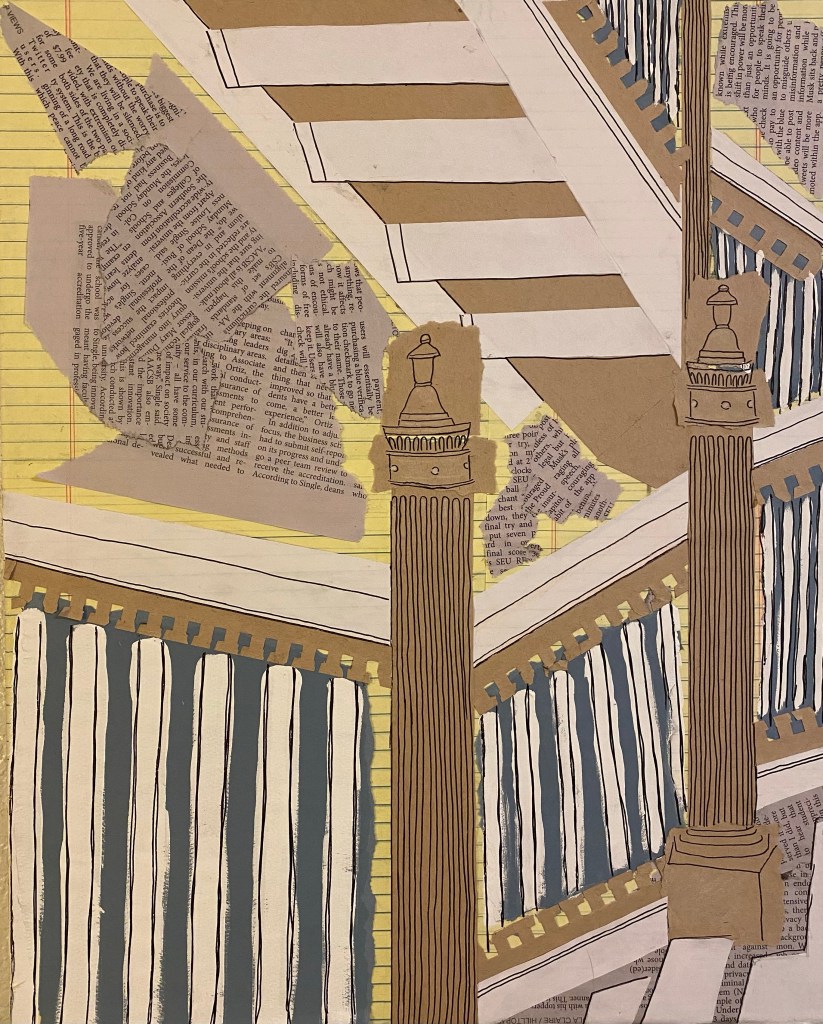
For our collage project, I chose to use this neoclassical-style staircase at my friend’s apartment as a reference. I approached this project by breaking down the structure into simple shapes. The staircase was made up of primarily rectangular shapes so I cut various sizes of rectangles using scrap pieces of paper. I used the paper from the side that gets torn from the spiral to act as the decorative parts of the balusters and finished the piece by drawing some details with a black pen.
After scrolling through a lot of summer photos, I thought the pictures I took in Paris felt perfect for our Atmospheric Perspective project. I didn’t take a lot of perspective photos sadly, but I luckily found one that looked beautiful and perfect to sketch out.
It wasn’t easy for me to start it out. I mainly just only used charcoal and pencil lead, since I didn’t think I could use anything else that would make it look stand out but not look like a mess. The center of the drawing was the easiest for me to, while the front wasn’t as easy or good in my opinion. The sky I barely drew, but I still feel like it should be lighter than it is.
The end result is ok, but not amazing. I think I could have done better, but I’m honestly too busy with other artwork, math, and moving to try to put my heart out to this art project until maybe spring break or summer.
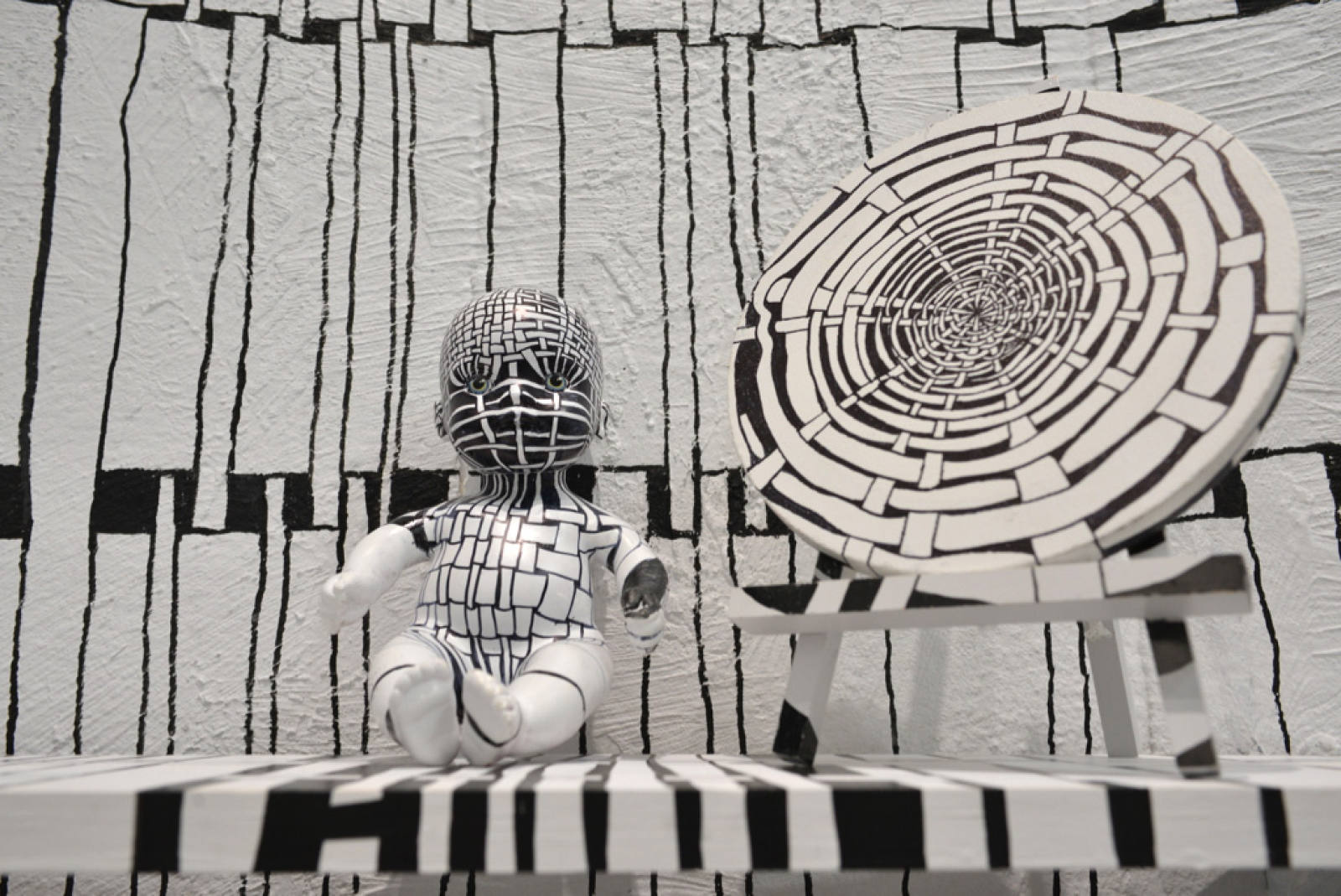
Beili Lui was born in Jilin, China in 1974. She immigrated to the United States in 1995 and graduated in 2001 with a Bachelor of Arts from the University of Tennessee, Knoxville. After she received her Bachelor’s degree she attended graduate school at the University of Michigan, Ann Arbor where she got her Master’s of Fine Arts.
Lui first became known as an artist at Art Farm, Nebraska in 2004 and since then she has received many awards. She has been featured on PBS as an artist which can be seen by most people on television.
The art which Beili creates is public art, performance, fiber art, and, drawing. Her art is quite abstract and reminds me of trees. The way in which I see these drawings as trees is because it looks like when you chop down a tree and look at the rings to see how old the tree is and I find that to be pretty.
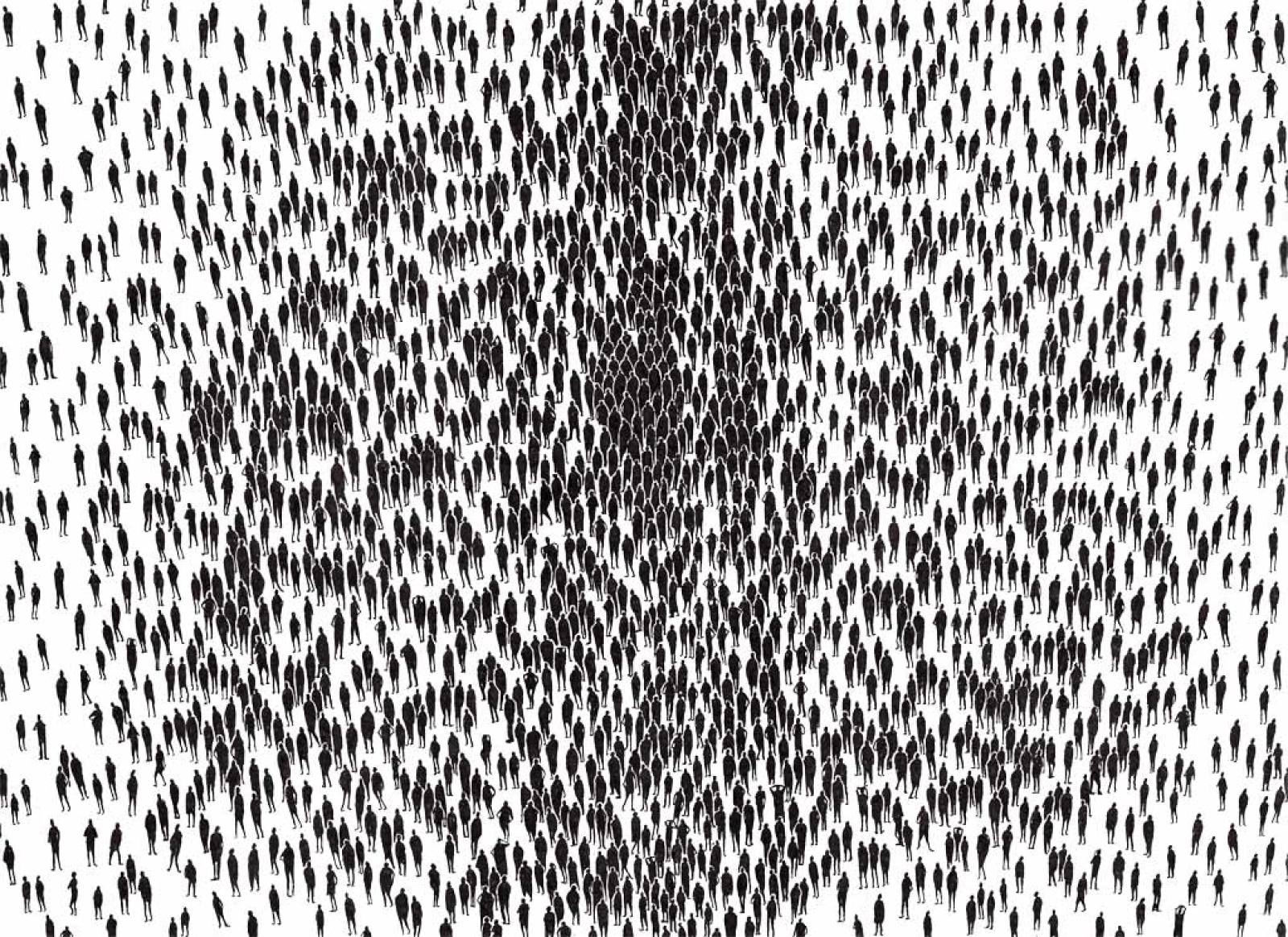
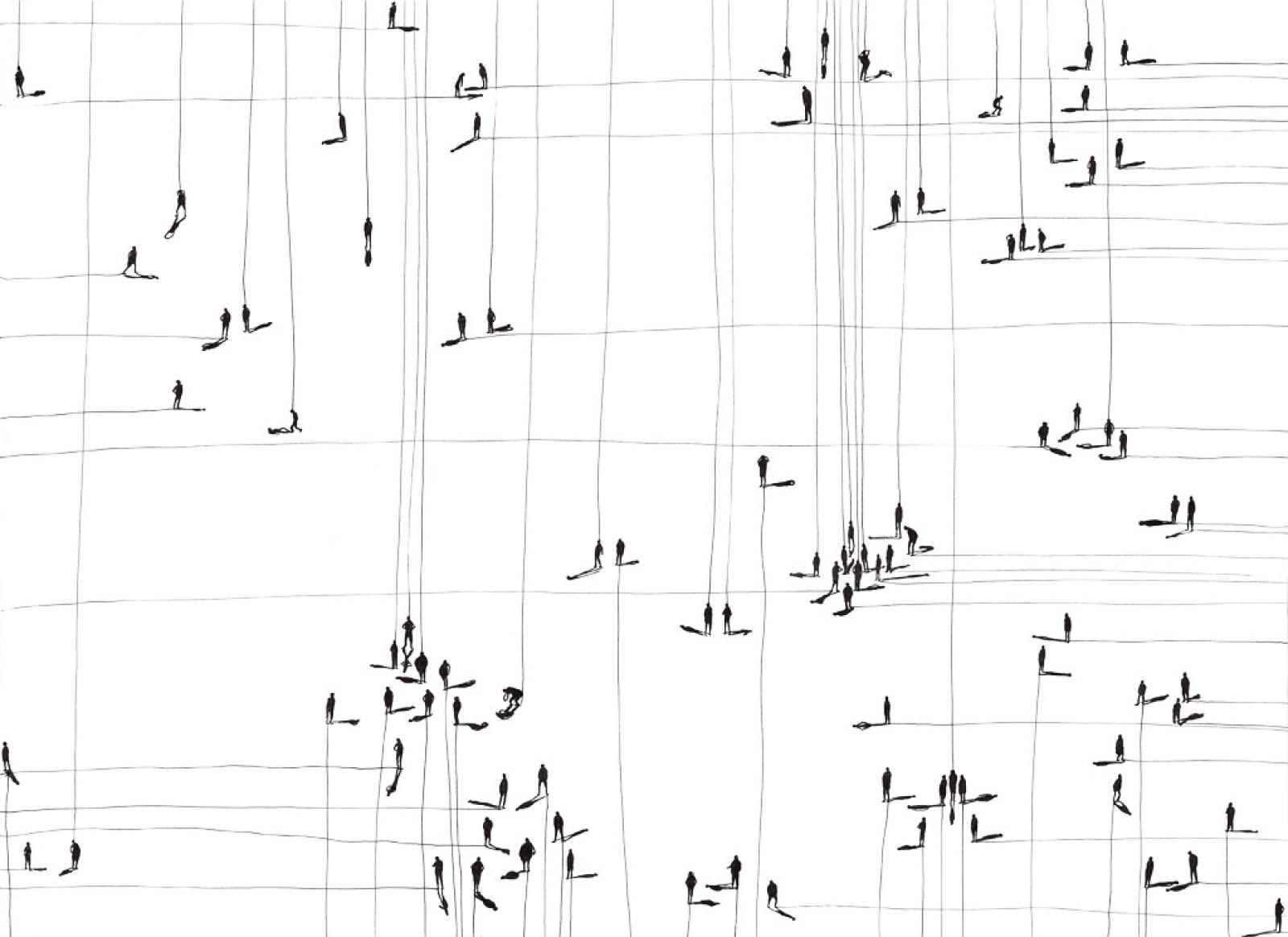
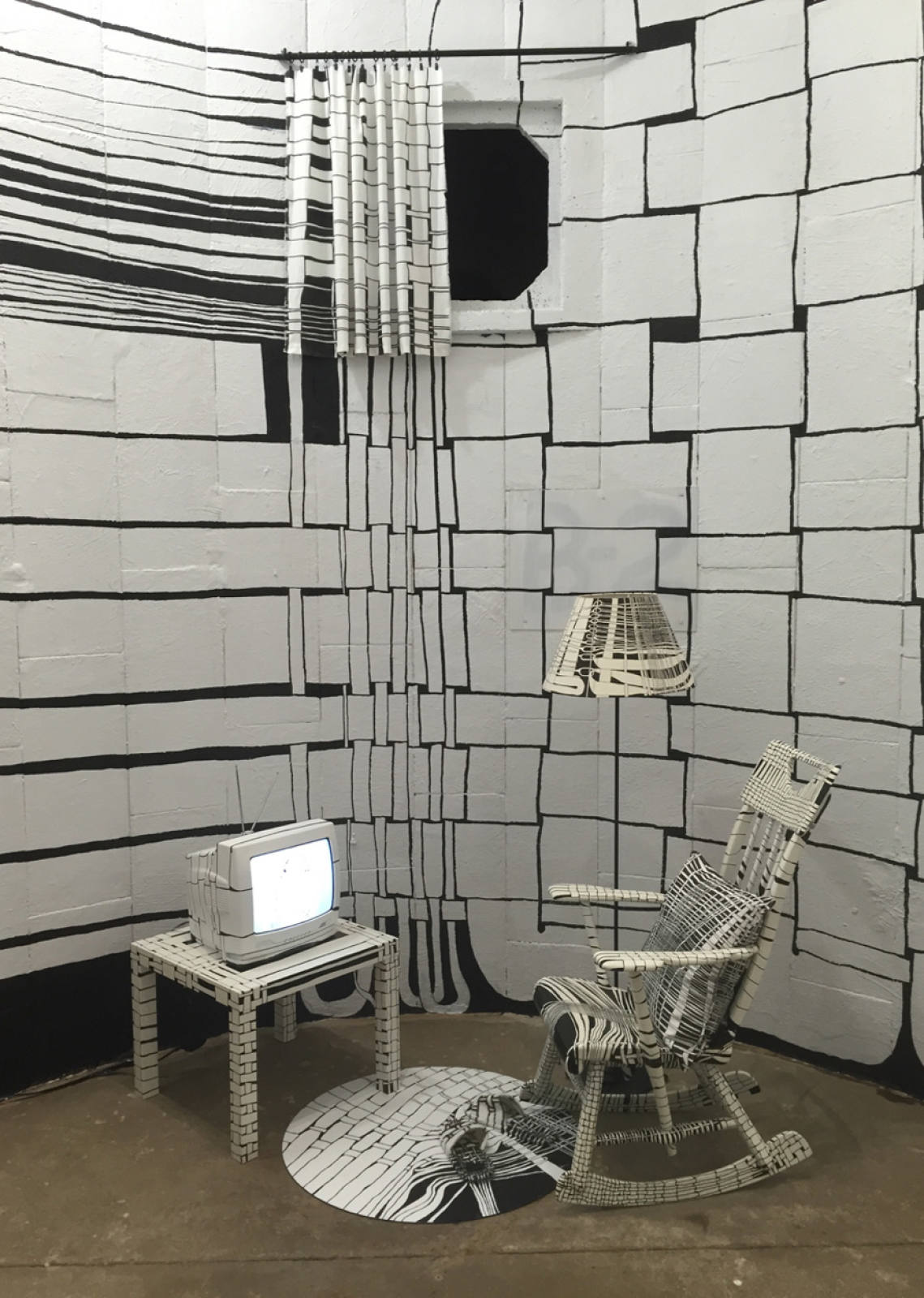
This week, I’ve chosen to look at a somewhat local artist– Hedwige Jacobs. Born in Singapore, Jacobs lives and works in Houston Texas. She creates drawings that are simple in appearance but are rich with an investigation into the ways we live and interact with each other as human beings.
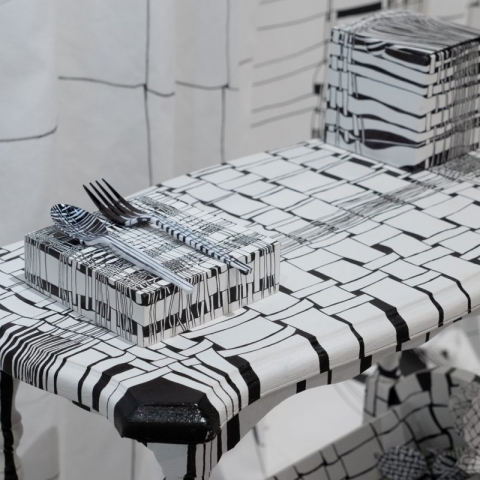
What drew me into Jacob’s work was one of her exhibitions that she had at Women and Their Work here in Austin in 2019. In this exhibition, she had an installation called The Corner Room in which there was a part of the gallery sectioned off to create a faux living room. I say faux, because although the room was real and contained real furniture, it was all drawn on and that really made me think of “drawing into space.”
She also did a similar site-specific installation in 2015 called Woven Living Room.
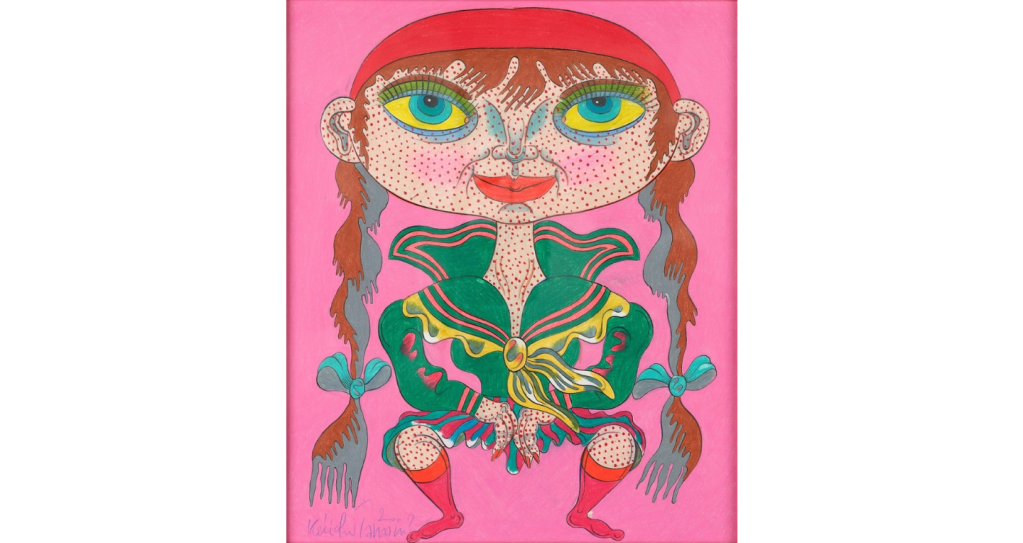
Tanaami is a Japanese artist born in 1936, well known for his style of pop art during the post-World War II era. He is also a graphic designer, illustrator, video artist and fine artist. He uses imagery from pop culture and different references for the 20th century in America. Many of his works are made with color pencils, others use collage, silkscreen, oil paint and sculpture. Much of his work revolved around the psychedelic craze in the 60’s, erotic paintings during the 70’s and soon after Tanaami became the first art director of Japanese Playboy Magazine. At some point in his life he had a near death experience and his work began to center around the idea of ‘Life and Death’.
Here is a link to an interesting interview with Tanaami by Hype Beast Magazine.
Robert Rauschenberg was an American artist born on October 22, 1925 in Port Arthur, Texas. Rauschenberg’s popularity and work started to emerged when he and many other artist were challenging the rise of the Abstract Expressionism movement.
“I think a picture is more like the real world when it is made out of the real world.” – Robert Rauschenberg
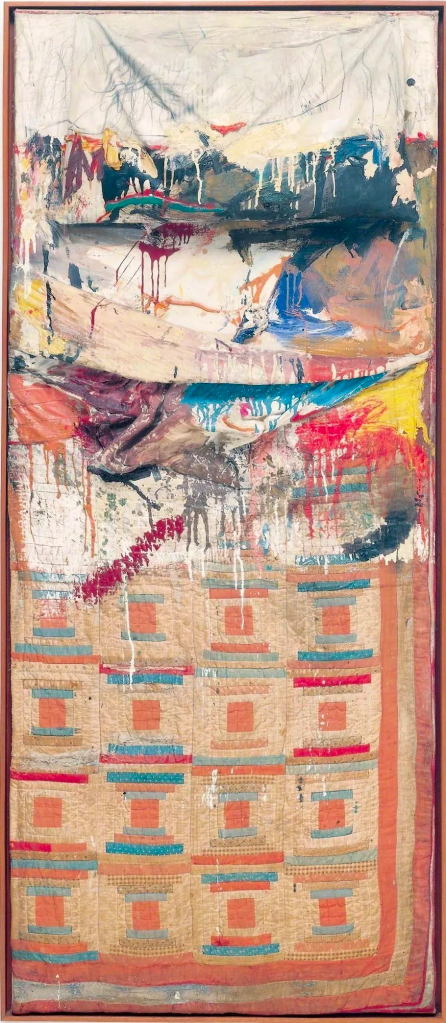
Rauschenberg got his notoriety from his Combines series from 1954 to 1964. Combines was a collection of Rauschenberg’s well-known works that has combined aspects of painting and sculpture from real-world materials and objects combined with abstract painting. At the time, his work made ironic nods to Abstract Expressionism by using self-expressionism to counter the modernist aesthetic as a way of displaying his belief that “painting relates to both art and life.” His works were predominantly mixed media with his main interests being photography and printmaking.
Bed (1955)
Materials: Oil and pencil on pillow, quilt, and sheet on wood supports
Dimensions: 75 1/4 x 31 1/2 x 8″ (191.1 x 80 x 20.3 cm)
Over the following years of life, Rauschenberg’s work would expand to a variety of other fields beyond art such as choreography, printmaking, engineering, writing, and many other fields where he could collaborate with others. This would help to expand his artistic philosophy of collaboration and commitment to humanitarian causes.
Nectar (1993)
Materials: Inkjet dye transfer on paper
Dimensions: 42 x 29 1/2 inches (106.7 x 74.9 cm)
One of Robert Rauschenberg’s most iconic works is that of “Buffalo II” which is a silkscreen painting that ties the world of art and politics together. The work is over 8 feet tall that used a combination of pre-existing pop culture images with the various drips and painterly gestures. Buffalo II served as a bridge between the decline of Abstract Expressionism and the rise of Pop Art movement.
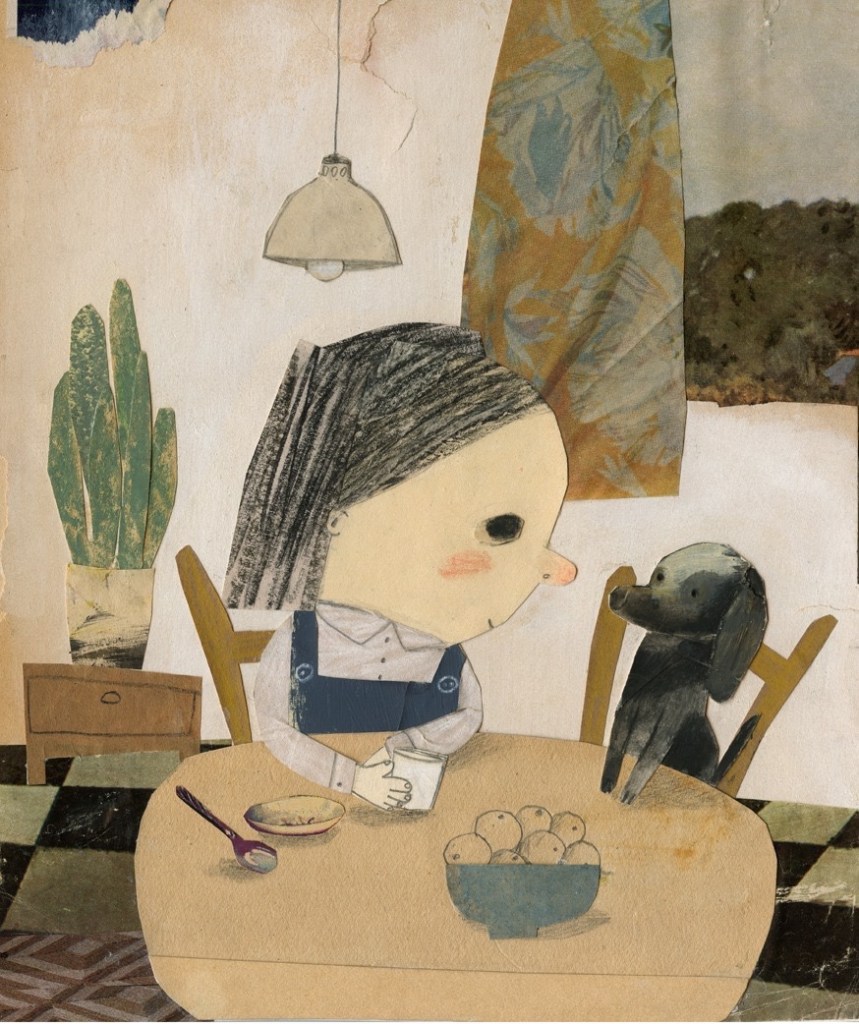
For this week’s artist, I have chosen the Canadian illustrator and collagist, Manon Gauthier. Gauthier is a Montreal-based artist who has over 25 years of experience in art and creativity as well as communications and philanthropy. I came across her work on Pinterest while looking for inspiration for our upcoming collage project and I was in awe of her playful and childlike collage illustrations. The works of Gauthier are done with the use of gouache, pencils, crayons, and paper collaging to create scenes depicting a youthful sense of wonder. Gauthier’s illustrations have been in dozens of children’s books for Canadian and European publishers. You can find her illustrations in the books, “Elliot” by Julie Pearson, “Good Morning Grumple” by Victoria Allenby, “Wash On” by Michele Marineau, and “All the World a Poem” by Gilles Tibo. Gauthier has received numerous awards for her work and has been nominated for the prestigious Governor General’s Literary Award four times.
Amanda Burnham is from Toledo, Ohio. Born in 1979, she focuses on installation featuring scraps of paper with drawings of city architecture. In Burnham’s words, her interest in depicting cities comes from her admiration for the “adaptive sensibility of tinkerers, patchers, foragers, and those who make-do.” (Brunham) One thing that really stood out was her practice of archiving pieces of previous installations and reusing the visual assets in later drawings. I come from a digital practice so to see a similar methodology of reuse of visual assets was really interesting for an installation artist. Burnham will use walls as a pile of trash, or even use street lights as sidewalks, keeping tape and adhesives exposed in order to utilize these tools as a line in the work.
Aside from putting up really amazing work depicting space with a great sense of perspective in black ink. Burnham is currently a professor at Townson University in Rhode Island.
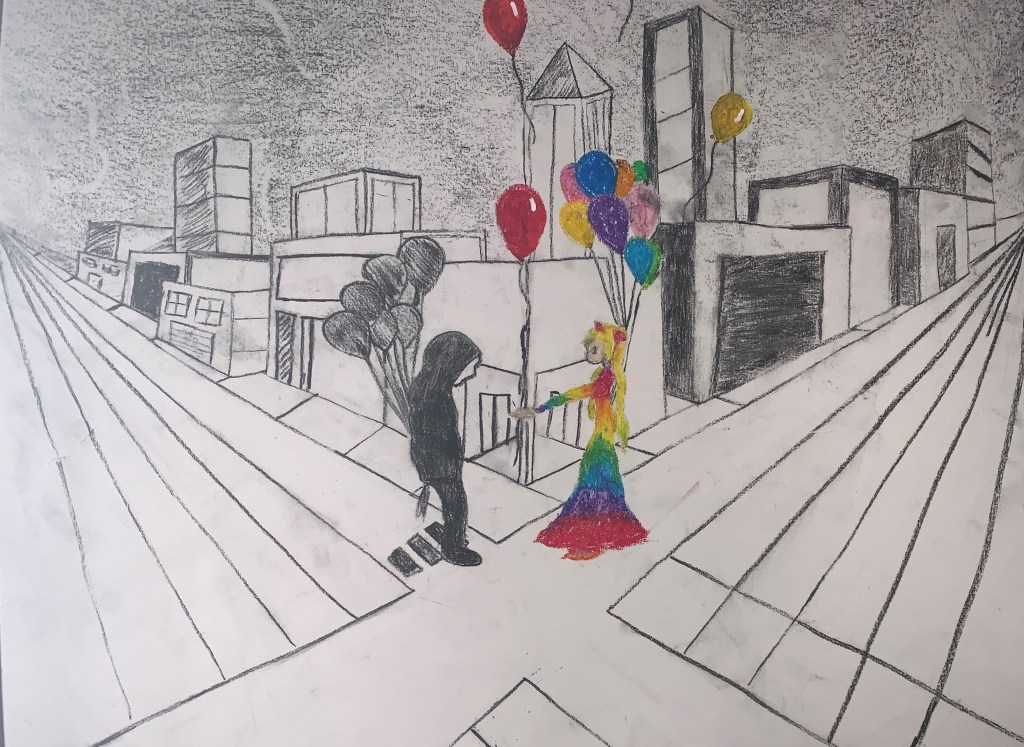
I had a few ideas when I was in class when approaching this piece. I wanted to work with lots of darkness and a splash of color. This is how I decided I wanted to create a girl in bright colors handing something colorful to someone who seems not to happy.
I sketched out a few ideas of this idea before looking online at references I can go off of.
After being set on what I wanted to do, I decided on using charcoal and pastel. I had never used pastels and charcoal sticks which was my true challenge. I didn’t like the outcome of my piece however, I now have more understanding on how these mediums work. The pastels were like crayons and it was hard mixing the charcoal and pastels together without making everything look muddy.
Here is the finished piece. In the future, I hope to come back to this piece and redo it.
When I think of atmospheric perspective, the first thing that comes to mind is a field of some sort. Something with a vast amount of space and depth. I wanted to challenge myself with a work that has less depth. I also wanted to do something that takes your eye into a “typical” direction. (Field eyes go back into painting). Using India ink and water I believe brings out the subtlety of the architectural aspect in this. Architecture isn’t something I typically do, but I found it gave me a sort of “pattern” to go by. Meaning, I could follow lines and shadows easily. The main goal I had was for this to turn out as a piece that was “easy on the eyes” and I believe I did that.










 drawing into space