Minty Sainsbury Silhouettes and Architecture

Minty Sainsbury studied architecture at the University of Cambridge in the UK. Graduating top of her class in 2013, Sainsbury moved to London to continue in architecture practices. Her main concern was to bring attention to the detail and craftsmanship to architectures through simplistic compositions contrasting with extremely detailed drawings of buildings. Most of Sainsbury’s drawing consist of single buildings, drawing in pencil. Some of her works are architectures that seem to “float” or sit in a blank space, while others include silhouettes of other buildings in front of or surrounding a single detailed building. By including silhouettes in her pieces, Sainsbury creates this kind of scene as if the viewer is focusing on little peeks of a building hiding behind other buildings. As of right now, it doesn’t seem that Sainsbury has had any exhibitions or been featured in galleries, but rather keeps herself known on social media and doing commissions or selling works done in her portfolio. She has however, been featured in an article on My Modern Met, where links to her blog, facebook, and instagram can also be found.

Minty Sainsbury, Milan Cathedral (9x9cm) Graphite on paper

Minty Sainsbury, St Pauls Cathedral, (56×76 cm) Graphite on paper


Minty Sainsbury, View of San Salute in Venice (100×65 cm) Graphite on paper

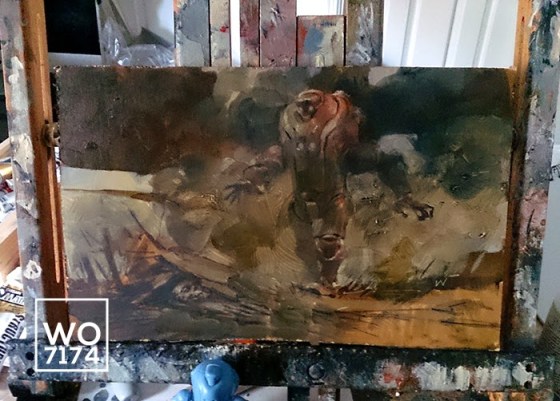
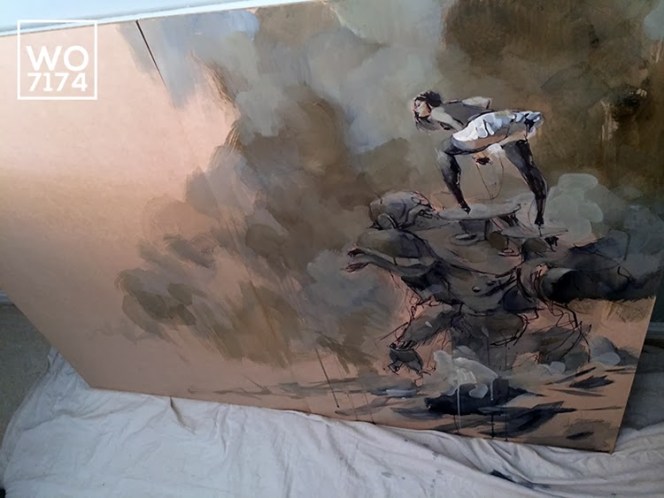
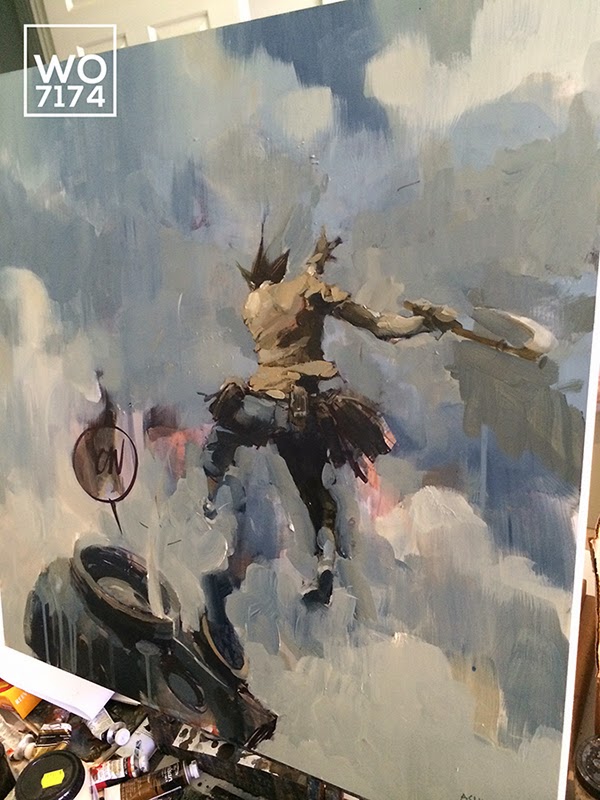
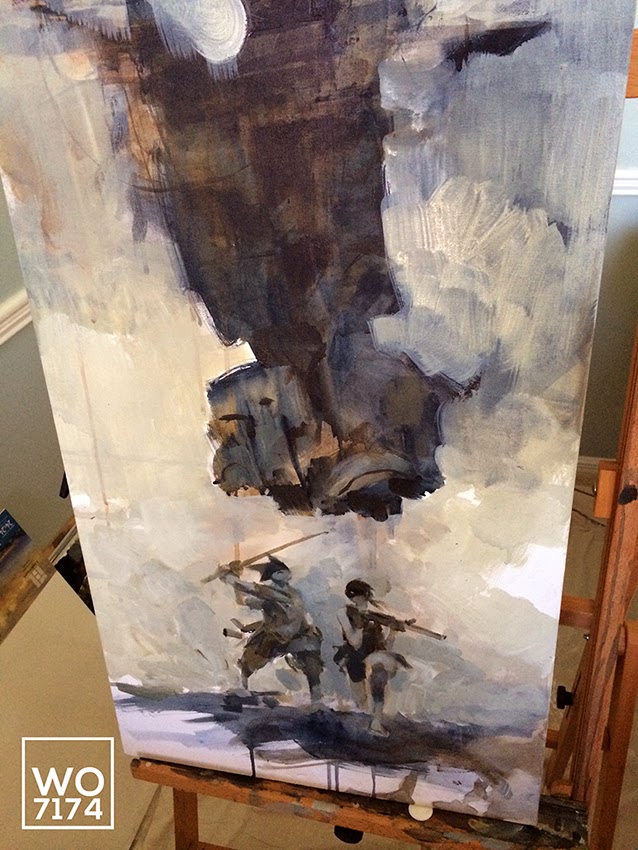
Ashley Wood and the breath of drawing

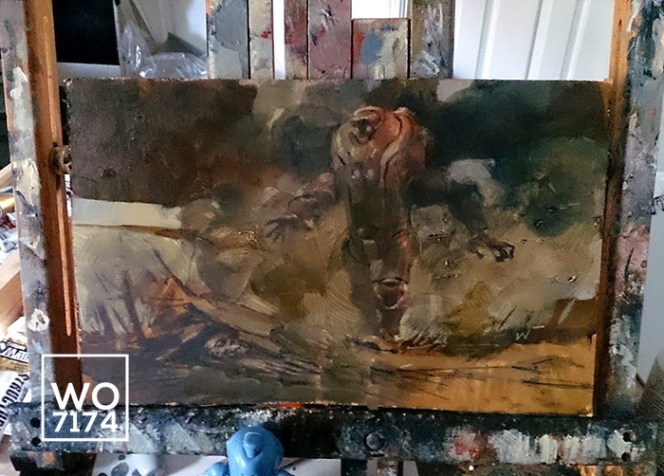
Drawing has many forms being it a tight  realistic drawing , or a simple doodle, all drawings are different and reflect a lot of what we are as both artists and as people. The balance of roughness and neatness is what differentiates each artist and their style,questions such as ” How much should I take from a reference?”,”How expressive should I be?” and ” how much neatness should I put on a drawing to make  it acceptable, and where should I apply it?” are what spawn the differences between personal styles, and differentiate how each artist both approach and expect from their work.This leads me to what really inspires me in Ashley Woods drawings being their roughness and stylistic choices. His choices with the exploration of space interest me,almost as much as his  choices in style ,given that he worked with comics most of his career , find his usage and rendering of space in his paintings to be the most interesting and relevant aspect of his style,at least for the purposes of this blog entry. What is interesting about his usage of space is how abstract yet thematically specific it is.His usage of color to convey space is fantastic, and the many shades used and the interaction of each color makes the feel of each space both unique and unquestionably Ashley s own in style and feel.


All examples taken from his blog at

http://ashleybambaland.blogspot.com/?updated-min=2012-01-01T00:00:00-08:00&updated-max=2013-01-01T00:00:00-08:00&max-results=50

Do Ho Suh’s “Rubbing/Loving” and Thread Drawings

Do Ho Suh explores our theme of space through capturing an aspect of the term familiar to all–that is, living space–through intricate rubbings of his old New York apartment and North Korean locales. For his “Rubbing/Loving” project, he and several assistants performed the rubbings of walls, floors, and other surface areas on paper while blindfolded and with various media from graphite to conte. The papers were then arranged on wooden panels and constructed as an exact replicas of the rooms that museum-goers were free to walk through. The project’s namesake is a play on the fact that there are very little to no distinctions between the “r” and “l” or “b” and “v” consonants in the Korean language, so “rubbing” and “loving” come out sounding similar.

Do Ho Suh
Rubbing/Loving Project: Apartment A, 348 West 22nd Street, New York, NY 10011, USA, 2014
rubbing paper on wooden panels
dimensions variable

While the above example is of the artist’s apartment, Do Ho Suh also exhibited his contributions to the 9th Gwangju Biennale, “ROUNDTABLE” from 2012. Gwangju is located in South Korea, and the Gwangju Biennale is held in honor of a 1980 demonstration against an oppressive military regime. Although it was reported that 200 people were killed, an estimated 2,000 people is the reality, and it is this censorship that has motivated contemporary artists to hold the festival since 1995. The themes of the 2012 program were things relevant to the East Asian experience, such as isolation, migration, and “the relationship between group trauma, memory, and history”.

Do Ho Suh
Rubbing/Loving Project: Dormitory Room at Gwangju Catholic Lifelong Institute, 2012
colored pencil (cyan, magenta, yellow, black) on paper, wooden structure, video monitor and player and speaker
154.33 x 131.5 x 105.12 inches
392 x 334 x 267 cm
Commissioned by Gwangju Biennale 2012

This is one of the two projects he had displayed at his “Drawings” exhibition at both of Lehmann Maupin’s New York spaces. The other is a series of thread drawings (“experimental”, as Do Ho Suh refers) in various colors depicting organic and architectural forms. These were a result of the artist’s invitation to Singapore, a testament to his multinational exploits. Having been born in South Korea, been educated at both RISD and Yale, and beginning an artistic career in New York, Do Ho Suh has a focus in exploring his identity in the various spaces he occupies.

Do Ho Suh
My Country, 2014
thread, cotton, methylcellulose
11.5 x 14.5 inches
29.2 x 36.8 cm

Do Ho Suh
My Homes, 2014
thread, cotton, methylcellulose
18 x 24 inches
29.2 x 36.2 cm
frame: 22 x 28 inches
55.8 x 77.1 cm

Chu, Christie. VIDEO: Do Ho Suh Explains His Ethereal Rubbings. Wednesday, September 17, 2014.

http://universes-in-universe.org/eng/bien/gwangju_biennale/2012

http://universes-in-universe.org/eng/bien/gwangju_biennale/2012

Paul Cadmus

Paul Cadmus was an American born artist known for his highly erotic and photo realistic depictions of men. Cadmus was first recognized because of his painting “The Fleet’s In!”- a controversial depiction of the American Navy. The painting was filled with highly sexualized depictions of sailors and women and homosexual undertones. The scandal generated a great amount of publicity for Cadmus. He continued to create paintings without the fear of offending the public. His 1935 painting, “Coney Island” was included in a show at the Whitney Museum of American Art, and generated the same amount of buzz. The Coney Island residents threatened to sue if it was not removed.

His later work includes intensely detailed sketches of lounging men. The use of crosshatching allows the figures to leap off of the page, and his incredible knowledge and accuracy of the human anatomy leaves the viewer to almost believe the drawing is alive. Here are some examples:


http://www.notablebiographies.com/supp/Supplement-Ca-Fi/Cadmus-Paul.html

http://www.artnet.com/artists/paul-cadmus/

http://www.dcmooregallery.com/artists/paul-cadmus#9

KARINA SMIGLA-BOBINSKI – ADA

Karina Smigla-Bobinski is an artist working primarily in Germany although she has been in shows and festivals in dozens of countries on five different continents. She works in many different media ranging from digital to sculpture and enjoys creating large kinetic and interactive installations. Her piece ADA was orginally finished in 2010 without a particular client in mind, but many different curators soon came to her wanting to show the piece in their galleries. ADA is treated more as a being than a machine, as her movements are too erratic to be controlled despite the efforts of the visitors who are allowed and encouraged to touch and push her around the room. She is a large, helium-filled sphere with charcoal sticks placed on her evenly so that as she moves the white walls, ceiling, and even floor of the room slowly become covered with her dots and lines. Her appearance is much like that of a white blood cell, further adding to the illusion of life. Smigla-Bobinski enjoys these participatory pieces as many artworks are limited to only looking but she feels that interaction allows for a further connection to the piece. By visitors using their body, they are even able to become a part of the piece themselves. This relates to Drawing Into Space because it is a piece that is able to draw around the room within the space that is provided, drawing in every place it can reach and surrounding the visitors.

http://www.smigla-bobinski.com/english/works/ADA/index.html
http://www.smigla-bobinski.com/english/about/index.html

Picasso’s Light Drawings (Woodruff Blog Post #1)

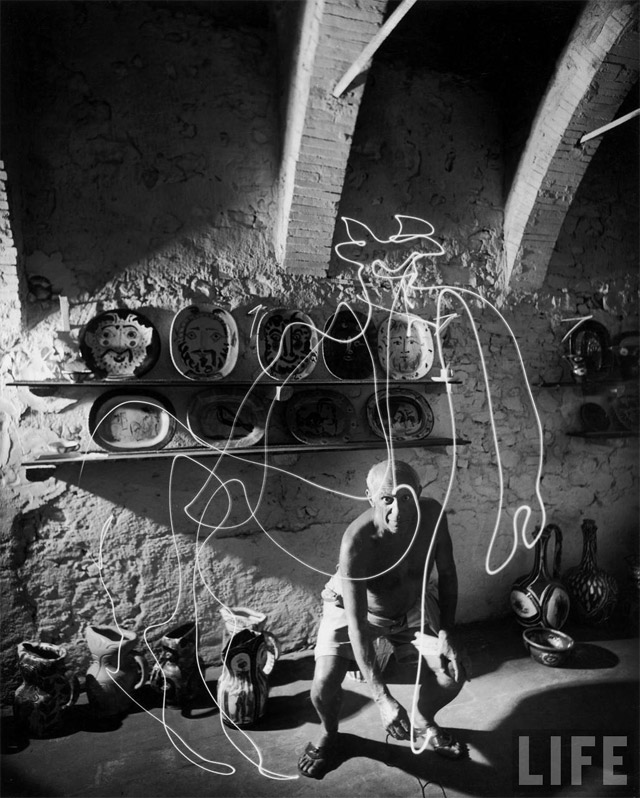
Light drawing is the method of capturing the movement of a light source in a 3D space, that when photographed, shows the trails of light. This process was discovered by Pablo Picasso and Gjon Mili in 1949. Mili, a photographer for LIFE Magazine, found that “by leaving the shutters open [on his camera], he caught the light streaks [being made by Picasso with a small light] swirling through space (Cosgrove).” Through this experimentation, the two produced photographs depicting Picasso’s drawings composed of light in a true 3D space. The following year, the series of works was displayed in New York’s Museum of Modern Art, with Picasso draws a centaur in the air being the most revered and remembered. With the advent of modern, more powerful technology, artists have adopted and expanded upon these techniques to incorporate them into video, performance, and other various artistic displays.

Here are some examples of Picasso’s Light Drawings:

Gjon Mili, Picasso draws a centaur in the air, Photography, 1949.

Gjon Mili, Picasso’s Light Drawings, Photography, 1949.

Gjon Mili, Picasso’s Light Drawings, Photography, 1949.

David Oliveira – Wire Sketches

David Oliveira is an artist that uses wire in order to create expressive drawings or sketches of figures and animals. The result is a 3-Dimensional rendering of the subject that has the appearance of a fast, light sketch and the solidity of a 3D object. It reminds me of a trompe l’oeil situation where the viewer from afar would expect the piece to be a drawing but as they examined closer the shadows of the wires are seen and the dimensionality of the piece is known.

David Oliveira is a 35 year old artist in Lisbon. He graduated in Sculpture by the University of Fine Arts in Lisbon, with a major in ceramics. Moving on to gaining a Master in Drawing and Artistic Compared Anatomy. Using a combination of wire and electrical tape to create a variety of line quality. In some a wider black paper, or resin is applied to block out the delicate wires.

Artists website: http://davidoliveiraescul.wix.com/davidoliveira


Example Research Post

You will be required to complete one research blog post per week related to our theme Drawing Into Space. Feel free to do additional research on the artists listed on the Links page, but I encourage you to find other artists who inspire you.

The following is an example artist research blog post. Approximately 200 words (150-500 words are acceptable), and including images with captions and links to sources. Be sure not to plagiarize… summarize your research in your own words, and use quotes when appropriate (but include source links as citations).

—————————

In 2011 former Austin resident Eric Zimmerman exhibited a new body of work at the The Old Jail Art Center in Albany, TX called Sixteen Tons. This body of work explores histories and symbols of the American West and reflects on his interest in representing both fact and myth. Eric Zimmerman, originally born in Columbus, OH, lived in Austin during and after attaining his MFA at the University of Texas, Austin. In 2009 he moved to New York where he lives and works on his detailed drawings and text pieces. One such text publication, created for the Sixteen Tons exhibition, is an eight page, black and white newspaper, printed in an edition of 300, titled How The West Was Won. In this printed newspaper he explores the idea of the American West as a potential place for utopia through the juxtaposition of historical texts, images, his own photographs, research, and diagrams. Zimmerman states on his website that “The paper uses the myth of the American West as a jumping off point and seeks to blur the lines between truth and myth, source material, artwork, and gallery guide.”

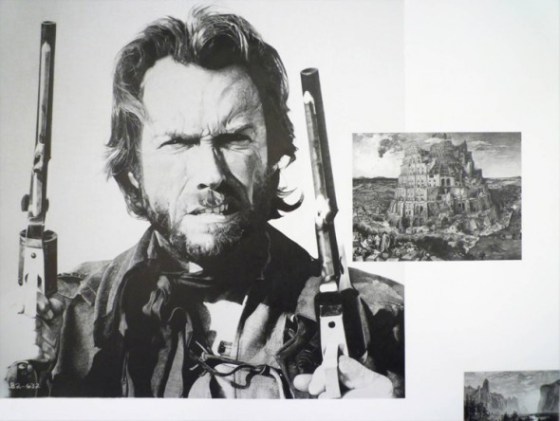
Here are some other examples of Zimmerman’s work.Zimmerman_Atlas_for-web.jpgEric Zimmerman, Atlas #12 Monument to the Third International (Tatlin’s Dream), Graphite on paper, 2008.

Eric Zimmerman-bonneville_L.jpg

Eric Zimmerman, The Velocity Of The End (From Here To There), 50 x 60in. Graphite on Paper. 2010.

There_I_Was_(Nothing_Is_The_Rule,_Something_The_Exception).jpg

Eric ZimmermanThere I Was (Nothing Is The Rule, Something The Exception) Production Still of Clint Eastwood as The Outlaw Josey Wales. |There I Was | Pieter Brueghel, Tower Of Babel, 1593. Albert Bierstadt, Yosemite, 1868| Starscape (Dispersion)2010.

Welcome to our blog!

Welcome to Drawing Into Space, a blog for the UNCC/McColl Center AIR collaboration between artist Hollis Hammonds (that’s me) and the students at UNC Charlotte, who are enrolled in Drawing 2 with professor Susan Brenner. Wow… that’s a wordy sentence.

I’m pleased to be working with you this semester, and look forward to seeing how your work evolves in our short time together.

So, why Drawing Into Space? Susan thought it would be an ideal way to incorporate my own creative research interests into your Drawing II course, and I agree that it will give us a dynamic framework to work within as we develop concepts and sculptural drawing installations for our exhibition in the gallery in mid-March.

All I ask is that you keep an open mind, and contribute your own thoughts (all and any ideas are valid), skills and talents. I’ll also mention that this project will engage each of you as individuals, but everyone will have to collaborate and participate in group work throughout the semester.

Let’s use this blog to share our ideas, research, sketches, in progress photos, and so on…

Cheers,

Hollis