Progress 3(Final): Reflecting Dream

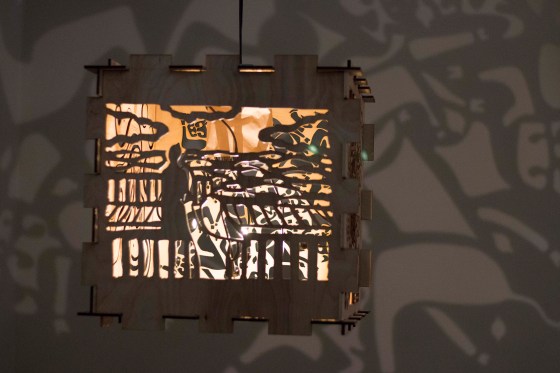
This week, as we were installing the work, we ran into a huge problem with the light bulb. We couldn’t get the perfect crisp shadows on the walls due to the incorrect wattage as well as the size of the bulb. The shadows appeared blurry and not focused. We thought part of it was because of the brightness in the room that is affecting the sharpness of the shadow.

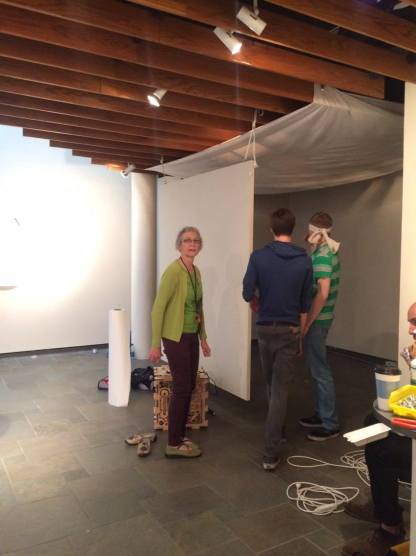
So we went with the reading LED light with the USB adapter and project each light onto each panel so ended up using 6 lights in order to cover the entire cube. Yet the images on the walls were still not clear. However, we managed to install black curtains to block out the excess light from the gallery.

As far as how the concept goes, I think that we manage to communicate our ideas to the audience successfully. In order to install the cube, we glued ever side together except the bottom panel in case anything goes wrong which I think is a good call. We measure the distance from the wall out to the center of the space before we install the cube. The sheet on the ceiling was stretched tightly so when we project the image there won’t be any wrinkle or distraction.

On the reception day, we present the the cube by having slightly moved so the shadows could move around the entire space we create. The motion of the shadows reminded me of a child’s bedroom since the images are created to be dreamlike.


Progress 2: Reflecting Dream

The week before spring break, some of us were preparing and gathering hardware and materials during class time, while the rest of our team members were trying to get the cutting part done so when we came back from the break we would have enough work as we expected it to be. The problem was that we did not have enough wall in order to project all the six sides of the cube. Luckily, Hollis came up with an idea of putting the two door panels together and then painted with white so we can hang it from the gallery’s ceiling to create an extra wall that we needed. On the ceiling of the gallery, we needed to stretch a white sheet so that we could project Drew’s design and not having it blend in with the original ceiling which could be distracting.
12873477_1703242029940386_80959539_o

The picture on the right was when we temporarily put the cube together without light bulb and the one on the left was the finished version.

Progress 1: Reflecting Dream

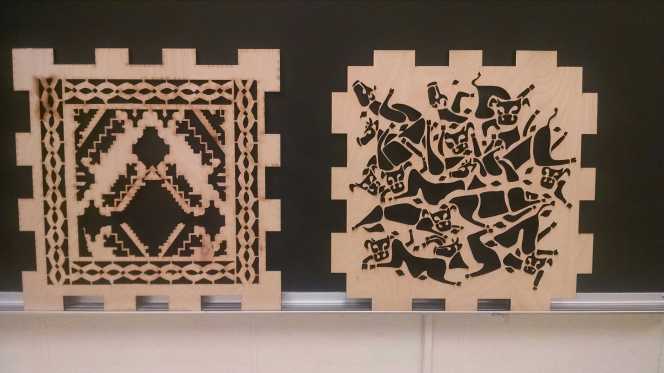
At the first week of collaborative project, I chose to work with Britney’s main concept and idea of using light to project the negative cut-out. Our idea is projecting the unconscious dream onto the wall. The design I created was abstract because I feel more comfortable with non-narrative patterns and to me, I feel like it would be more convenient when working with the software and laser cut. Our concept is to build a laser-cut 18’x 18′ in. cube and project the light from the inside of the box. So every side of the box has its own individual design which represents the dream.


This is a picture of how the design looked like before cutting.

sapuns square


It took 30-45 minutes to cut this 18′ x 18′ wood panel. I loved how it turned out!

IMG_20160302_164118955

I also think that the actual cut-outs are very interesting in terms of the fragments and negative space on the laser cutting bed.

12381000_1703242033273719_2061073495_o


Jennifer Purdum

Jennifer Purdum received her BFA from University of Cincinnati and later pursued her MFA at American  University, Washington DC and Corciano Italy. Purdum is well known internationally and nationally for her print making. She has participated in many exhibitions internationally and nationally, including, “Printmaking Today” at the Cincinnati Art Museum, Zig Zag Light Night, Gallery Svartaloft, Reykjanesbae, Iceland, AGallery in Chelsea , NYC, and at the Weston Art Gallery in Cincinnati. (Miami University 2016)

Her recent works are the series of print and mixed media representing the objects that she loves. She works in layers and using two medias to overlap each other creating blurry, ambiguous  images that could be read as objects or places. Her works are inspired her personal experience in living through Hurricane Katrina, New Orleans and has explored the same concept through print making and drawing since then. She lives in Cincinnati, Ohio and teaches at the regional campus of Miami University. Jennifer Purdum also has international teaching experience from Czech Republic at the University of West Bohemia in Pilsen and has been visiting artist, giving lectures at several universities and colleges throughout the country. (Miami University 2016)

“Jennifer Purdum.” College of Creative Art,. Miami University, n.d. Web. 28 Feb. 2016. <http://miamioh.edu/cca/academics/departments/art/about/faculty-staff/faculty/jennifer-purdum/index.html&gt;.

J-Trojan-1.jpg

Jennifer Purdum, Trojan House #1, Ink and Latex on paper, 60 x 55 in. 

J-DomesticMori-1

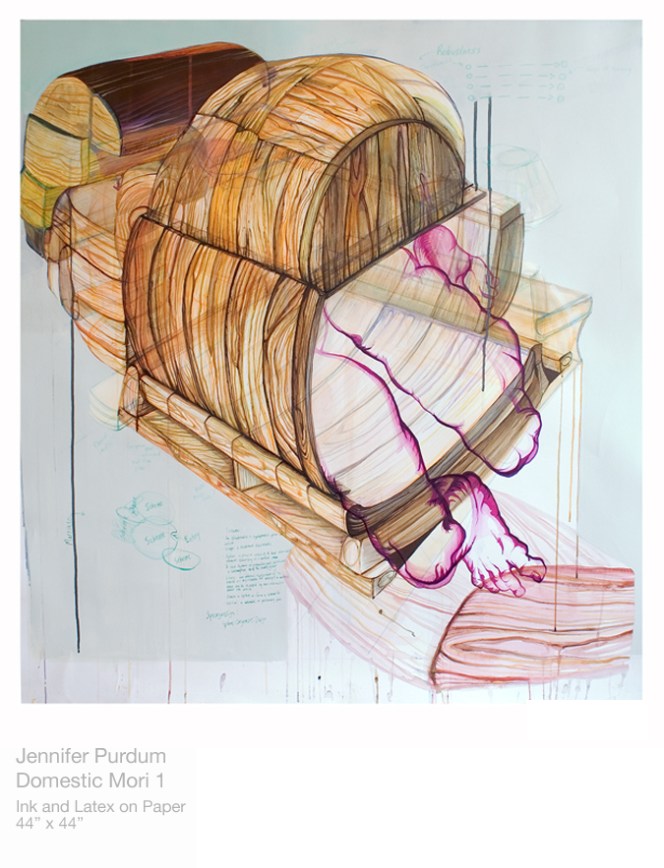
Jennifer Purdum, Domestic Mori 1, Ink and Latex on paper, 44 x 44 in.


J-Exodus-5

Jennifer Purdum, Exodus 5, Archival Pigment Print on German Etch Digital Paper, 22 x 17 in. 

J-Trojan-2

Jennifer Purdum, Trojan House #2, Ink and Latex on Paper, 60 x 55 in. 


Citation

“Jennifer Purdum.” College of Creative Art,. Miami University, n.d. Web. 28 Feb. 2016. <http://miamioh.edu/cca/academics/departments/art/about/faculty-staff/faculty/jennifer-purdum/index.html&gt;.

http://www.au-purdum.com/Pages/jenmain.htm

Project 5 Drawing in Space Installation

A piece by Kimberlyn Cook and Spun Ngoensritong

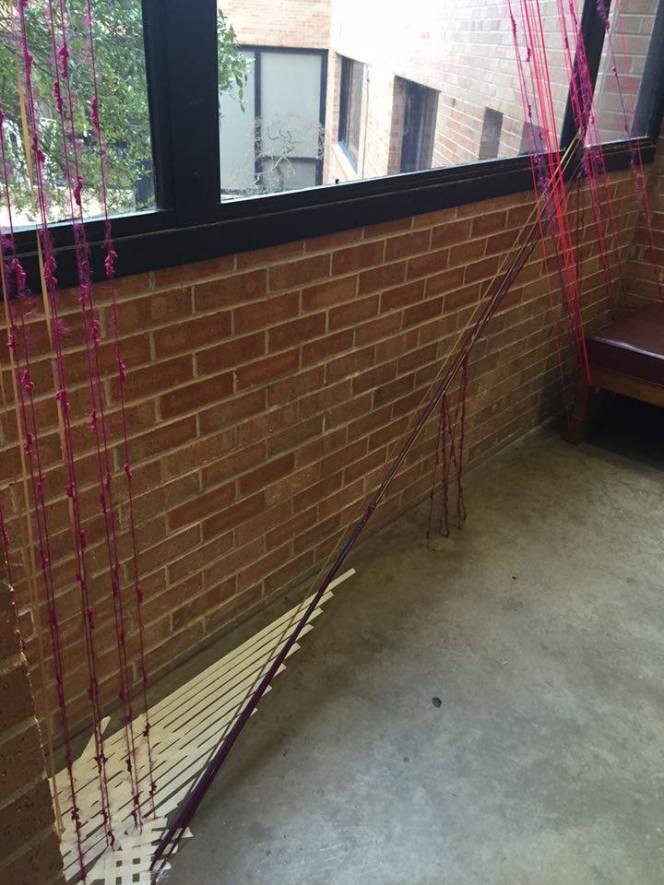
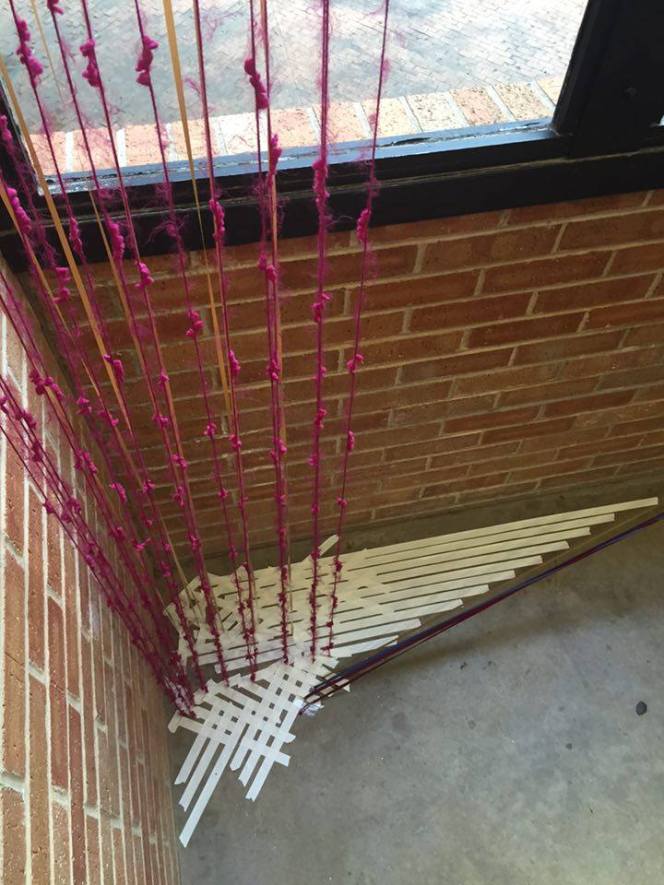
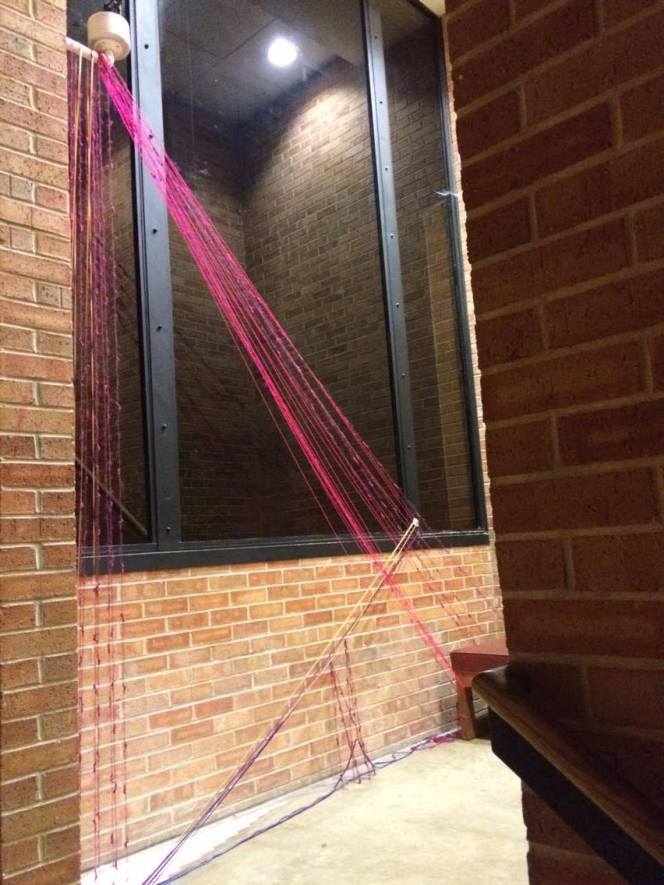
For this project our concept was creating linear perspective in a 3D space.  For the structure we used yarn and tape.  The tape was used to ground the yarn and also add to the design.  We created a cross pattern to incorporate the thick white tape and also to add something less conventional to our piece.  We chose to create the piece in the window because of the different effects it has during different times of the day.  For instance, if it was sunnier outside the yarn looked brighter, but yet was harder to see; whereas, in cloudy days, or night time, the pieces’ colors was not as electric but easier to see  in contrast to the window background.  So not only were we playing with drawing in space, but we were also playing with the actual space itself.  We thought it would be best to utilize the complete space by using the bench and the light fixture.  By doing this, the whole space became engaged with our drawing.  We created the vertical lines on the left side to break up the linear perspective created between the light fixture and bench , and to add more linear elements to the piece.  We thought that by adding multiple colors in the layers it would add to the dynamic effect of our drawing.  We also were cognizant about our color and yarn choice.  Some of the yarns are fluffy; whereas, others are straight and tight.

12767358_10205509428324131_1449627554_n

12767563_10205509428244129_1632209301_n

12752077_1692493344348588_1107507261_o.jpg

12773230_1692493364348586_150382068_o.jpg

Project 6: Cardboard: Kimberlyn and Spun

By; Kimberlyn Cook and Spun Ngoensritong

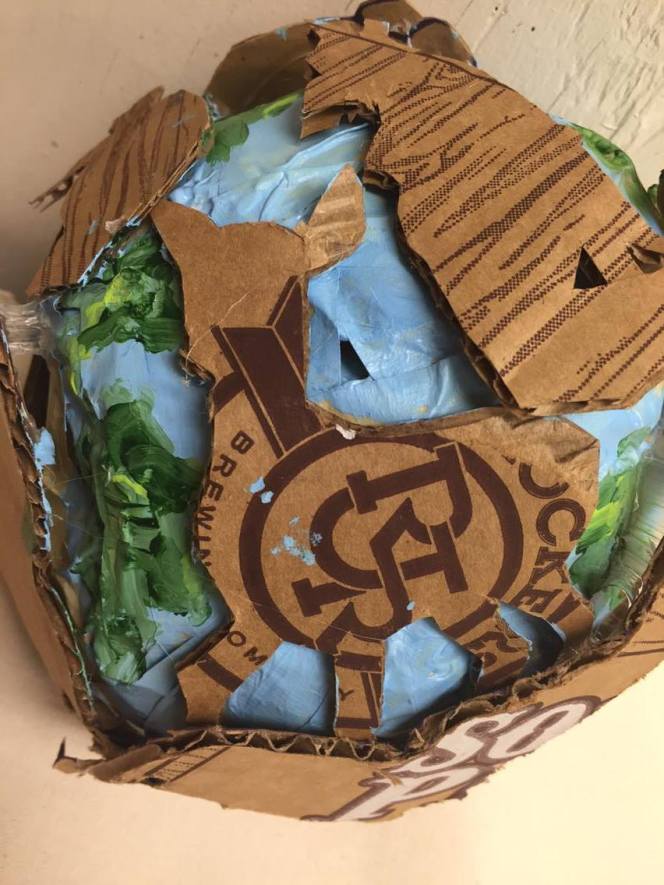
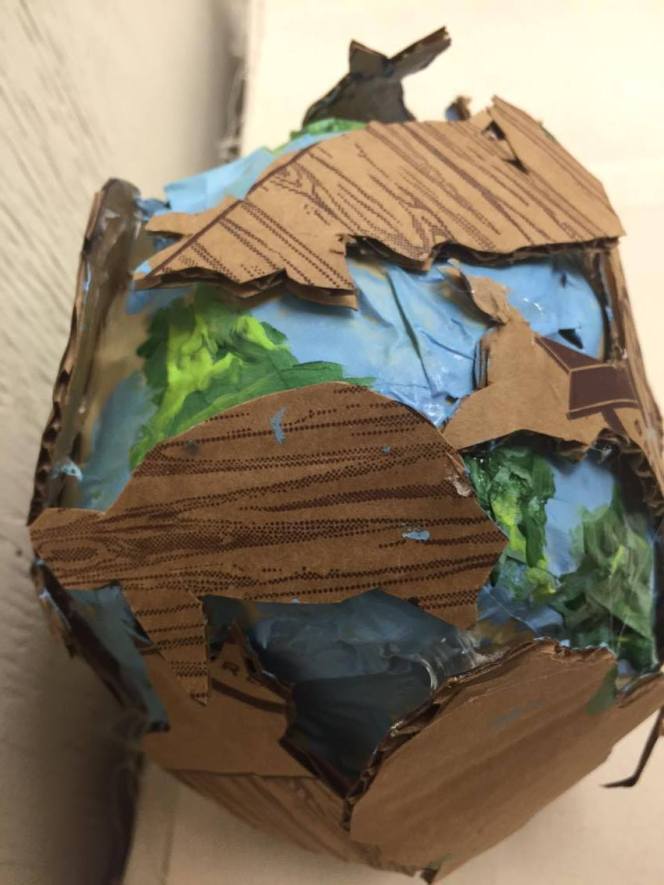
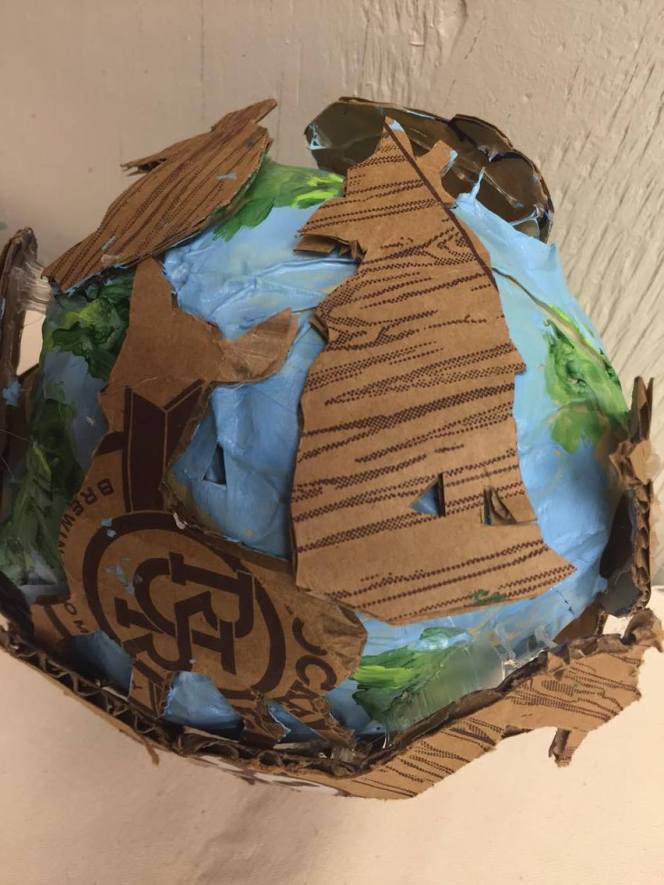
For this project we created an earth out of the brown paper, and then wrapped in in tape to create a sphere, which became the earth.  Next we painted it blue and green to represent the different continents.  After painting the globe we wanted to incorporate animals but in a unique way. Originally our idea led us to do a mobile, but we wanted to be more outside of the box, so instead we pasted the animals to the earth and played with line.  Some have lines drawn on them, some are plane cardboard, and our kangaroo has line work done with hot glue on  his body.  Our concept for this project was about extinction and animal awareness.  It is scary to think that the animals we have grown up with and come to know might one day not be on this earth for our children to see.  I think this is a topic that is too overlooked in our society and needs to be on a higher level of concern.

12751871_10205510272505235_1315287496_o

12773226_10205510272385232_888745445_o

12765578_10205510272305230_1191298518_o-2

12772886_10205510272425233_1418503388_o


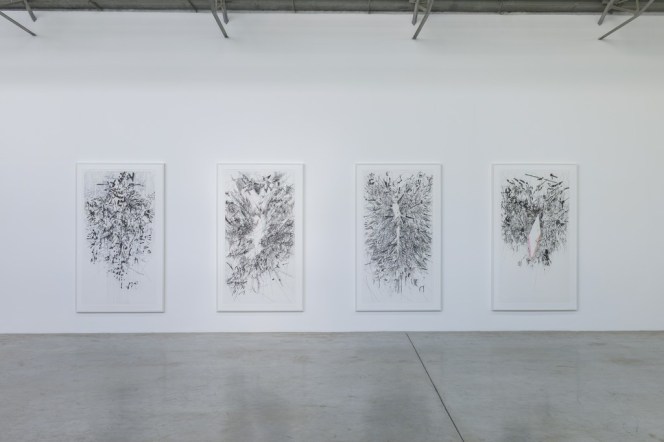
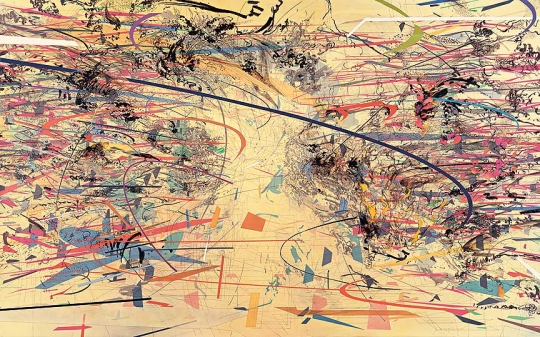
Julie Mehretu

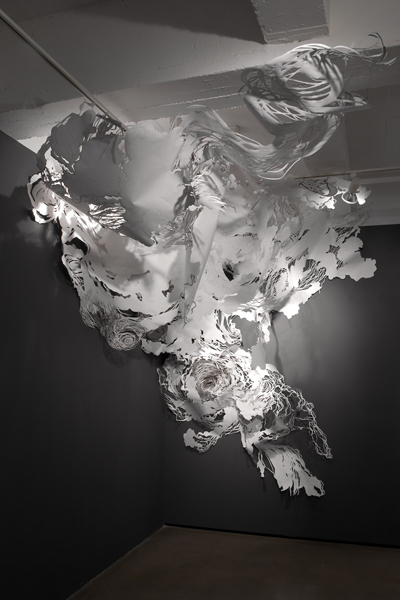
Mia Pearlman

Pearlman got her BFA from Cornell University in 1996. Most of her works are non-representation and freeform. The drawing was done with India ink on roll paper. She cut out the negative shapes between lines which guiding to the next cut. Her work process is very spontaneous. Because she doesn’t want to end up recreate the work like the way the might end end in her studio, the installation is mostly done in the gallery space intuitively. If the work needs to be transported, she would roll them with the drop cloth and fit them in a tube to check with her baggage. She hasn’t had any sketches of how the installations should turn out. However, she would measure the dimension of the space and work from there instead. The works are in a quite large scale in order to represent the idea of bigger forces or powers, including her inspiration from nature, in the universe.


These are some examples of Pearlman’s works

Pearlman_EDDY_full2.jpg

Mia Pearlman, EDDY, 2008 11′ x 12.5′ x 14′ Sears Peyton Gallery, NY


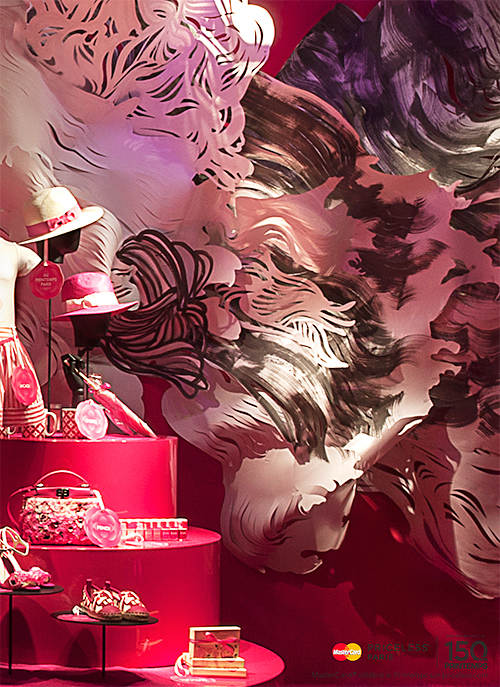
Printemps_det_rt.jpg

Mia Pearlman, Printepms window, 2015


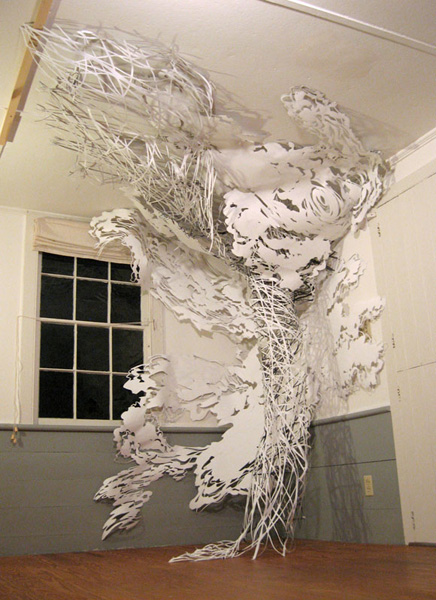
tornado_right2_600.jpg

Mia Pearlman, TORNADO, Paper, india ink, tacks
52″ W x 84″ H x 54″ D, 2007

Official website

http://miapearlman.com/index.htm

Val Britton

18479841831_7e2e051687_z

Val Britton, Deluge, Site-specific installation of hand cut and laser cut paper, ink, and thread Dimensions variable Install views from the exhibition “Passage” at Gallery Wendi Norris, San Francisco, CA, 2014,  Photographs by Johnna Arnold Photography.

Val Britton was born in Livingston, New Jersey. She completed her undergraduate degree at Rhode Island School of Design in B.F.A and received her M.F.A. from California College of the Arts. She currently lives and works in San Francisco, California. Britton has received the Pollock-Krasner Foundation Grant and participated in residencies and fellowships. The artist also has solo and group exhibitions throughout the country. Her recent show is at San Jose Institute of Contemporary Art, Foley Gallery (New York), and Gallery Wendi Norris (San Francisco)

Britton works with collage on paper to create her own abstraction of maps that related back to her own personal experience and relationship with her father. She uses abstraction in her works as a way to explore, what she called “psychological and emotional spaces.” She has brought the drawing from a two-dimensional into a three-dimensional space by using collage materials and cutting into the ground paper of work as a goal to create the movement through space and emotional impact. (Britton 2000-2016)

Here are some examples of her works

8568976255_b7378fe290_z

Val Britton, Lines Unbroken (for E.M.) Graphite, ink, watercolor, and collage on paper
54″ h x 72″ w., 2013

8762980540_00fe575563_z

Val Britton, Tracks, Graphite, ink, tempera, and collage on paper
52” h x 52” w. 2013

14199933728_13f73479c7_z

Val Britton, Reverberation #24 (detail) Ink, collage, and cut paper
30” h x 30” w (paper size), 2014


http://valbritton.com

Photographs by Johnna Arnold Photography.

Britton, Val. “Biography.” Statement. Http://valbritton.com, n.d. Web. 23 Jan. 2016

JANET ECHELMAN

a

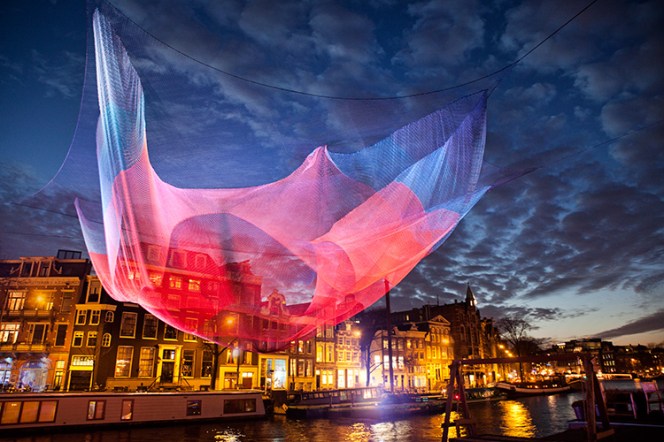
Janet Echelman, 1.26 AMSTERDAM, NETHERLANDS, Sculpture Project at the Amsterdam Light Festival, December 7, 2012- January 20, 2013
Janet Echelman started her career as an artist after graduating from Harvard. She moved to Hong Kong in 1987 and completed a study in Chinese calligraphy and landscape painting then moved to Bali, Indonesia. Echelman had cooperated traditional textile methods with contemporary painting.  She’s spent several years working, living, and traveling in Asian countries. From there Echelman’s works were discovered and purchased by Robert Rauschenberg. She has created large scale sculptures as a living environment that we could be a part of. Artist uses unusual materials in the artworks to emphasize on environmental forces like wind, water, and sunlight. Echelman also created public art and collaborated with artisan such as fishermen in a series of netted sculpture. Her sculptures are a combination of cutting edge technology, public art, and urban transformation as a goal to create diversity in different cities and environment. There are some concerns about birds and wildlife regarding her large scale sculptures. However, she said that the team including herself have cautiously discussed the process and idea before asking for construction permission that her artworks will not harm the animals.

artwork examples

LDN_Echelman_PhotoEmaPeter_1091

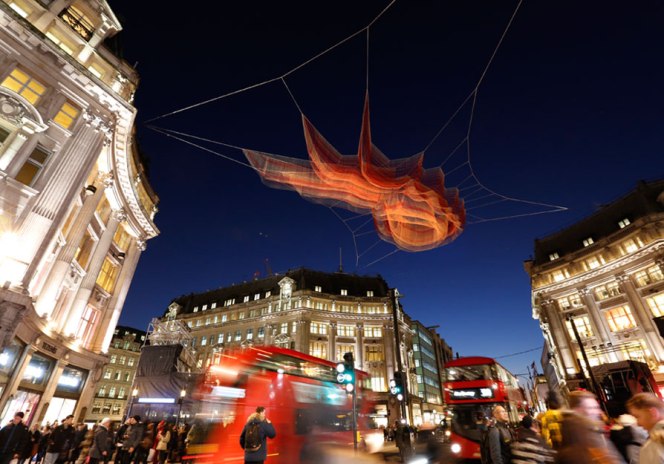
Janet Echelman, 1.8 LONDON, UK, Fiber, Buildings and Sky combined with Colored Lighting, Wifi, and Interactive Computer Programming. Fibers are braided with nylon and UHMWPE (Ultra high molecular weight polyethylene)Dimensions of net: 100 ft. length x 45 ft. width x 20 ft. depth
Installation Dimensions: 180 ft. length x 180 ft. width x ft. 70 height, 2016 

VAN_Echelman_PhotoClaytonBinkley_Nate-on-the-net_edit

Janet Echelman, SKIES PAINTED WITH UNNUMBERED SPARKS, VANCOUVER, CANADA, Twisted nylon, braided polyester, Honeywell Spectra fiber, and interactive, colored lighting, Dimensions of Net: 300 ft. length x 110 ft. width x 40 ft. depth, Installation Dimensions: 745 ft. length x 475 ft. width x 175 ft. height,  2014


Echelman, Janet. “Biography.” http://www.echelman.com. N.p., n.d. Web. 23 Jan. 2016.