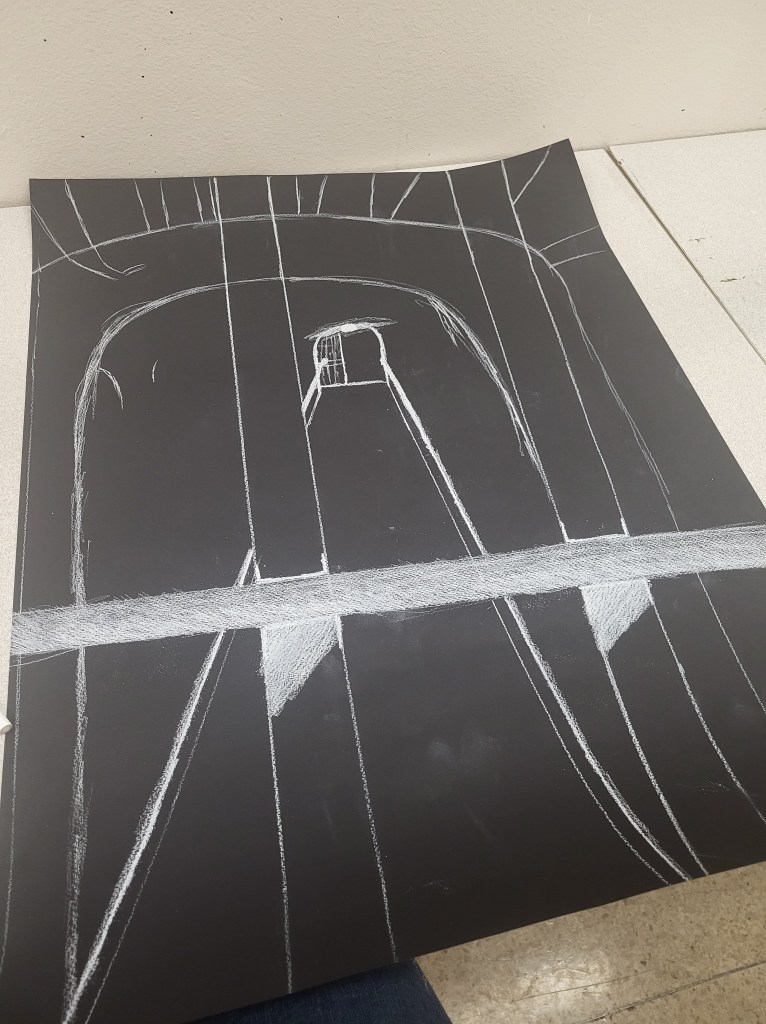
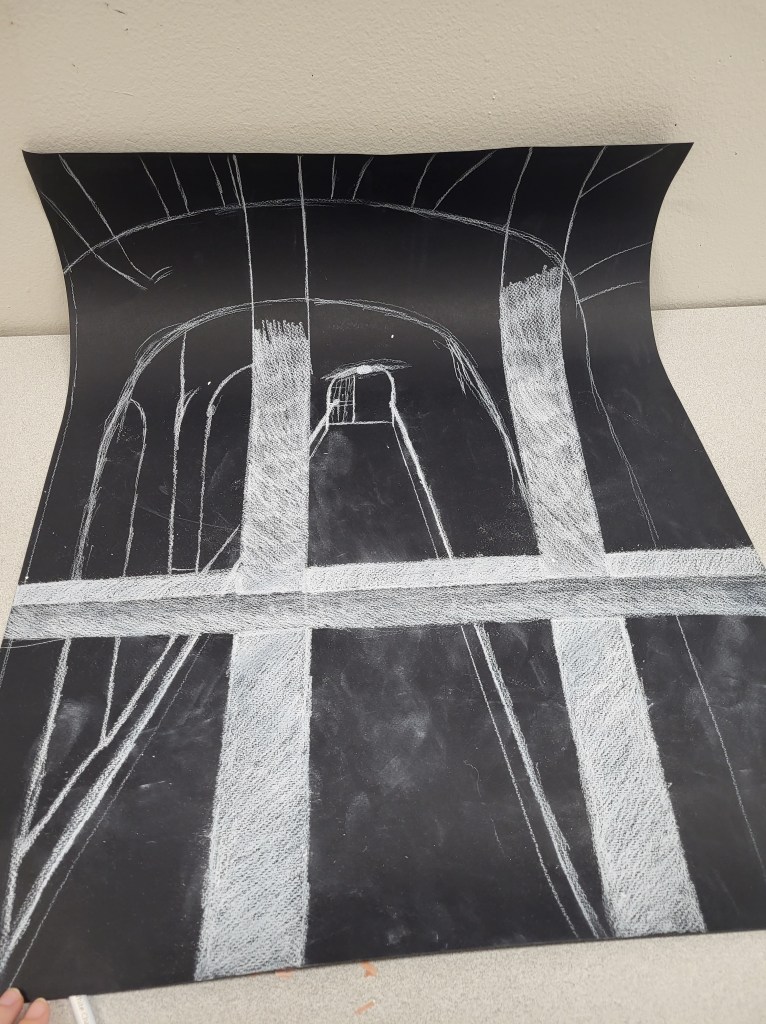
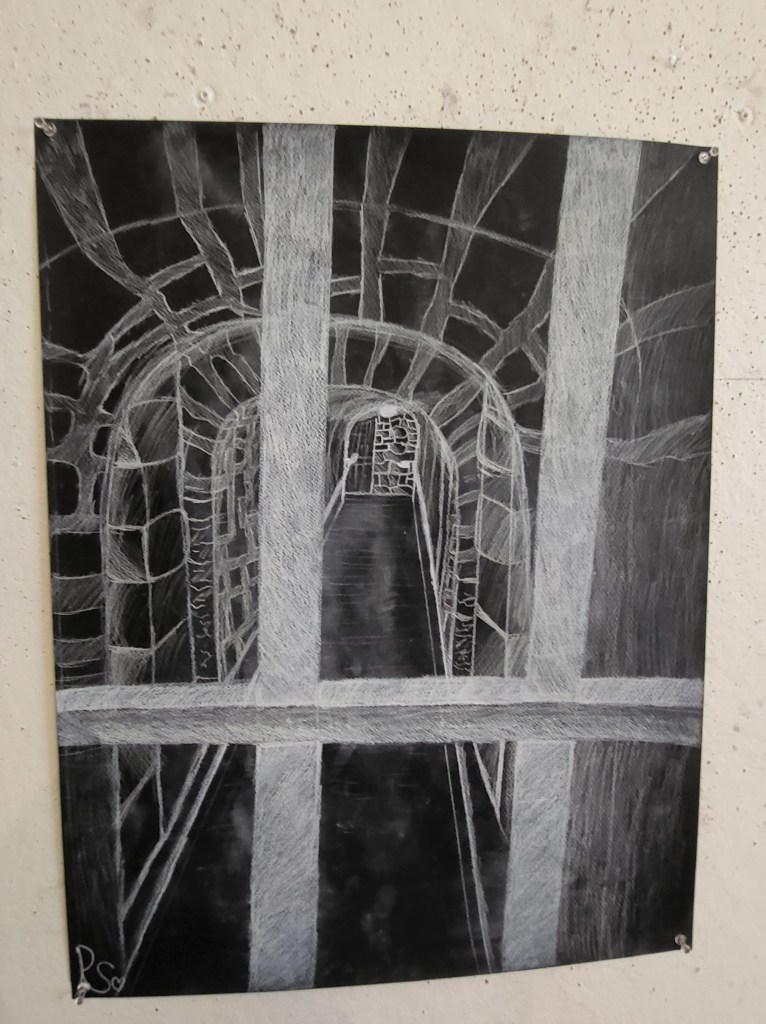
For my final project, I knew I wanted to do something that was easier for me but was fun for me as well. And since drawing in general is what I love doing best, I decided to do a Atmospheric Perspective project. Now my idea for it was to use black paper instead of white, since I already used white paper for the first assignment that we did that was about Atmospheric Perspective. However, when it came to the image, I wanted to pick something that had both light and darkest to fit the paper color well. After picking a good picture, and buying white colored pencils, I finally started drawing the outline of the image.
However, I did run into some trouble with the colored pencil getting all over the black paper, but that was luckily just an easy fix. After the next few days of coloring in parts white, shading other parts, and erasing mistakes I finished my drawing.
I’m personally happy with how it turned out, but I can always do better and work harder on the few issues I had. Maybe one day I’ll redraw this image just to see how my art skills change over time.
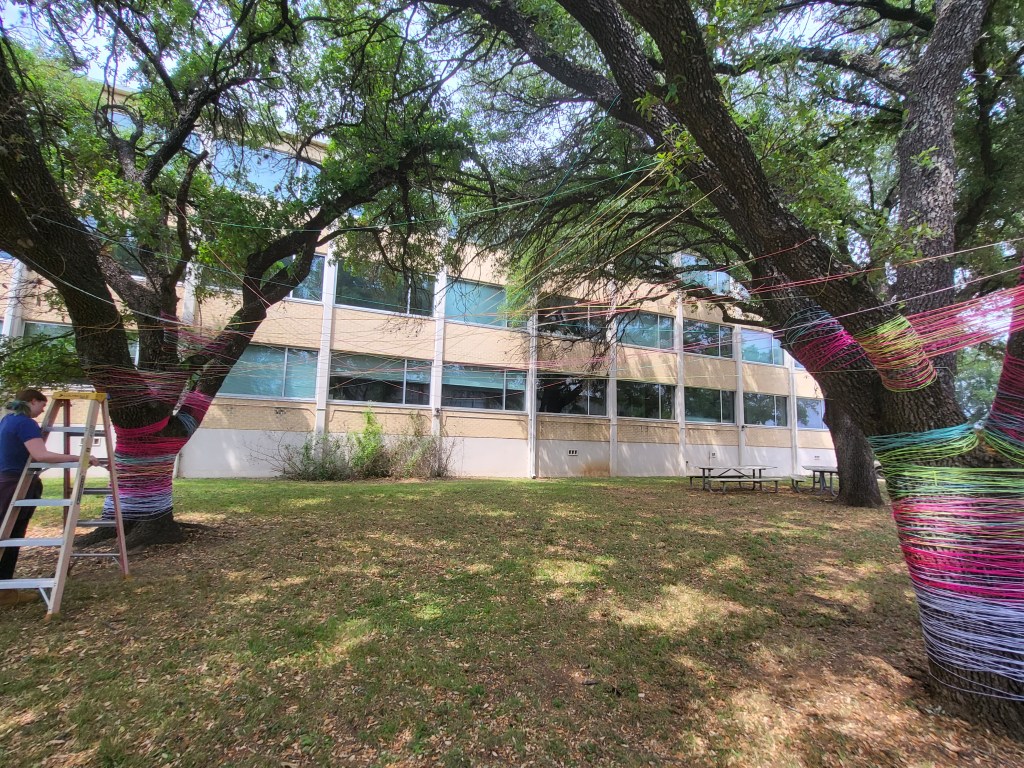
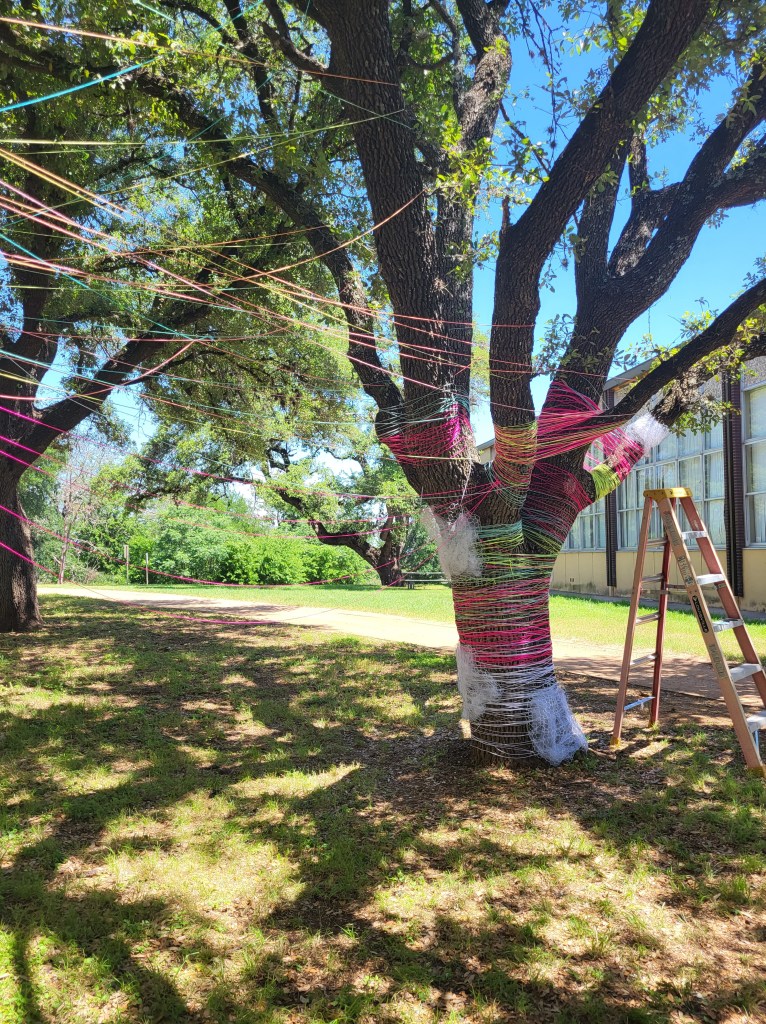
Before we could begin our project, we had to find two trees that were close to each other and tall enough to wrap yarn and lights around the branches. However, we had to find trees that were close to the fine arts building, since we couldn’t go out too far. After we decided on which trees to use, we started wrapping yarn around each tree.
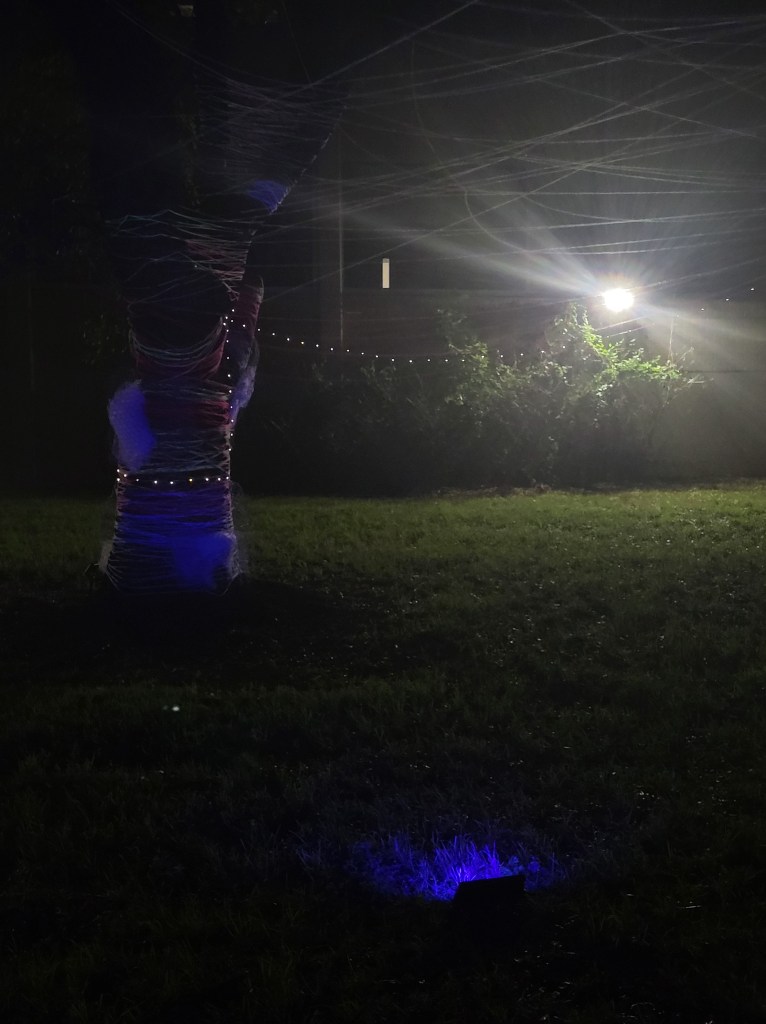
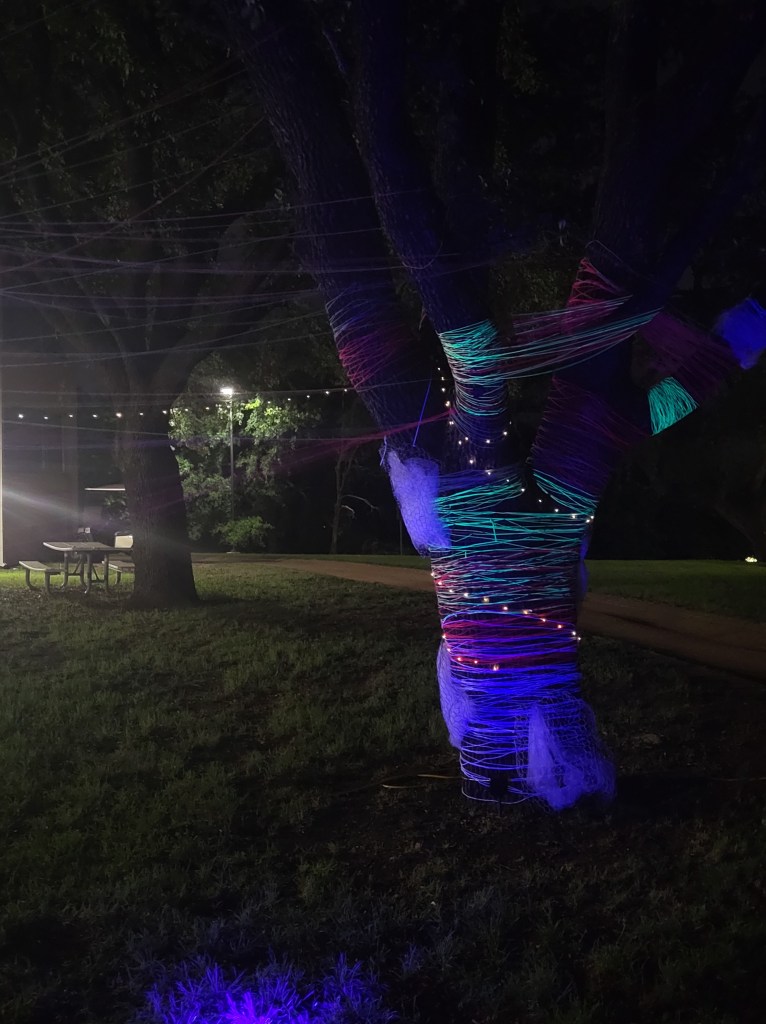
Some of the yarn was neon, so that when we finally plugged in the black lights they would glow in the dark and give more light. Once we wrapped yarn around the tree’s trunk, I decided I would throw the yarn around some branches to make a crazy fun web. I got the yarn stuck a few times, but with the help of my teammates we got it out (No yarn was injured during this project).
Once we were done with the yarn, we started making the chicken wire shapes and spray painted them white. Once they were done drying, my teammates placed each one on a different side and angle of both trees while I gave them yarn to wrap around the shapes to keep them steady. After that, we wrapped the lights around the tree branches and trunk and connected them together in the center of the yarn. And lastly, we plugged in our black lights inside the fine arts building and tested them out to make sure they worked. But as a bonus, for the past few days, I’ve been making sure no one stole the black lights or took the lights and yarn off the trees. I’ve also tested the black lights at night with one of my teammates. My team and I are proud of how this project went, and I hope it doesn’t immediately get taken down once the semester is over.
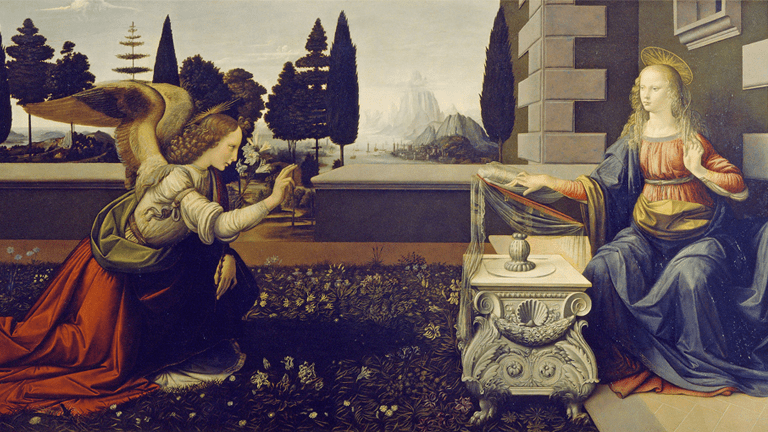
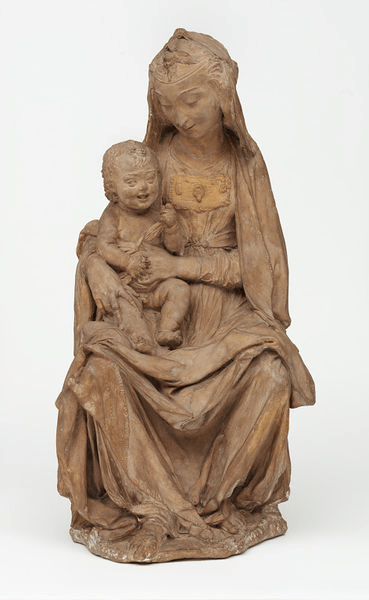
Leonardo was born on April 15, 1452 and died May 2, 1519 due to a stroke. He was an Italian polymath of the High Renaissance, who was active as a painter, engineer, scientist, sculptor, and architect. Leonardo first gained attention for his work on the Baptism of Christ, painted in conjunction with Verrocchio. Around in the 1480’s, Leonardo received two very important commissions and commenced another work that was of ground-breaking importance in terms of composition. Two of the three were never finished, and the third took so long that it was subject to lengthy negotiations over completion and payment. One of these paintings was Saint Jerome in the Wilderness, which Bortolon associates with a difficult period of Leonardo’s life, as evidenced in his diary, “I thought I was learning to live, I was only learning to die. ”
His artwork is one of my favorites when it comes to very old artists from history. It’s so realistic to me, that it feels like I’m actually looking at a real photo of someone/people. It’s sad that he died too soon and didn’t continue to creative many more paintings, sculptors, and drawings for the world to see.
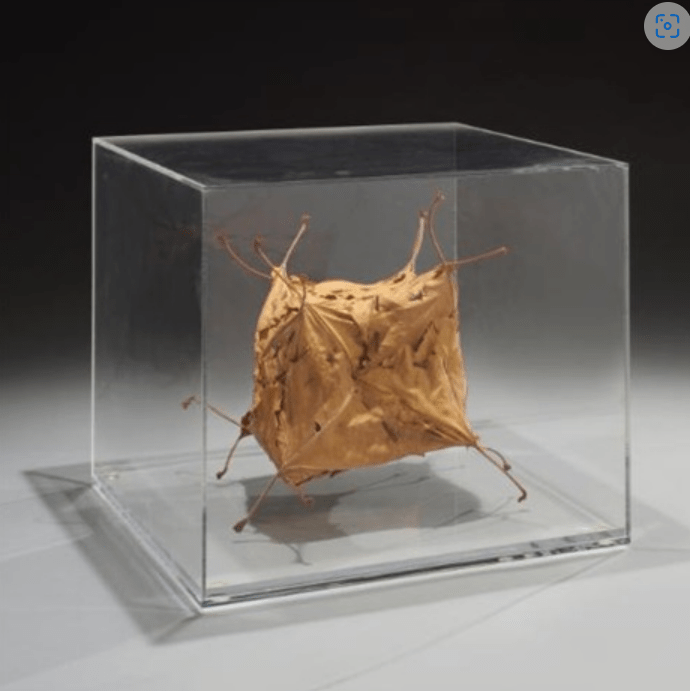
Andy was born on July 26, 1956 in Cheshire, United Kingdom and is 66 years old. He’s an English sculptor, photographer, and environmentalist who produces site-specific sculptures and land art situated in natural and urban settings. Working as both sculptor and photographer, Goldsworthy crafts his installations out of rocks, ice, leaves, or branches, cognizant that the landscape will change, then carefully documents the ephemeral collaborations with nature through photography. “It’s not about art,” he has explained. “It’s just about life and the need to understand that a lot of things in life do not last.” In his teen years, he worked as a farm laborer in rural England before going on to study art at Bradford College of Art and later Preston Polytechnic. In 1985, the artist moved to Scotland where he began producing work. Goldworthy’s works are held in the collections of the Courtauld Institute of Art in London, the Storm King Art Center in Mountainville, NY, and the National Gallery of Art in Washington, D.C, among others. The artist currently lives and works in Dumfriesshire, United Kingdom.
Nike was born in 1964 and is 59 years old. She a leading contemporary artist from Australia. Trained as a painter, Savvas works fluidly across sculpture, installation, kinetic and light-based media. Her conceptually grounded works draw inspiration from a range of references including film, painting and systems logic. Savvas’ work is held in many public collections including the Art Gallery of New South Wales, Auckland Art Gallery; Toi Art Te Papa Tongarewa, Wellington; Museum of Contemporary Art, Sydney and so much more. In 2012, Leeds Art Gallery (UK) showcased Savvas’s work in a major survey show titled ” Liberty and Anarchy”. In 2005, she was included in the historic exhibition Visual Music at the Museum of Contemporary Art, Los Angeles. Savvas’ inclusion represented a significant development in the history of visual music. Savvas was the recipient of a Jury Prize (Gold Medal) 11th Triennale of India, Dehli, The Anne and Gordon Samstag International Visual Arts Scholarship, the A.C.T. Creative Arts Fellowship, and an Australia Council Fellowship.
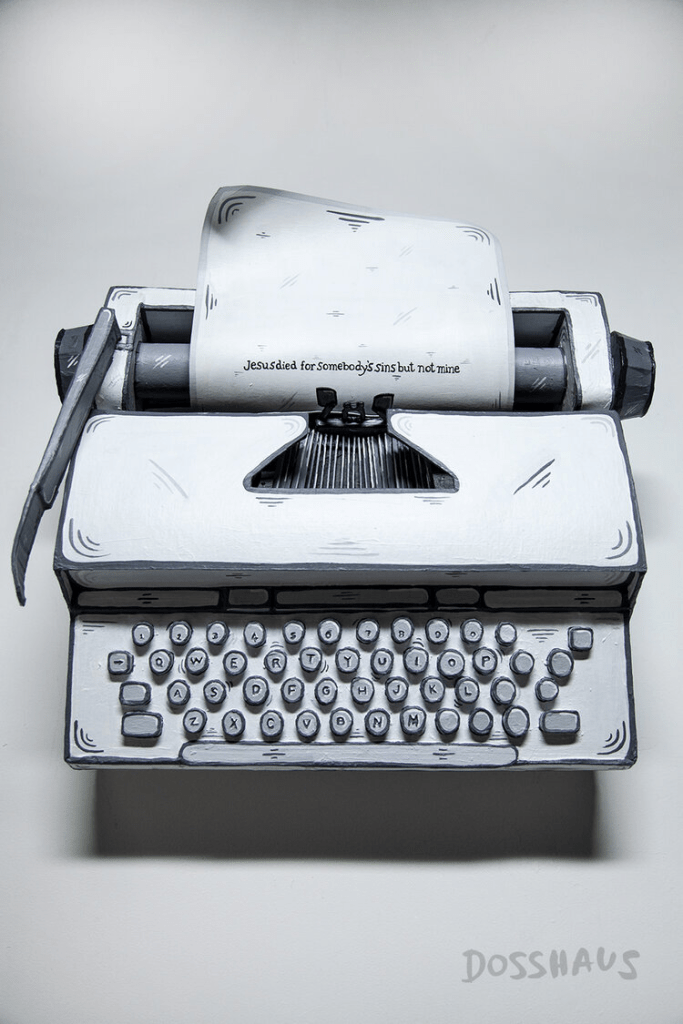
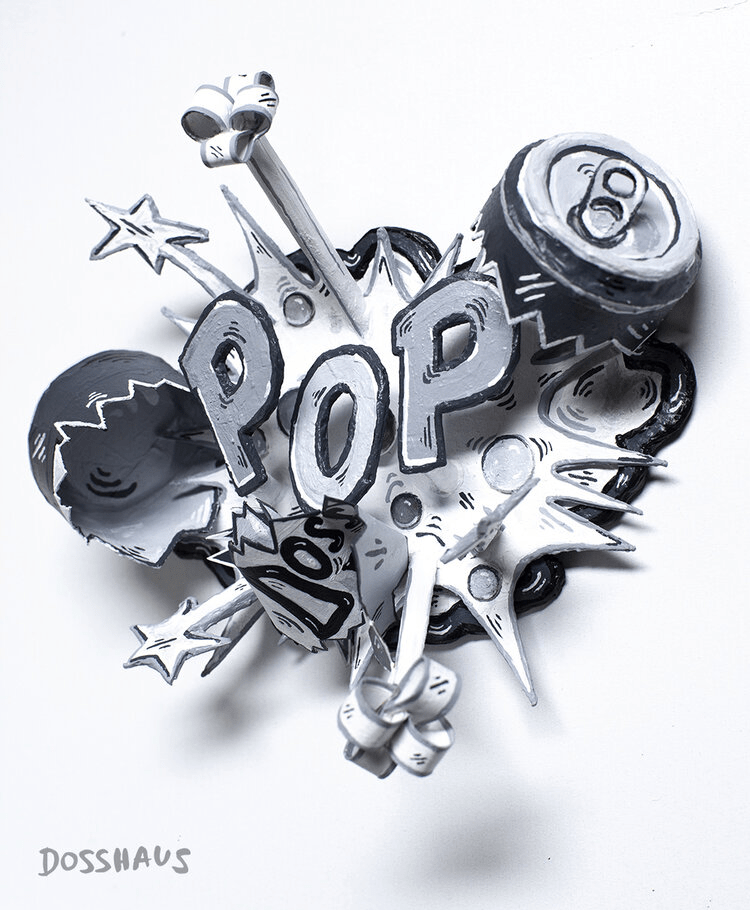
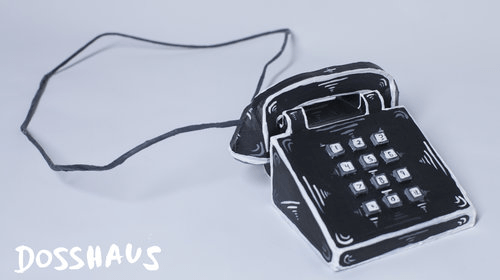
There’s not much I can find on Dosshaus when it comes to his age, where he’s from, and where he was born in. However, what I do know, is that he’s an art collective founded in 2011 and the nom de guerre of David Connelly. Created in response to a society saturated with social media-generated images in which reality itself seems all the more relative, Dosshaus uses recycled cardboard, paper, and acrylic to create its own highly idealized universe. He also has his own art exhibits at Oceanside Museum of Art and Torrance Art Museum. As awards go, he won in outdoor sculpturing at Lucca, Italy on August 2018. No more awards sadly. As for what kind of art he does besides sculptures, he does installations, performance art, fashion, film, video, and record and posts them on his Twitter, Instagram, YouTube, and Facebook.
I personally think his sculptures are so creative and artistic. It’s like as if I’m actually looking at a live action cartoon of certain objects that we usually see and use. I’ve never see anything like this before, so it’s kind of special.
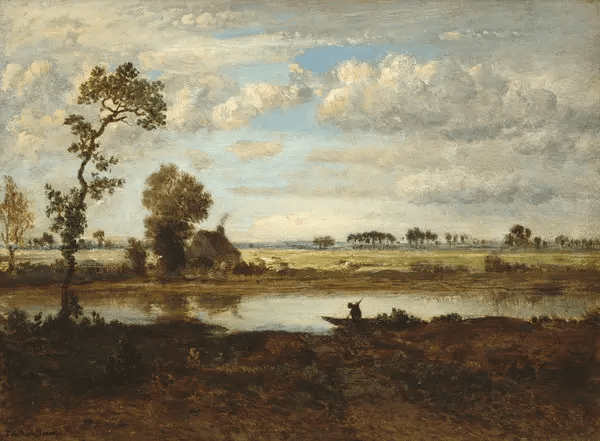
Theodore was born on April 15, 1812 in Paris, France and died December 22, 1867 in Barbizon, France. He was a French painter of the Barbizon school and at first he received a basic level of training, but soon displayed aptitude for painting. Although his father regretted the decision at first, he became reconciled to his son forsaking business. Rousseau’s pictures are always grave in character, with an air of exquisite melancholy. They are well finished when they profess to be completed pictures, but Rousseau spent so much time developing his subjects that his absolutely completed works are comparatively few. He left many canvases with parts of the picture realized in detail and with the remainder somewhat vague; and also a good number of sketches and water-color drawings.
In my opinion, his paintings look beautiful and like as if they could be a real photograph. I don’t know why he painted so many with trees, but it might be because he loves natures or just trees in general.
Group Members: Laramie Torres, Reagan Stevens, Beth Davis
When assigned the project on Tuesday, we decided to walk around to look for a place we could install our project in. After some time, we found a perfect place we all liked in Equity Hall’s stairwell. From there, we needed to think of ideas on what we could put there, so we agreed to bring back ideas and concept sketches we thought we could do for our projects next class on Thursday.
By Thursday, we came together to show off sketches and share ideas of what we could do. Laramie had ideas for using Q-Tips to make them into interesting snowflake designs that could hang. Beth had an idea for a cage with a figure hanging inside it. Since both Laramie’s and Beth’s ideas included hanging elements, we combined both to have this icy-cold theme with the cage, figure, and snowflakes hanging together.
We started off making the cage out of heavy-duty wire, and we let Beth lead this part since it was her idea for the cage. The three of us made a large wire base and a lot of time was spent cutting and twisting pieces together. We only got a cage base going by the end of class.
The following week on Tuesday, we continued working on building the cage by adding more bars with thin wire pieces. Then, at the top of the cage, we tied all the wire bars together to create a centerpiece and loop of the cage where it will hang from. After that, we all decided to integrate a hula hoop at the base to make it more round and sturdy, and we used thinner wire to secure it together. Towards the end of class, Laramie agreed to start making some of the Q-Tip snowflakes and we all agreed to have the whole project done by the end of class on Thursday.
On Thursday, Laramie brought two snowflake designs along with the pack of Q-Tips, tape, and super glue to work on making more snowflakes during class. Laramie helped to add a smaller base towards the top with a silicone tube to help the cage to remain round and sturdy. Afterward, Reagan agreed to help Laramie with making the snowflakes and Beth agreed to get started on the figure. We initially planned to have a full-body figure inside, but due to time, we decided to not include legs. The pose of the figure was inspired by images from google, and we thought it would be a good idea to have the figure reaching up and holding itself up from the top of the cage. By the end of class, the project was pretty much finished and all that was missing was to give the figure more volume and install it in the Equity Hall stairwell. We coordinated and agreed to set it up the next day on Friday around 1:30 pm.
On Friday, Beth came in earlier to do some final touches before installation. Beth took a ball of blue yarn she had laying around to go with the icy theme and wrapped it around the wire figure several times to give it more volume/further develop the body. She also used some silver ribbon and let it hang off the bottom of the figure to give it more expression. In certain spots like the arms, it was difficult to get the yarn to lay the right way, but in the end, it came together and we were satisfied with the result. Once everything was good to go, we all headed to the Equity Hall Building as planned but unfortunately we ran into a problem with the ladder. It was too small for Beth to hang up our project, so she had to return to the Fine Arts Building to get a taller one. After hanging up the cage and tying on the snowflakes, the project and installation were finally completed.
This project was a lot of trial, error, and discovery; we ran into problems with the extremely thick wire frame we made, finding the best way to hang it, and there was a lot of experimentation with what materials would work best to achieve our goal. In the end, we worked well as a team to problem-solve and create an experimental piece that we were happy to show.
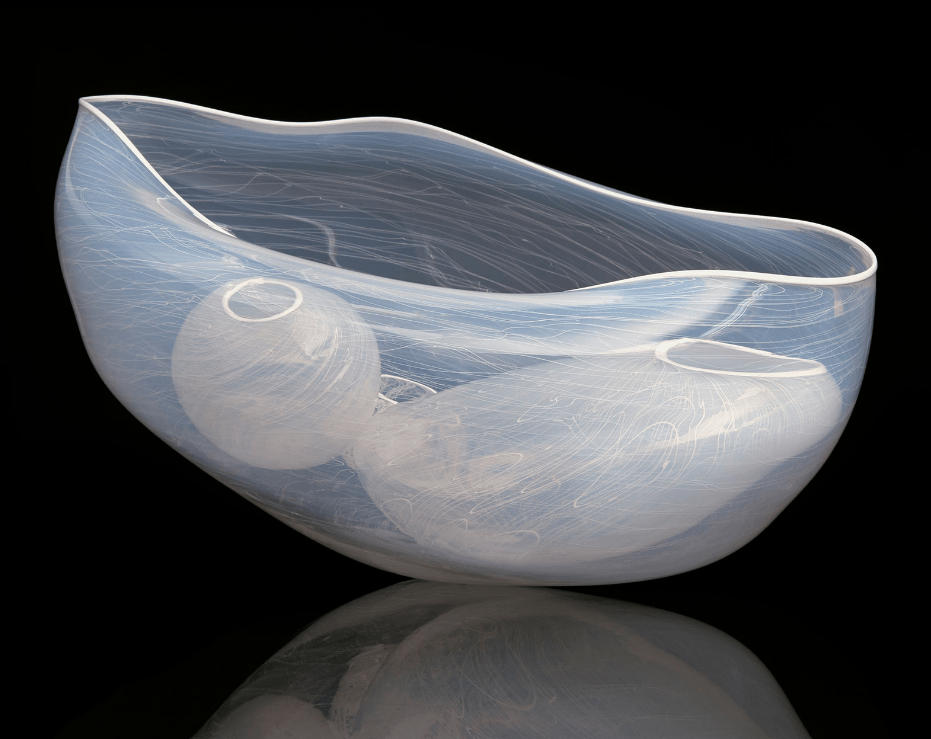
Dale Chihuly was born on September 20th, 1941 in Tacoma and is still alive today at the age of 81. He’s an American glass artist and entrepreneur. He is best known in the field of blown glass, “moving it into the realm of large-scale sculpture”. However, in 1976, while Chihuly was in England, he was involved in a head-on car accident that propelled him through the windshield. His face was severely cut by glass, and he was blinded in his left eye. After recovering, he continued to blow glass until he dislocated his right shoulder in 1979 while bodysurfing. No longer able to hold the glassblowing pipe, he hired others to do the work. Chihuly explained the change in a 2006 interview, saying “Once I stepped back, I liked the view”, and said that it allowed him to see the work from more perspectives, enabling him to anticipate problems earlier.
Personally, I really love his glass artwork. Working with glass is dangerous, but it sure does look pretty and colorful.
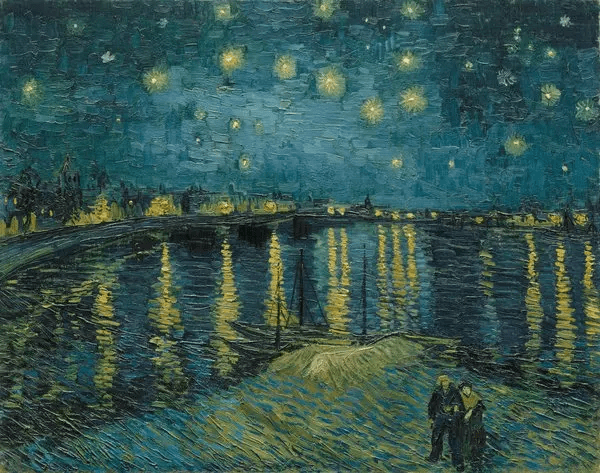
Pretty sure everyone is familiar with him, but Vincent van Gogh was born on March 30, 1853 in Zundert, Netherlands and died on July 29, 1890 in Auvers-sur-Oise, France from a gunshot. At the time, no one actually knew why he shot himself, but sometime later people figured it was because he had depression. As for his artwork, he’s mostly known for painting the starry night, cafe terrace at night, wheat field with cypresses, and his series of sunflowers. In a decade, he created about 2,100 artworks, including around 860 oil paintings, most of which date from the last two years of his life. And for someone who wasn’t that popular back then with his paintings, he was very talented and his art to this day is loved by so many people around the world. If you ever want to see some, there are a lot of museums around the world that have his paintings. As for buying, you can get cheaper and smaller versions on amazon or other websites.














 drawing into space