Yarn Glow Trees- Team Project

  • Describe the project, planning phase, building/making phase, and final result.
  • Add images related to the above.
  • Include a sentence or two about your personal contributions to the project.

The team project was all about neon, vibrant colors surrounding the tree. We started by figuring out what supplies and where to put the yarn. Most of the project was wrapping the tree limbs and tree core in string. The layers of string started to slowly build up and become more solid. The two trees were then connected by connecting a piece of string to each side limb, creating a net of yarn in the center. I was in charge of finding what materials we were going to need and helped cover the trees in string.

The Incident of Contemplation

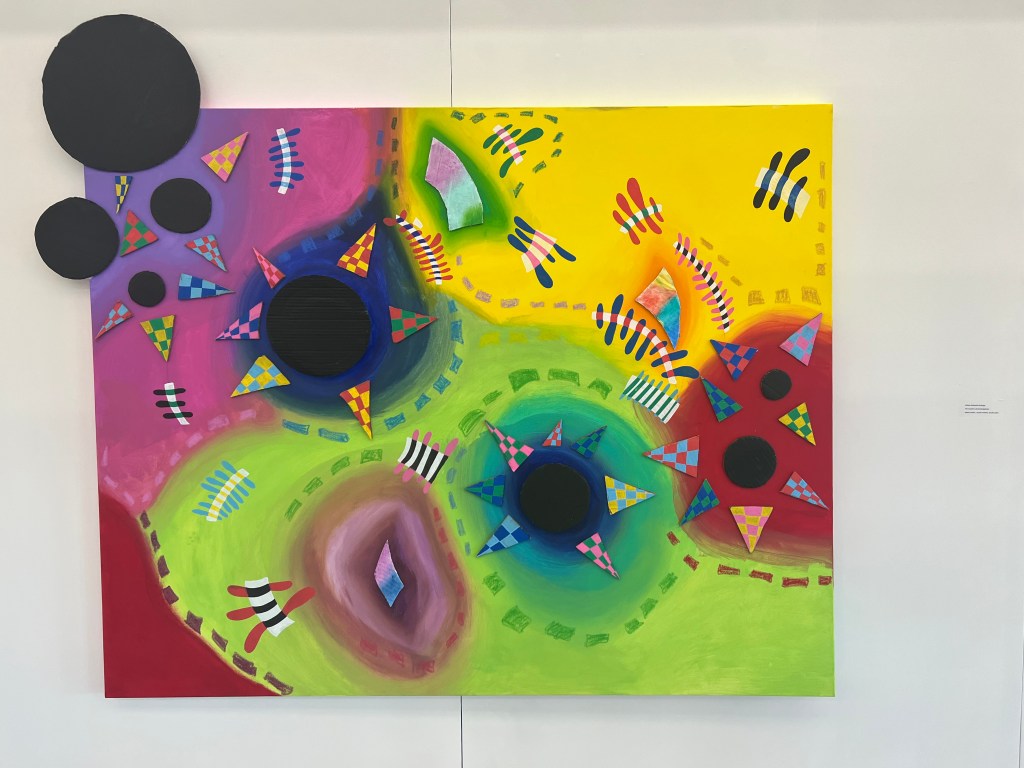
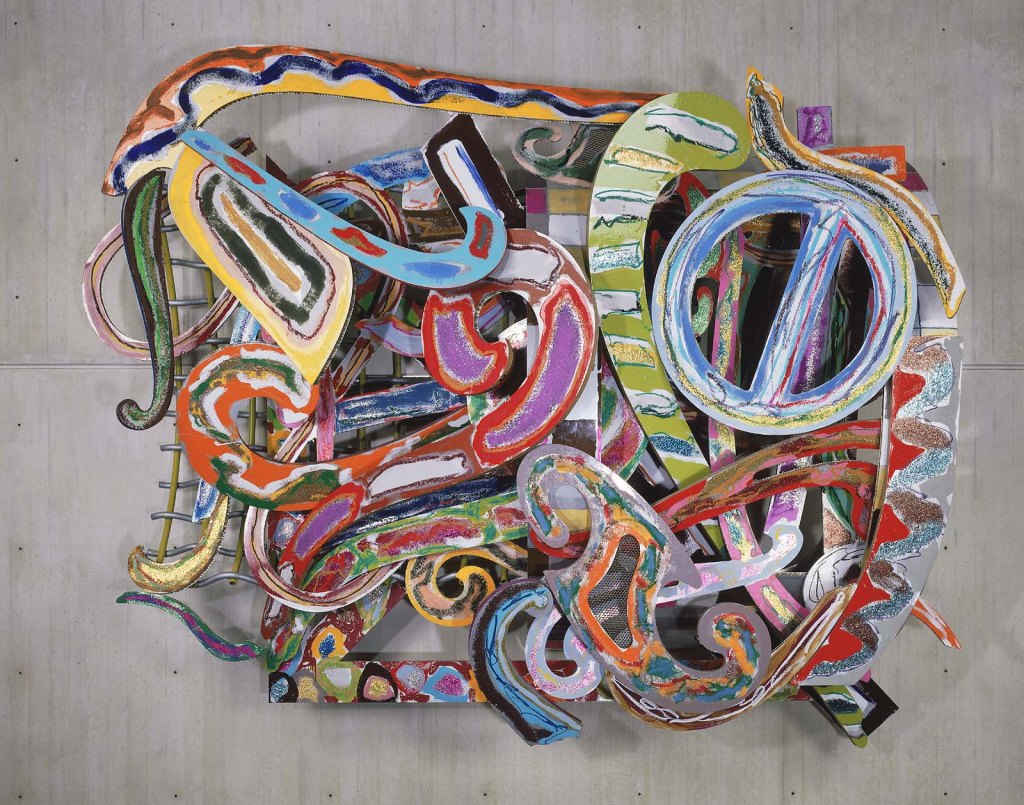
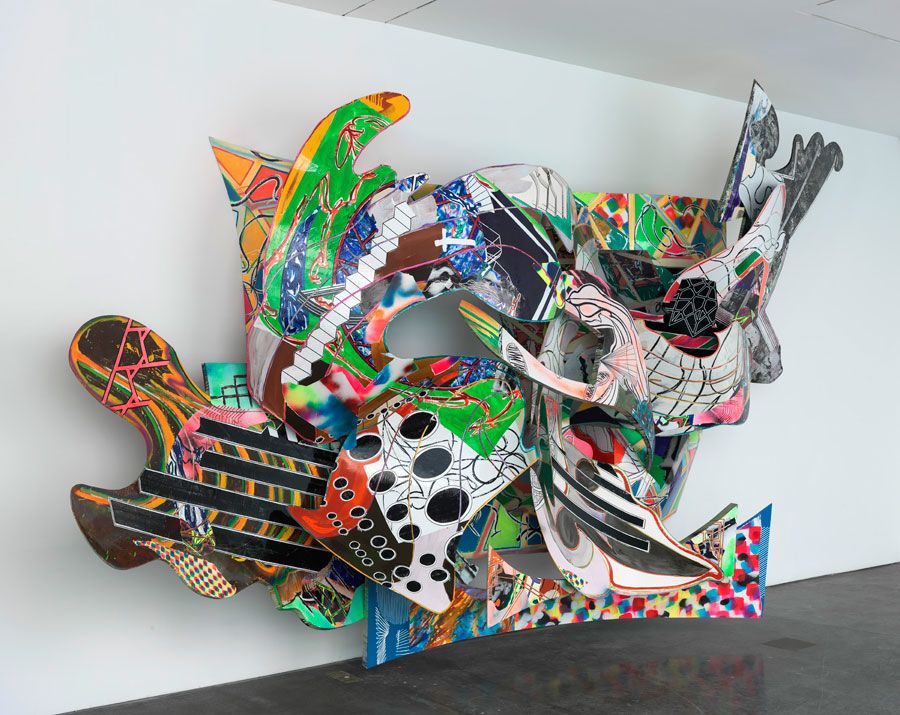
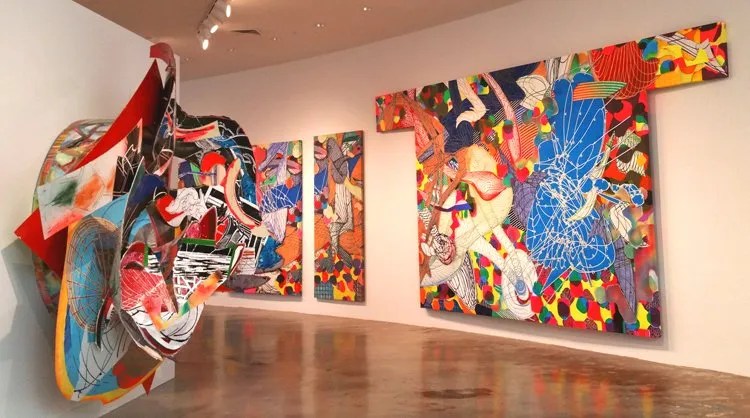
My project was inspired by Frank Stella’s many cardboard sculptures. (Please look them up they’re amazing!) When I look at them it almost feels like something I can’t explain. There are pops of colour and pattern in his work that are so vibrant and captivating. I wanted to try and go for a similar vibe/feeling for my personal project.

I started out by cutting up the cardboard into triangles, circles, and rectangular curved shapes. I then used acrylic marker to color the squares with a checkerboard pattern. For the rectangular shapes I used oil pastel over white acrylic paint. After the cardboard material was gathered, I painted the entire background by blending different acrylic paint together. Taking the cardboard I glued it down proportionally. The last step was painting on the abstract shapes on the canvas.

To align with what we learned in class, I used cardboard to create some 3D aspects to the canvas. On the right corner, the cardboard extends out from the canvas as well. Doing research projects in this class helped me find new inspirations for my own work and see the process of different successful artists. My project seems to be pretty successful in my eyes but there are some changes I would make. Overall, I think there are too many empty spaces that could be filled in with more abstract details and color. I did want to add more but maybe should have taken more time to dedicate for the project.

Ivana de Vivanco

Ivana De Vivanco is a Chilean sculptor and installation artist. She was born in Santiago, Chile, in 1981 and currently resides in Berlin, Germany. De Vivanco’s sculptures are mainly made from materials such as wood, metal, resin, and ceramics. Her works often incorporate elements of nature, such as branches, leaves, and stones, and explore themes related to ecology, anthropology, and the human relationship with the environment. De Vivanco’s installations often involve the use of light and shadow to create a sense of depth and movement within her sculptures. De Vivanco has exhibited her work in numerous solo and group exhibitions in Chile, Germany, Switzerland, and the United States. She has also been the recipient of several awards and grants, including the DAAD scholarship for artists in Berlin and the Fondart National Fund for Cultural Development and the Arts in Chile.

Cartesian Banana, 2022

Glazed ceramic, metal chain, synthetic hair

39 × 6 in | 99.1 × 15.2 cm

The Return of the Repressed, 2022

Glazed ceramic, metal chain

55 × 24 × 44 in | 139.7 × 61 × 111.8 cm

Ofrenda, 2022

Oil on canvas, metallic chains, gilded glazed ceramic (gold 12%), gold-plated silver rings, soil.

51 1/5 × 39 2/5 × 1 3/5 in | 130 × 100 × 4 cm

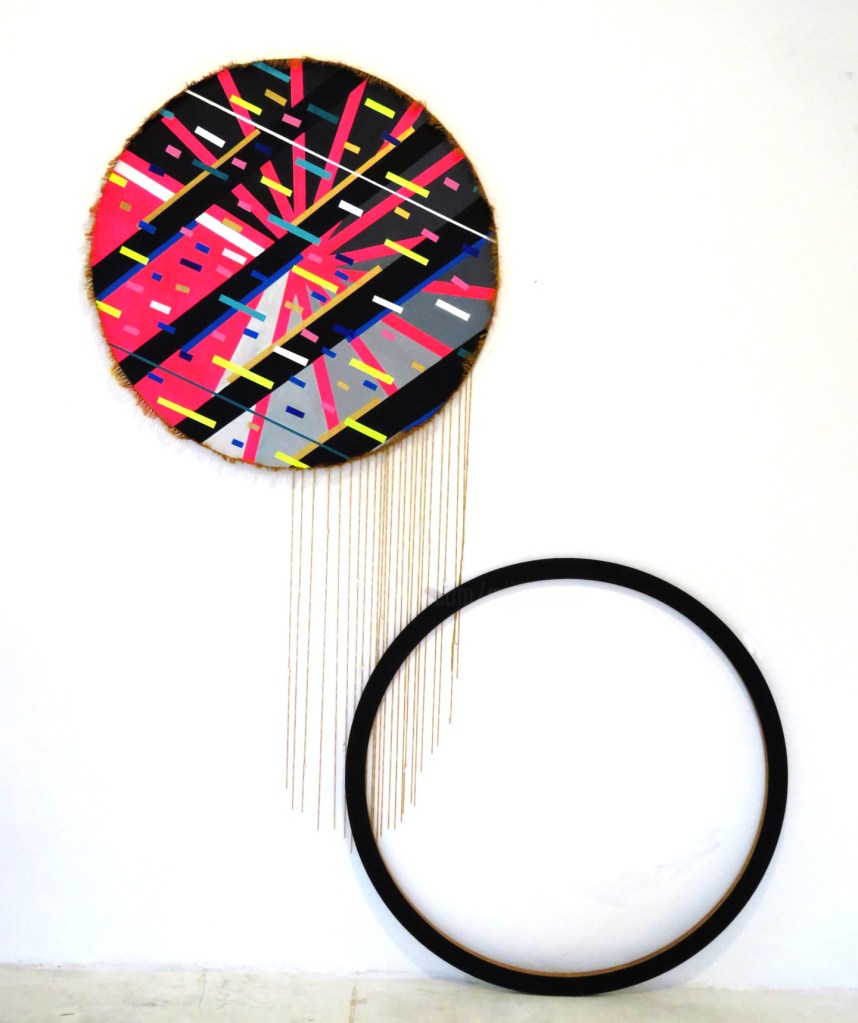
Mijal Zachs

Mijal Zachs is a contemporary Mexican artist. He was born in Mexico City in 1978 and is known for his abstract paintings and sculptures. Zachs studied fine arts at the National School of Fine Arts in Mexico City and has exhibited his work in various galleries and museums in Mexico and abroad.

Zachs work often explores themes of identity, memory, and the relationship between human beings and their surroundings. He creates intricate and colorful abstract compositions that incorporate a variety of materials, including paint, wood, and metal. Zachs’ work has been described as both visually striking and conceptually complex, inviting viewers to engage with a range of emotions and ideas.

In his sculptures, Zachs works with a range of materials, including wood, metal, and found objects. He is known for creating large-scale sculptures that incorporate intricate patterns and shapes, often using repetition and layering to create a sense of movement and depth.

See more of his work here:

https://www.mijalzachs.com/?pgid=kml9pjrl-4d9add30-bb29-4809-9210-5effc2f6e2a5

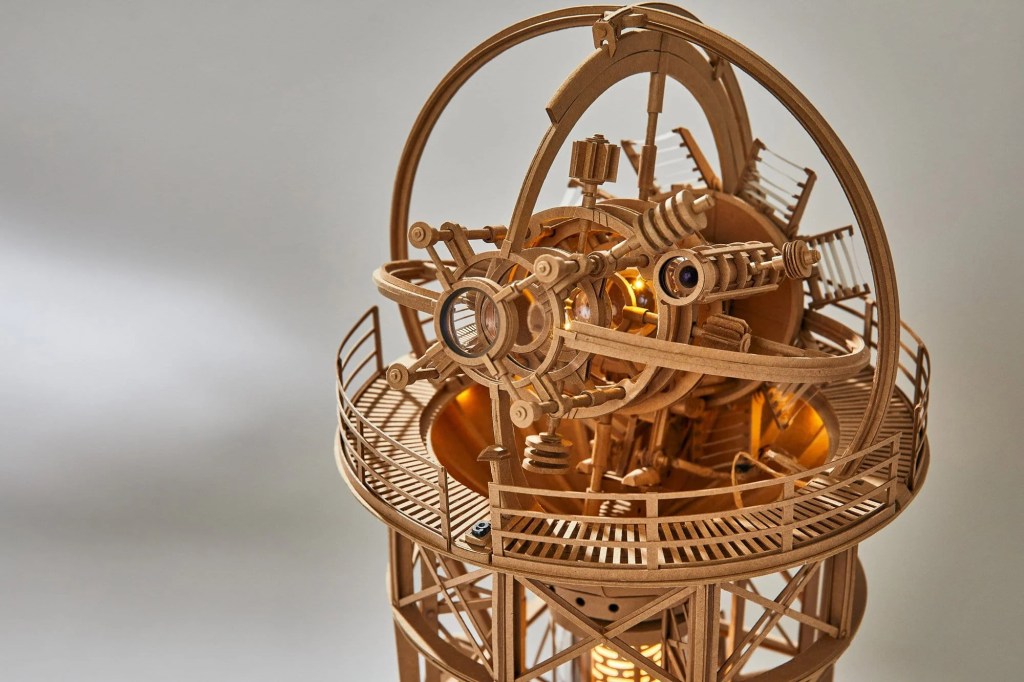
Greg Olijynks

Greg Olijynks is an artist that utilizes cardboard as his medium. He is a Canadian artist who is known for his intricate sculptures and installations made out of cardboard. His works often depict retro-futuristic or science fiction-inspired landscapes and cityscapes, and he uses cardboard to create a sense of nostalgia and playfulness in his art. Olijnyk has exhibited his works in galleries and art fairs around the world, and his art has been featured in publications such as The New York Times and Wired.

In addition to his cardboard art, Olijnyk has also worked as a graphic designer and illustrator. He has created album covers, posters, and other graphics for a variety of clients. He has won several awards and honors for his work, including the Toronto Arts Foundation’s Emerging Artist Award in 2016.

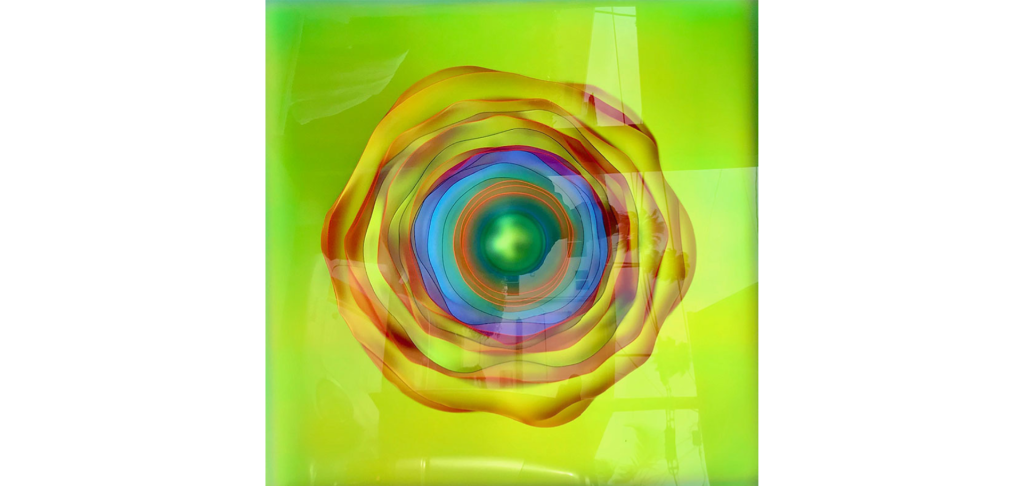
RP#5- C Dutch

C Dutch, born in 1957, is a Southern California Contemporary Artist. He makes sculptures and paintings. Some of his materials include array discs and polymers. He has spent his artistic life exploring and experimenting with light. His work has an effect where it seems like it is lit up inside, but in reality they collect available light and amplify it back into the environment.  In the lucite box he uses in his works, light is shaped, bent and sculpted as if a solid, then blended, merged and projected, creating an illusion of three dimensionality. The colors in each piece vary based on the viewer’s position as well as the changing light throughout the day and night. 

“Light in a work can express many emotions including strength, sensitivity, awe, wonder, calm and enlightenment,”–C. Dutch

RP#7- Annagret Soltau

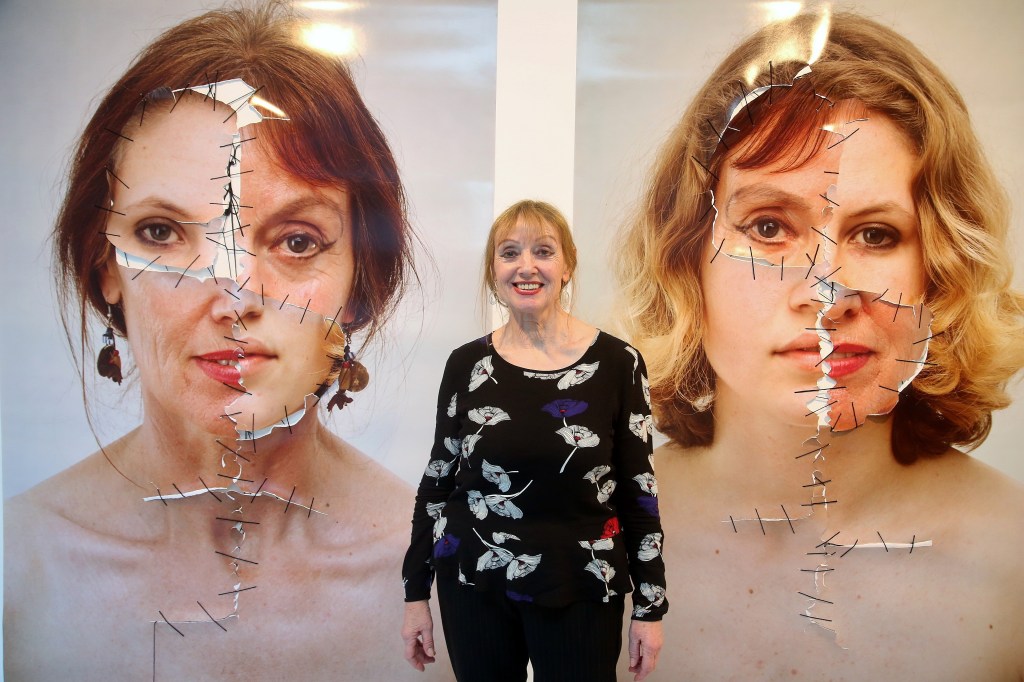
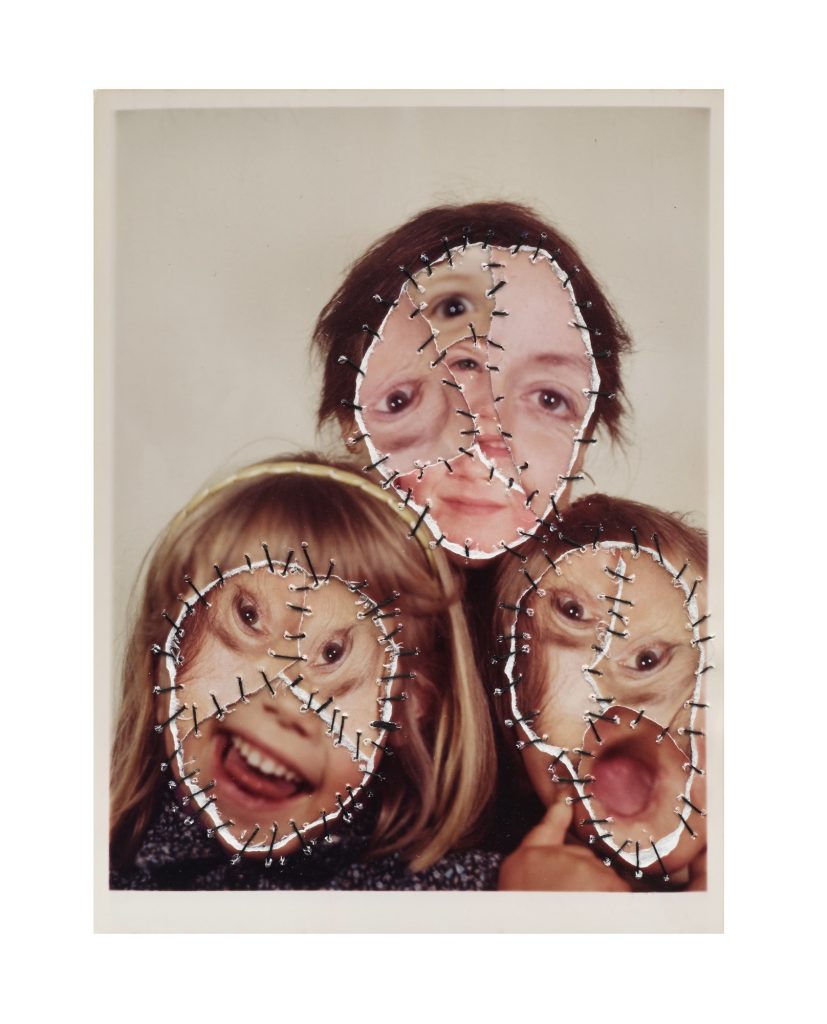
Annagret Soltau is a visual artist born in Luneberg, Germany, 1946. Majority of her work features photographic montages of herself and other people, cut up, and sewn with black thread. Although these works are collages, with threaded holes sewn throughout, they give off a pristine feeling.

Her photography and work focuses a lot on the female form and bodily processes, but it is also her way of searching for her identity. The work almost gives off a dark energy but I think it is just because peoples faces are being cut and sewn, which reminds me of the idea of mutilation. These are not as gory as that concept though, maybe she is symbolizing the mutilation of herself and what it can feel like when you are questioning your identity.

“I am using myself as a model because I can go the farthest with me” – Soltau

RP#6- Frank Stella

Frank Stella, born in 1936 on May 12, is considered one of the most famous post-American war painters but works with many other different mediums outside of paint, such as aluminum, cardboard and even 3D-printing. He began painting boats and cars, later using his creativity to make art when he moved to New York in his 20’s. His work is highly abstracts and saturated in different colors, textures, and patterns. Oddly enough, his work began with minimalist ideas and focused on basic lines and minimal colors. As time went on, he explored new ways of creating. He began as a leading figure in the Minimalist art movement and later became known for his irregularly shaped works and large-scale multimedia reliefs. When I look at Frank’s newer works, it makes me feel excited and joyous. It amazes me what feelings can come from abstract works like these.

Line Installation Blog Post- Juliana Quiroga

Our line installation consists of fishing wire, broken pieces of glass, a wooden rectangle and chicken wire. First we attached the fish wire to the wood piece and spray painted it white in order for it to blend in with the ceiling.

I had these pieces of glass sitting in my closet for a good amount of time so I thought it would be good to utilize for the line project. I love how they are a bit transparent which gives a stained glass effect with the light and how they chime in the wind. The hardest part was tying the wire around the glass tight enough so that it would not slip or fall through. The piece reminds me of a more adult baby mobile that hangs above a crib. There are many ways that we could tweak this project to make it even better to look at, but it came out pretty decent.

Transparency Blog Post

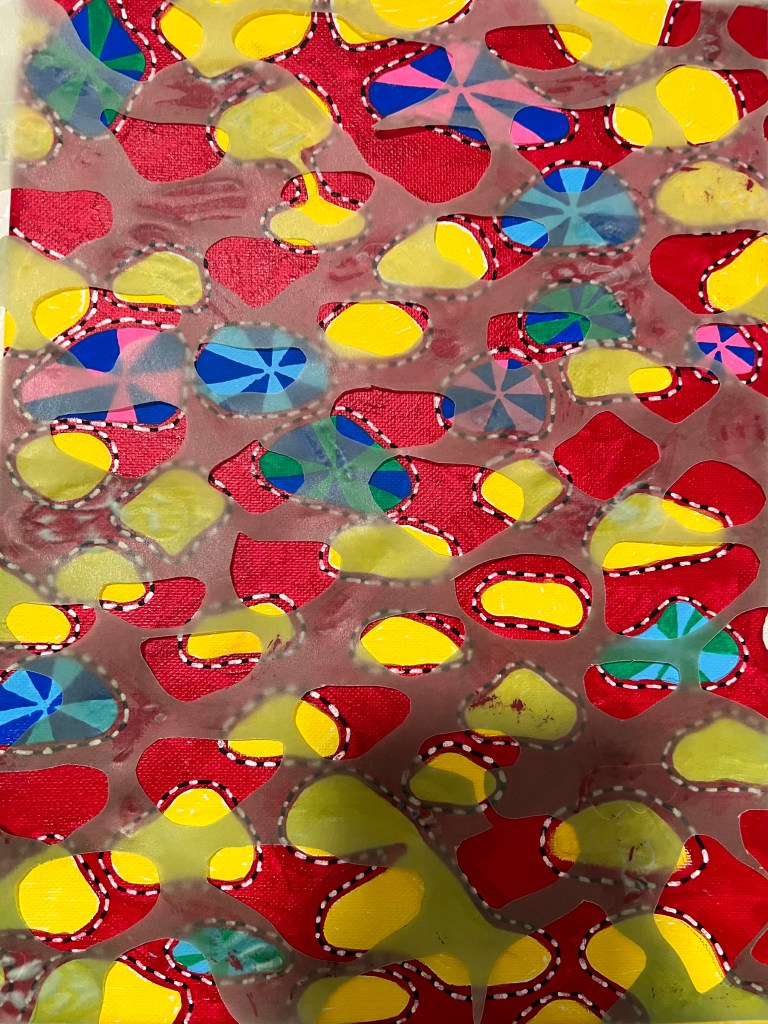
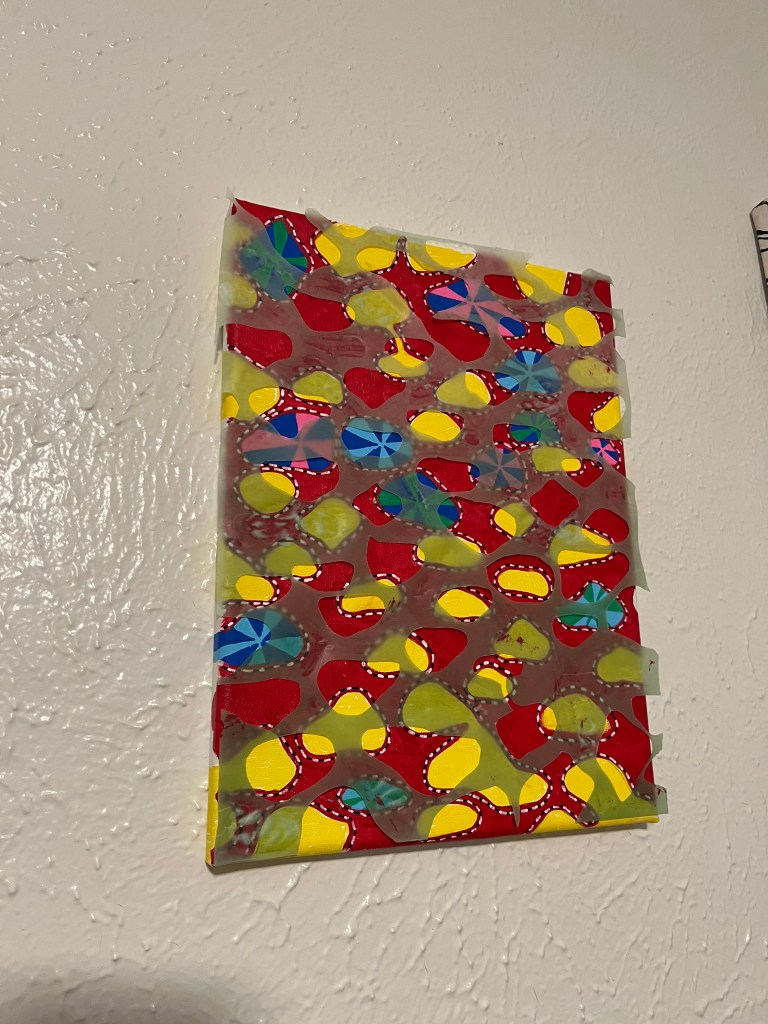
For my transparency project I utilized this thin blue paper I had. It originally had clouds all over it that I had to trim out, leaving holes on the page. A pattern of circular shapes popped into my head which is why I made the abstract pattern underneath. The colors are a bit hard to look at for me, I could have picked a better color combination in the end. Another thing I would have fixed was the splatter of red paint on some areas.

During the painting process, I found that it was therapeutic to make the striped lines and fill in the circles with lines. Pattern is something I love incorporating into my work, I love the organic nature of it. In the end, it was a fun project but I would definitely make something different next time, more aesthetically pleasing.