Individual Project

Munday Library

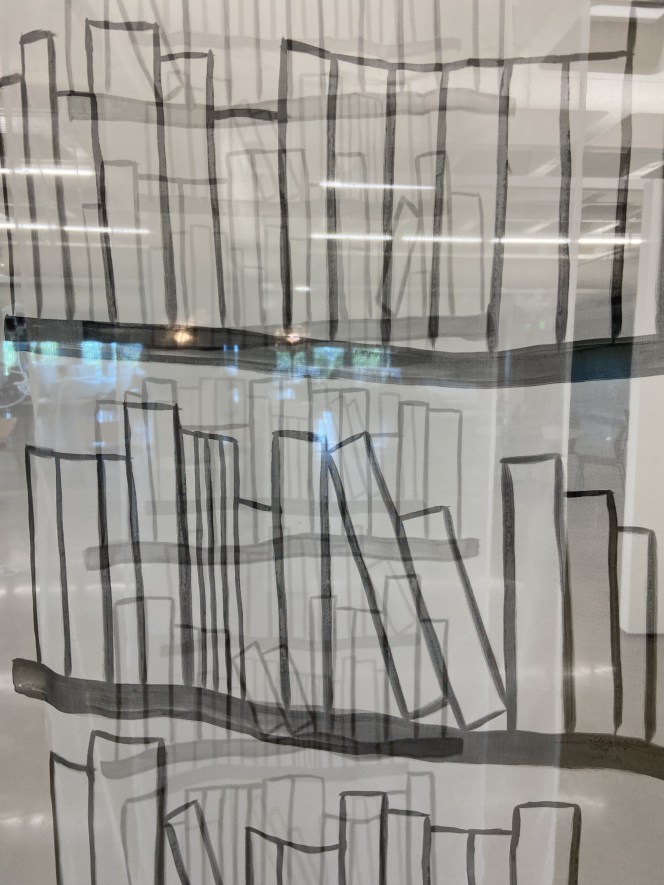
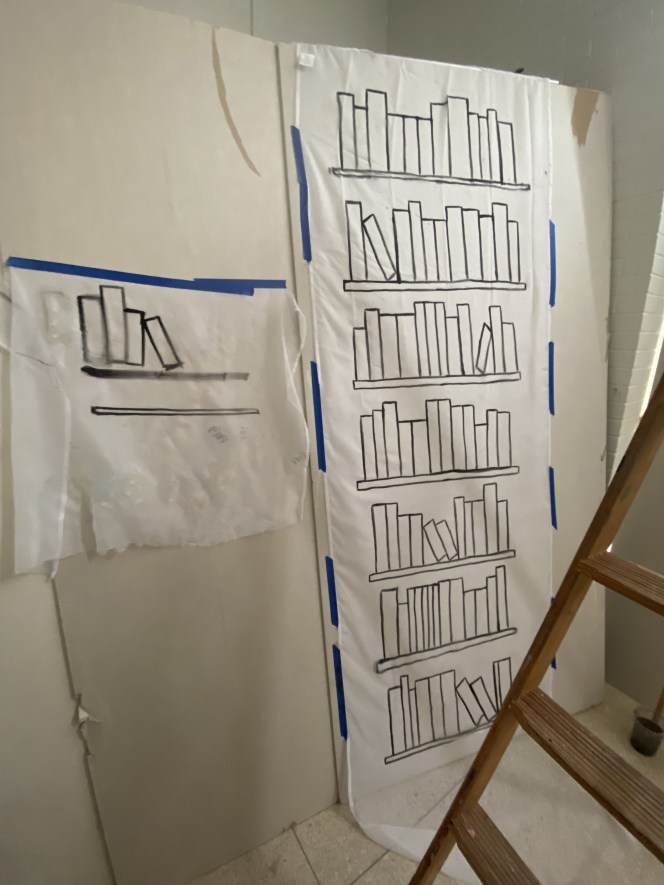
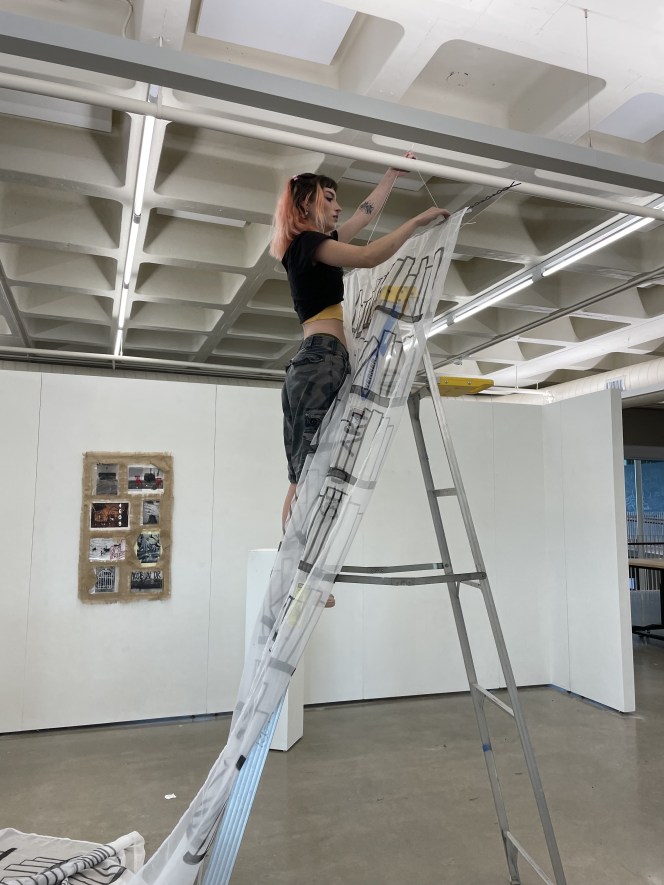
For this piece, my idea was sparked by the location of the gallery. When I heard it was going to be displayed in the Stacks Gallery in the library, I wanted to create work about the library… or lack of one. Ever since they decided to take away the books, I’ve always had a big issue with it. Growing up, the library was always my favorite place. I loved walking through the books and looking at all the different ones I could read or check out. When I came to St. Edward’s, the library was already a big downside. When I toured they only had one floor of books. I hated that, but I thought the pros of the campus would outweigh that. Then they decided to get rid of it all. It seems very dystopian and as the visiting artist, Justin Favela mentioned, it is reminiscent of book burning. I wanted to create a ghost library. Using my project proposal research from before, and my artist research, I decided to use transparent fabric. I originally wanted to embroider, but due to time constraints and also my lack of skill in that area, I decided to use paint. The books were painted onto the fabric using watered down acrylic paint. I used the same piece of drywall to paint each sheet on to have the shelves arranged the same way.
Team Project Blog Post

The team project was a fun project to work on. I think my team did a strong job of working together as well. The idea was a combination of Meg and Sydney’s ideas. Through the creation of the project, we had a lot of challenges that we overcame, as well as problem solving. We initally planned to build a structure for a hang out spot/ studio space. But, at the end it became more of a public work that you can go inside. We started off by building the frame of the dome and working out the different contruction problems. We then started to indidually cut and combine each circle. After that we connected them together with zip ties, and made it a large piece. Each large piece was then carried outside and attached to the frame.

Atmospheric Perspective

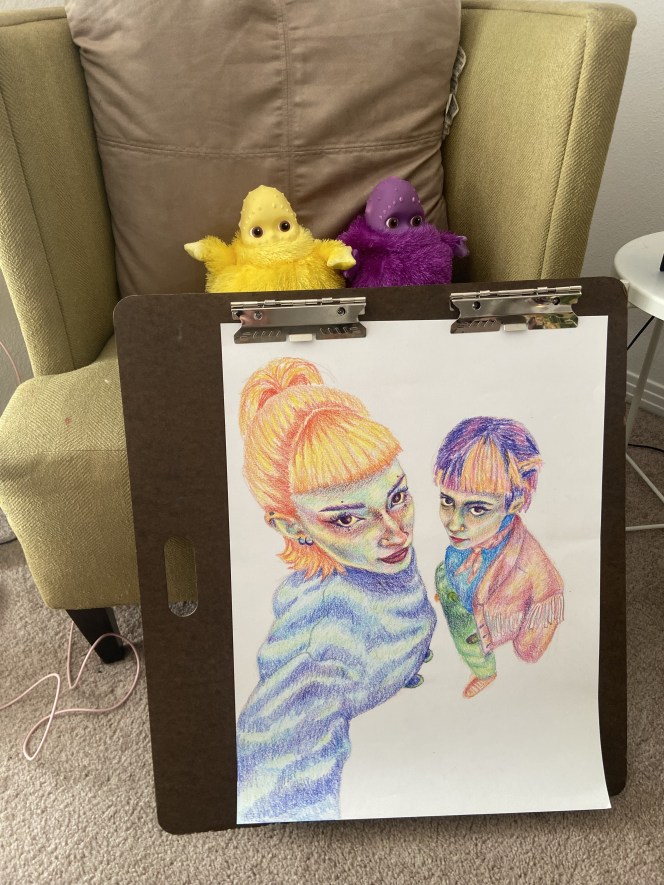
For this project I wanted to choose an image in 0.5 lens. I love taking these photos and the distortion it creates for an image. I chose this picture of my sister and I, and I wanted to draw it in my style. I use crayons to create the shading and add value through color. Working with color is my go to and it is easy to understand for me. It hasn’t been finished yet, but I want to add fish in the background, and transform it into a different space. Rather, that create an work that is just true to the reference image. I plan on using watercolor to create contrast with the image focus of the people.

Collage Project

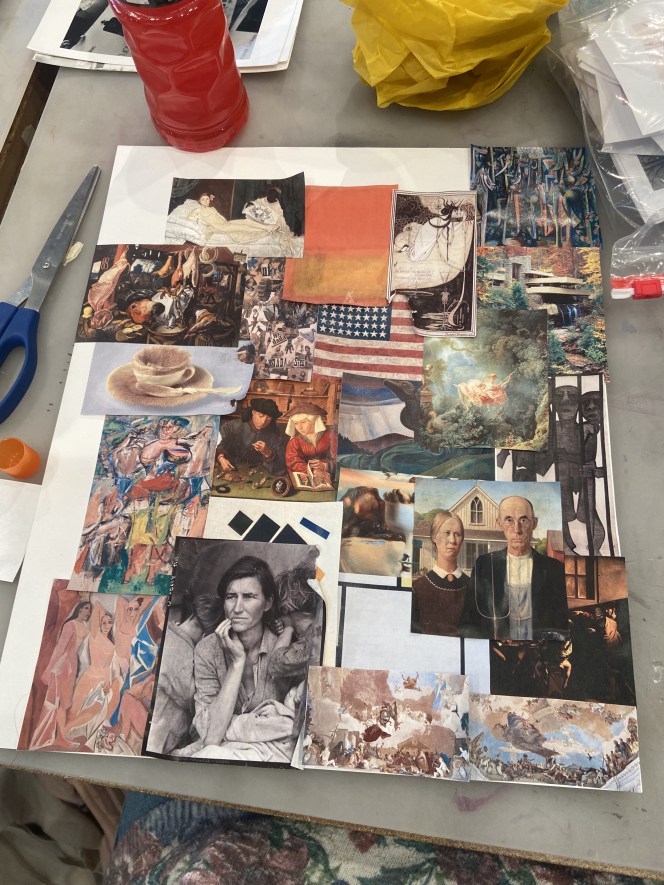
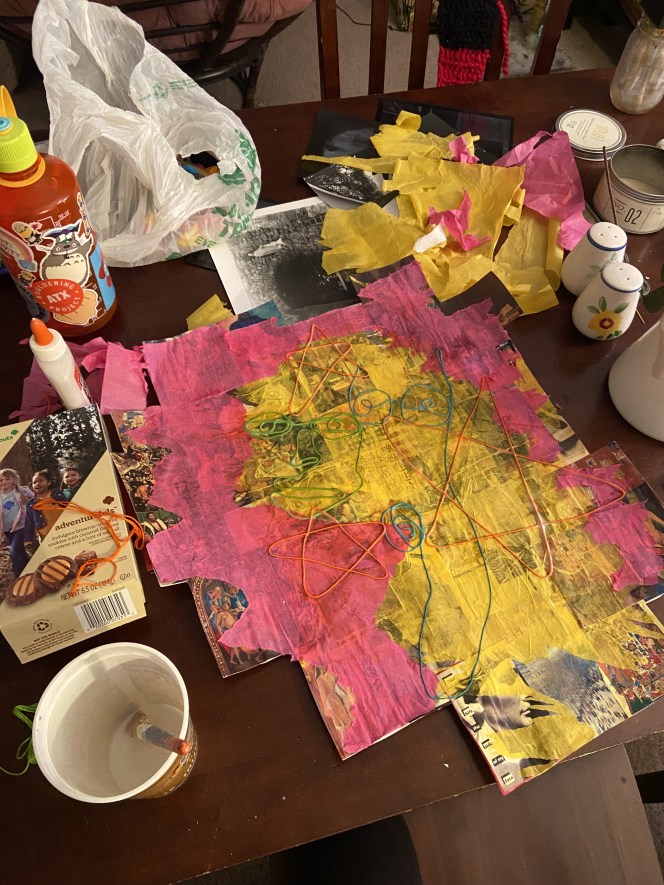
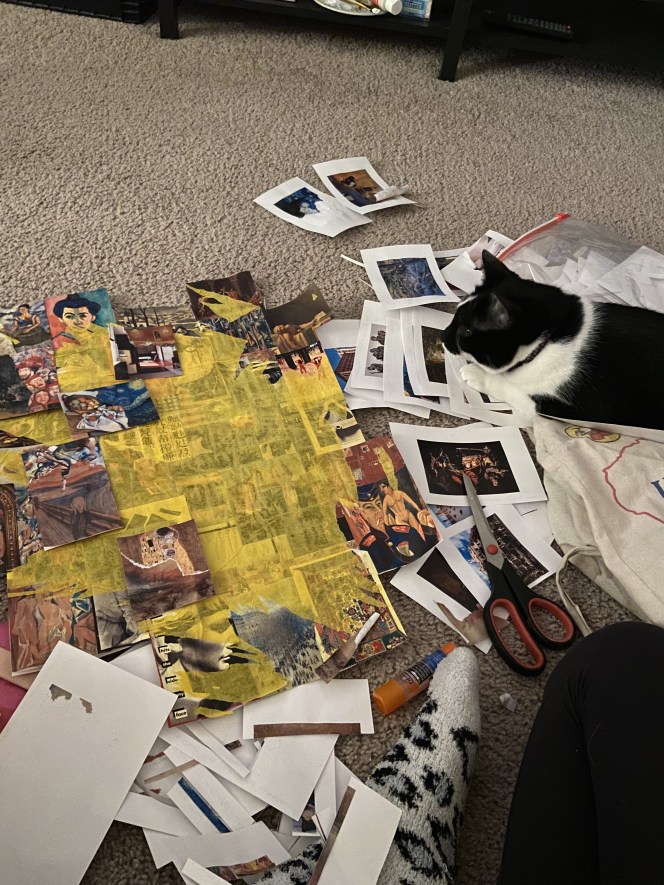
My goal for this project was to reurpose images I had already. I thought of all the art history flashcards that I have made for art history 2 with the images printed out. I saved them for something, and it turns out it came in hand for this project. I went at this assignment with no plan. I felt if I planned it out I would overthink it and it would not be completed. I started by ripping the photos off of the flashcards, or cutting them out, and then gluing them together onto one sheet. Some of the photos were ripped in half, and I decided to combine them with other ripped images. Once they were all glued together, the piece looked overwhelming and I wanted something to mute the images. So, I added tissue paper on top and glued it with modpodge and water. It didn’t turn out as translucent as I wanted it to be, but I went along with it. The next thing was to add more to the top of the piece and I decided string would be a cool way to create imagery. I don’t know what it means, but I added it and liked the way it turned out.

Research Post #10

Oscar Oiwa

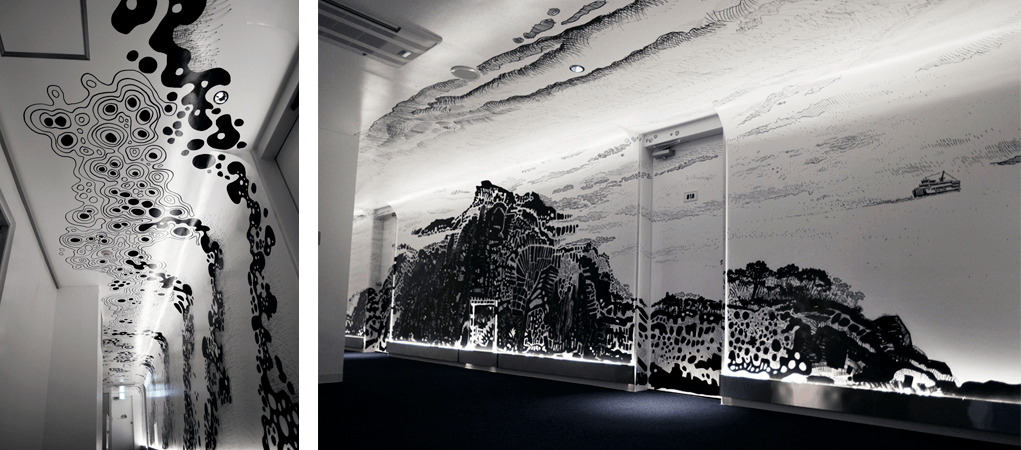
Oscar Oiwa is a Brazilian artist who is known for drawings that become immersive installations. They are drawings that transform a space into another world. He creates work that explores his cross-cultural life as a Japanese man in Brazil, and combines it with science fiction like themes. He uses marker pens to create these works, and goes through more than a hundred of them for each artwork. 

In this work, he creates a room and makes it where you can walk through his drawing. This is how I interpret drawing into space, and is also something that is really interesting. I love the idea of making a new world that the viewer can step into and explore rather than imagining the concept. 

https://www.trendhunter.com/trends/drawing-installation

http://www.oscaroiwastudio.com/oscar_website/search/searchlist.html

Research Post #9

Maggie Nowinski

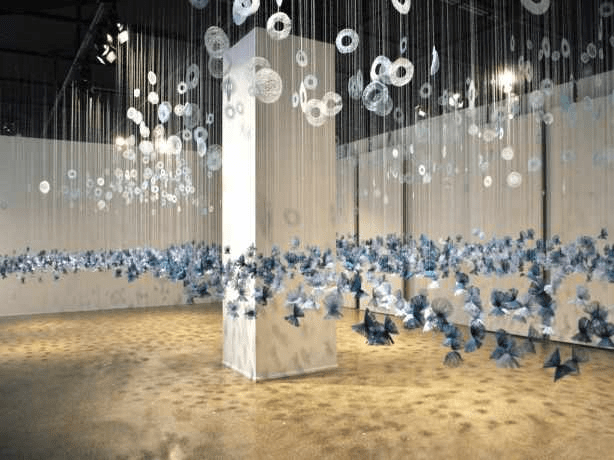
Maggie Nowinski is an artist, educator, and curator who is based in Western Massachusetts. She currently teaches at Manchester Community College, and is the interim director of the drawing program there. Her work is mainly drawing and printmaking. But she often displays these through installations. Like the one featured below, she uses these large drawings and takes it further to transform a space and show the work in an interesting way. Nowinski creates work that explores human emotion, in a style that resembles botanical specimens. She is very interested in the process of mark making and roots a lot of her work in the repetition of these marks. 

I take a lot of inspiration from the way the work is shown. It could have just been hung on the wall, but she takes it a step further. This is something I will continue to work on when creating my own art.

http://www.maggienowinski.org/about

Research Post #8

Amanda Mccavour

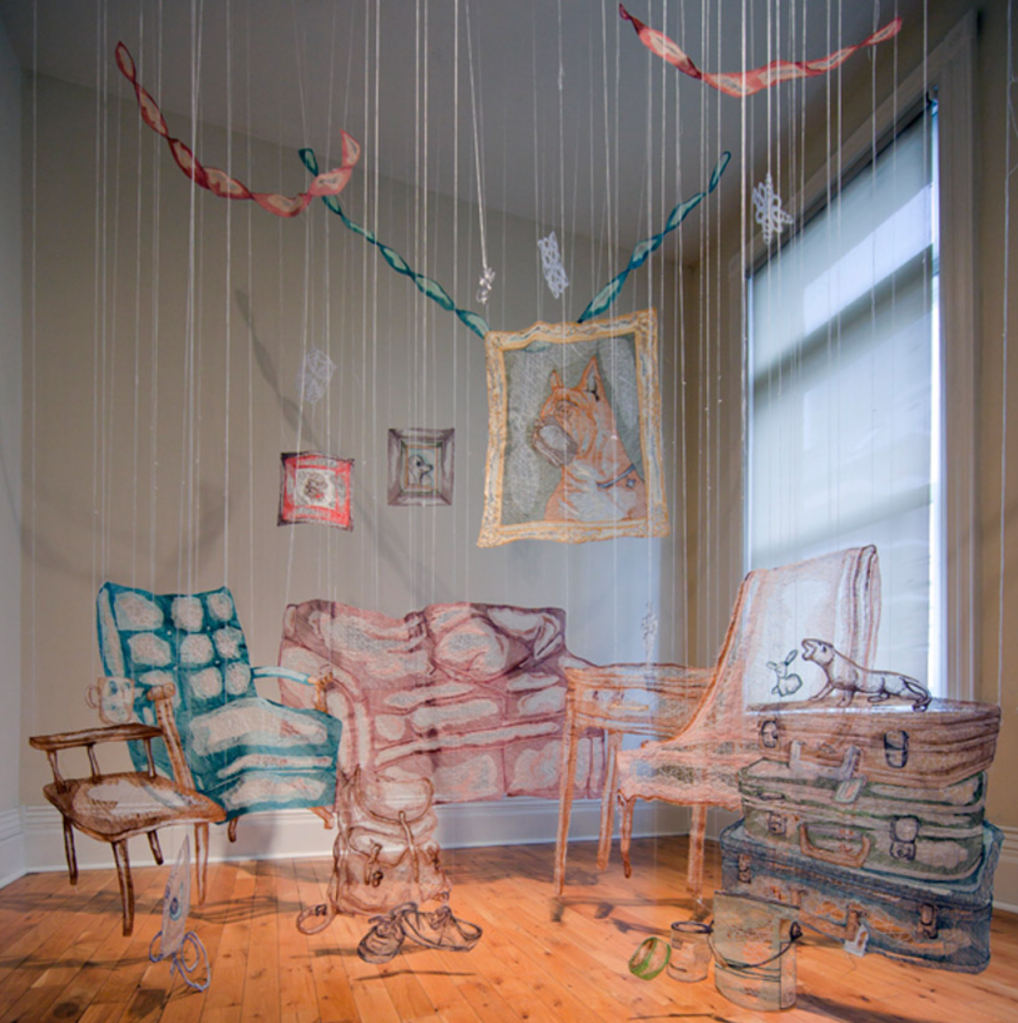
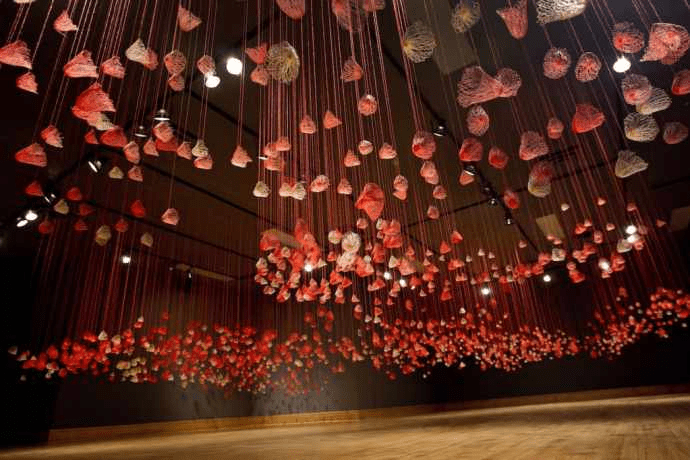
Amanda Mccavour is an artist based in Toronto. She makes large installations using embroidery to create the objects. Mccavour uses a sewing machine and embroiders onto a fabric that dissolves in water to make these drawings. The purpose is to explore the vulnerability of the thread and the strength it gains when it is sewn together. The installations consist of either abstract concepts or natural phenomena. This ranges from symmetrical doodles to plants, and even the recreation of everyday objects such as an iron. 

Research Post #7

Marina Nelson

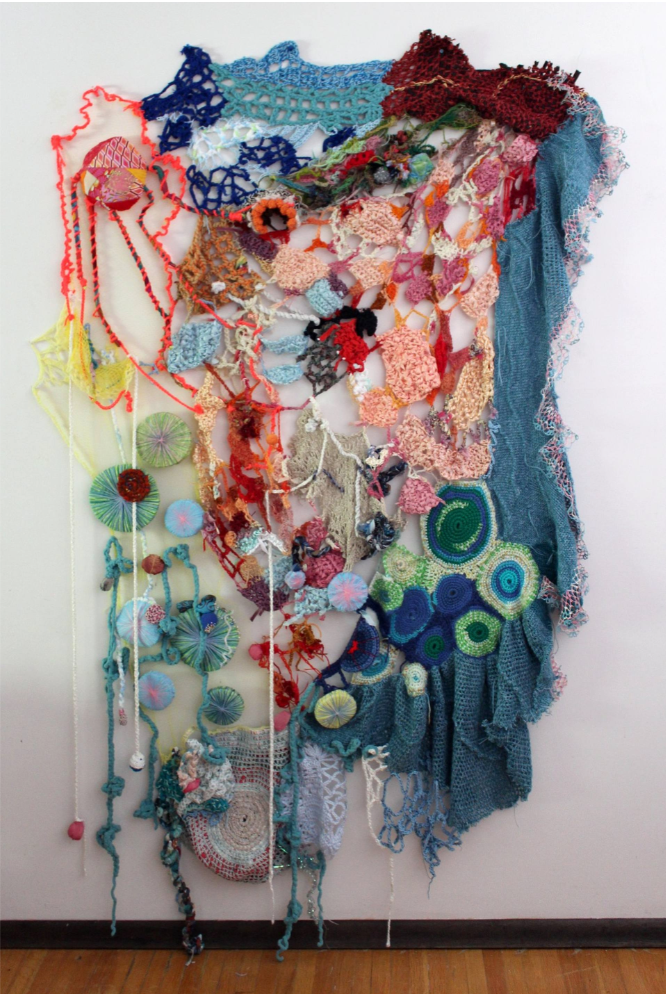
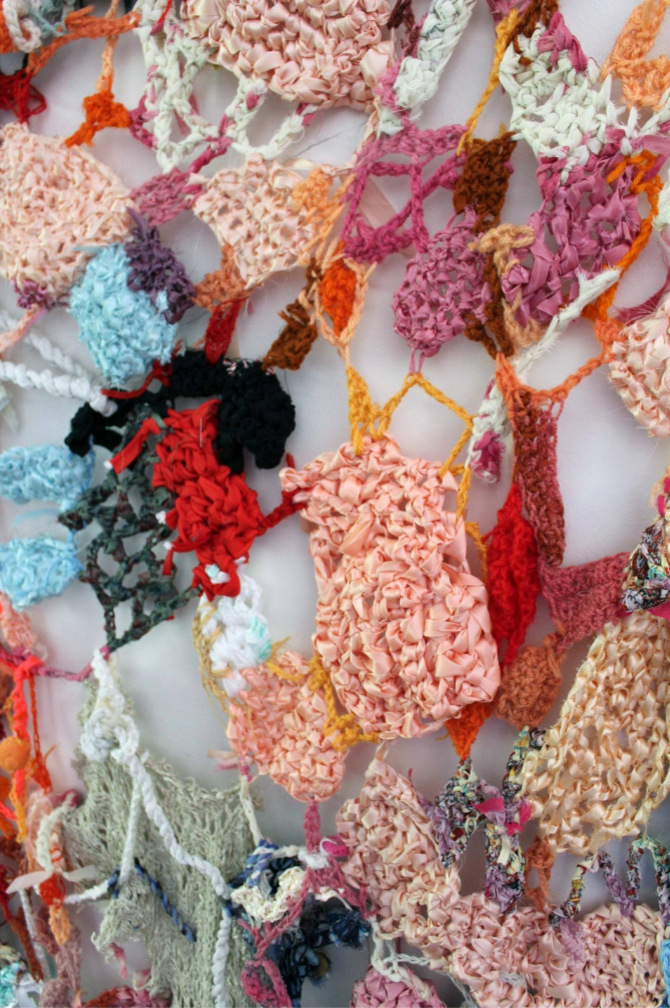
Marina Nelson is a multimedia artist, based in Canada. She creates work that relates to the vulnerability of people and the connections we make through that aspect. Nelson states in her bio “in the end, or in the beginning, it’s all about love”. This particular piece is called “Sunnyside Island Sculpture”. It is exploring the feelings of happiness one would find in an island paradise. Spending a sunny morning by the sea and enjoying the environment around you. The crocheted piece is not only meant to express the feeling but also the landscape itself.

I enjoy the use of yarn and ribbons to create a beautifully woven piece. I also like how the pieces are arranged together and the way that it gives the feeling of happiness in nature. The bright colors are attached together with green and blue borders. I also really like how the more you look at it, the more you can find in it and connect with the piece. 

https://www.saatchiart.com/art/Sculpture-Sunnyside-Island/44839/8472424/view

Research Post #6 

David Zalben 

David Zalben is an artist based in Miami but is from Brooklyn New York. He grew up taking pictures and was interested in photography at a young age. He started out working with school newspapers and then began working in photography advertising. After exploring with photography he started to branch out and began to experiment with other ways of art such as painting, sculpture, and poetry. 

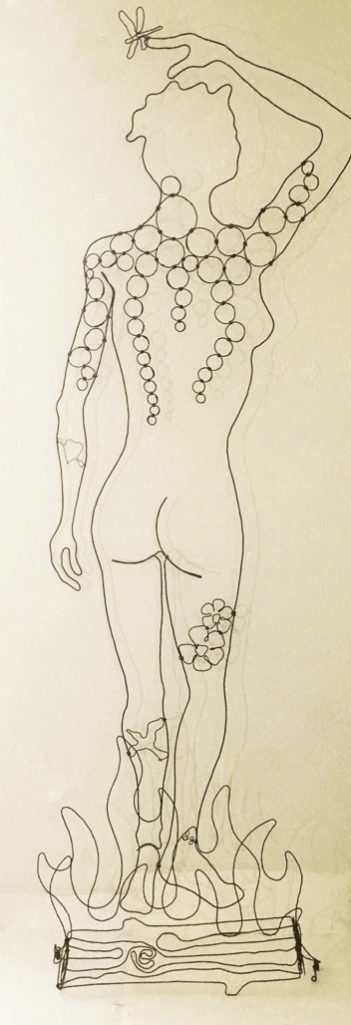
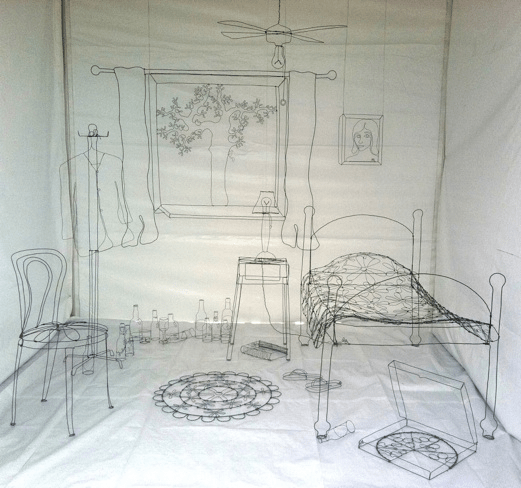
He likes to work with wire because of the simplicity, yet complexity is supplying. He uses inspiration from his life and personal experiences. Zalben likes his art to resonate the beauty and growth of everyday life. 

This is the way I interpret drawing into space and something that I want to somewhat recreate for a project. The use of wire is a cool sculptural way of making a drawing. 

“Life-size wirework ‘My Room’ in the Wynwood art fair”

https://www.davidzz.com/davidzalben/Sculptures.html

Research Post #5

Pia Männikkö

Pia is an artist that currently works and resides in Helsinki, Finland. She enjoys working with the relation between body and space. Pia explores with different perspectives of the world and is inspired by “natural and physical phenomena”. This can be seen throughout her work. She creates artwork that immerses the viewer in these perspectives and creates an interesting space that displays her themes of change, time, and body.

Pia Männikkö portrait

Pia Männikkö: Déjà Vu, 2019

The image above shows an installation Pia did in an exhibition in Paris. Deja Vu VII, 2019, is a work consisting of life-size ink silhouettes on seethrough, tulle fabric. The figures move slightly between each work, and the layering creates the illusion of movement. It also shows the theme of gradual change. With so many sheets and little movements in between it suggests the idea of slow growth.

The use of tulle and the multiples of an image is something that interests me. I may want to incorporate this idea into one of my works this semester. The layering effect of multiple drawings is a way to transform a space and display a drawing as a 3-dimensional work.