research 7

Egon Schiele was an Austrian artist and was part of the expressionist movement. He was born in 1890 in Tulln, Austria. At the age of 11 he moved to Krem. His dad died from Syphilis when he was 15 years old, and was taken in by his maternal uncle. He wasn’t ever interested in school. His uncle saw his talent for drawing, and he supported and urged him to to apply to art school. He applied to Kunstgewerbeschule in Vienna. Many faculty members convinced him to apply to a more traditional school. The main professor was strict, which made Schiele and a few of his friends leave. In 1907 he was mentored by Gustav Klimt. His early works are reminiscent of Klimt’s work. He soon developed his own recognizable style, and focused on self portraits as well as other nude portraits.

The Embrace (1917)

Seated Woman With Bent Knee (1917)
https://www.wikiart.org/en/egon-schiele

research 6

Tracey Emin was born in 1963 in London, England. She was raised by a single mother with her twin brother named Paul. As an adolescent she experienced many traumatic events that she exhibits in her work. She first studied Fashion at what is now known as University of the Creative Arts. She graduated in 1982, but returned in 1984 to study printing. In between her studies she met and was a affiliated with Billy Childish, and worked on confessional poetry. All of her work is described as “autobiographical and confessional,” She was part of the art group known as the Young British Artists that was active during the 1980s and known for their controversial works and exhibitions. This group also included Damien Hirst and Marc Quinn. Throughout her career she has worked with a variety of mediums, including film, drawing, painting, sculpture, and more. In recent years she has taught at the Royal Academy as a professor of drawing, making her one of the first female professors at the Royal Academy. She has also lectured around the world.She now lives in Spitalfields, London.

My Bed (1998

Everyone I have Ever Slept With (1963-95)

https://www.wikiart.org/en/tracey-emin

research 5

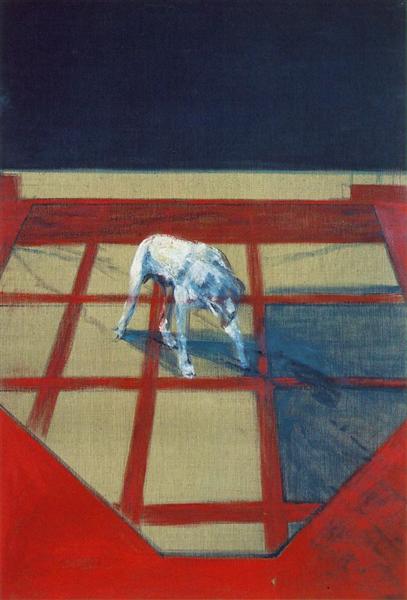
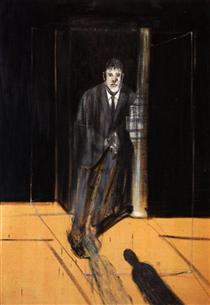
Francis Bacon was born in Ireland in 1909. He grew up between Ireland and England after World War I, and was thorn out of his parents’ home at 16 due to his homosexuality. He moved to London alone, and then traveled to Berlin and Paris. In Paris he was introduced to Pablo Picasso’s work at an exhibition. In 1928 Bacon decided to move back to London and started a career designing furniture as well as interior design. He began painting and met his soon to be partner Eric Hall. In 1933 he decided to focus on Painting. He wasn’t satisfied with most of his early work and destroyed it. He was able to get out of having to fight in World War II due to his asthma, but he still volunteered as a civil servant. After this his career finally got its start. His style was unique and distinct, once he settled in London he was part of many exhibitions.

dog (1952)

Portrait of Lucien Freud (1951)

https://www.wikiart.org/en/francis-bacon/all-works#!#filterName:Theme_lucian-freud,resultType:masonry

research 4

Ernst Ludwig Kirchner was born in 1880 in Bavaria. He studied architecture in Dresden, Germany, but had always been very interested in painting. In 1905 he decided to leave architecture behind and pursue a career in art. In doing this he and other artist created a group called Die Brucke, which translates to “The Bridge.” In 1911 him and the group, Die Brucke, Moved from Dresden to Berlin. They found inspiration in “Primitive” art. He was drafted during World War I, and he was discharged in 1915 due to a nervous break down. He moved to Switzerland in 1917 to recover, and he spent some time in a mental institution. He stayed in Switzerland until he committed suicide in 1937. Though his life his focus was painting, in which he depicted many figures that looked elongated and slightly deformed. He also worked with woodblock printing and sculpture.

Potsdamer Platz (1914)

Self Portrait of a Soldier (1915)

research 3

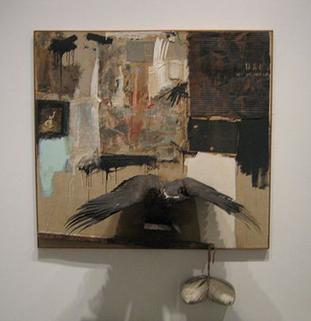
Robert Rauschenberg was an American artist born in Port Arthur, Texas, in 1925. He was raised in a christian household, and attended the University of Texas Austin for pharmacology. He served in World War II, and then he studied in Paris. In 1948 he studied at Black Mountain college with Joseph Albers, One of the founders of Bauhaus. During his time at Black Mountain College he experimented with a lot of different mediums. He later moved to New York and became close with Cy Twombly and Jasper Johns. While in New York he supported himself by designing store front displays. He began incorporating found objects into his work as well as photographs and other images. He also made what are famously known as “combines,” in which he incorporated found objects, sculpture, painting, and much more. He worked continued to create work until he passed away in 2008.

canyon (1959)

Bed (1955)

https://www.britannica.com/biography/Robert-Rauschenberg

research 2

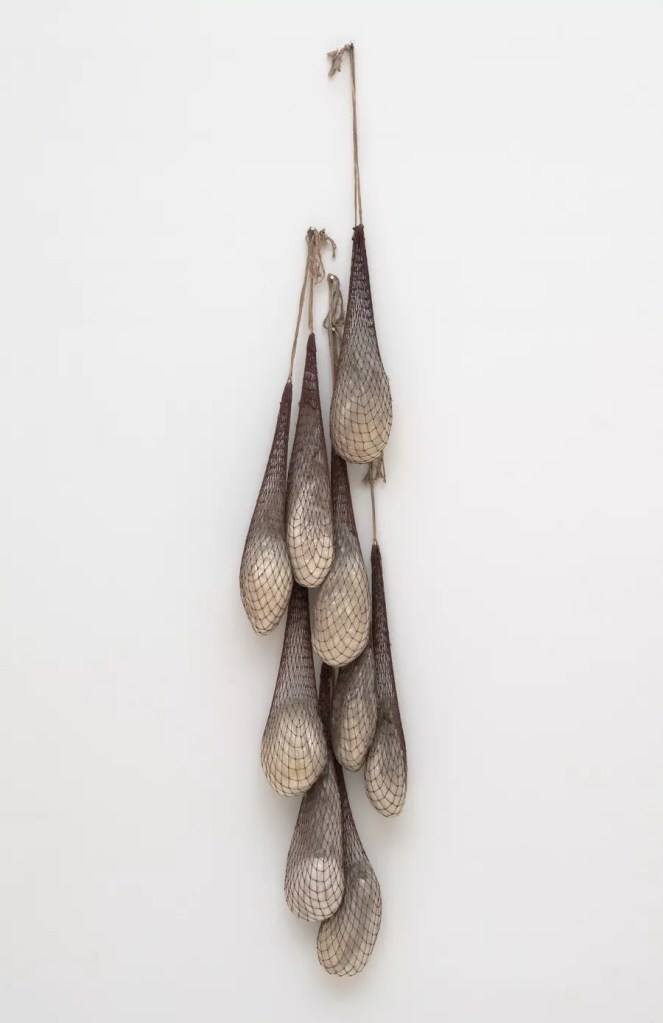
Eva Hesse is known as one of the first artists thought to be a post-minimalist. She was born in 1926 in Hamburg, Germany, but moved with her family to New York in 1939. Her upbringing was tumultuous due to her parents divorce, and just 1 year later, the suicide of her mother. She studied art at the Pratt institute, Cooper Union, and later Yale University. Her work began as drawings and paintings. She married Tom Doyle and they moved to Germany. During the 15 months she was there Hesse began to experiment with sculpture. She used non-traditional materials to create abstract forms. After returning to New York her and her husband divorced and she began creating a plethora of work. She died in 1970 from a brain tumor.

works

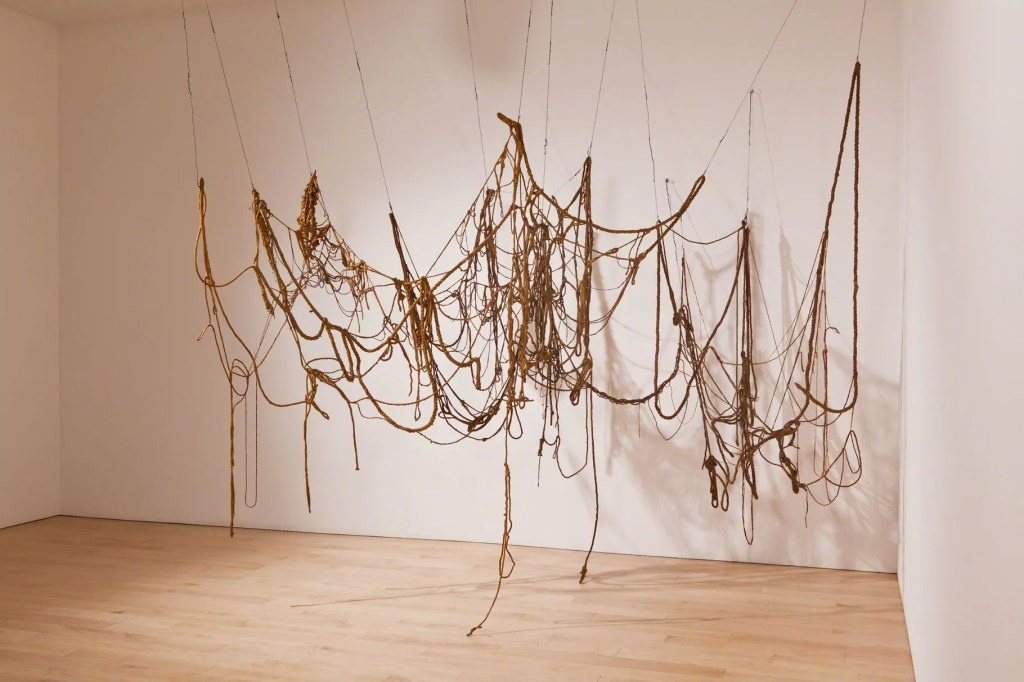
Untitled or Not Yet (1966)

No Title (1969-70)

Judy Pfaff

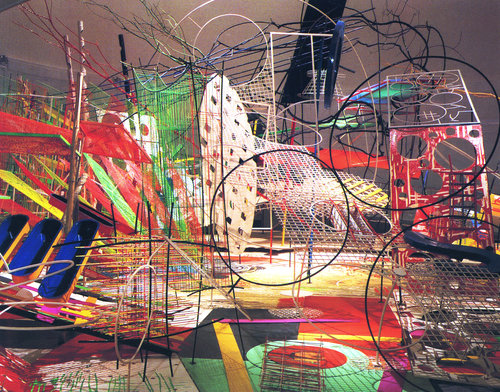
Judy Pfaff is an artist from Tivoli, New York. She got her BFA from Washington University in Saint Louis in 1971, and then earned her MFA from Yale in 1973. Her work incorporates both 2D and 3D elements to create otherworldly installations. Like collage, she carefully places each element to make a sort of organized chaos. Her work is symbolic due to many elements of her work being discarded after exhibitions, much like mandalas which are seen as temporary objects. Though her work doesn’t seem to directly pull from religious imagery, she does compare it to that of a cathedral in contradiction to the concept of mandalas. Her installations have been displayed in many major museums, and she has permanent works in the Tate Modern, MoMA, The Whitney, and many more prestigious institutions.

examples

from her Quartet series (2018)

GU CHOKI PA (1985)

LA CIUDAD DE LOS ANGELES (1977)

https://www.judypfaffstudio.com

Daisy’s introduction !!

hello !!!! I’m daisy I’m a junior, and I’m an art major. when I think of drawing I think of drawing, I think of visually manipulating spaces with the use of lines and mark making.

most of the art I make is focused on the human form. I look forward to experimenting with new methods of “drawing” this semester and meeting all of you guys!!!!!!