Laura Catherine Soto

Laura Catherine Soto is a sculptural artist from California. The work she does is very unique- creating hundreds of man-made sea shells/rocks/organic forms which she integrates in books, journals, on furniture, and in installations. The materials she uses are mixed media, including oils, concrete, insulation, glues, acrylic, resin, etc. which typically coming from parts of her previous projects. I’ve followed her on instagram for a while now, and it’s really interesting to see her artistic journey and process. In one post she explains “I do not incorporate found natural material in my work. Instead, I let the long winded process mimic the organic world.” In another article, she expands on this stating “I enjoy this tension between what is naturally occurring and what has been amassed through mixing/amassing material.” I really like the shiny pastel, ecclectic and organic look of her pieces, and that she’s not afraid to really transform and create something foreign.
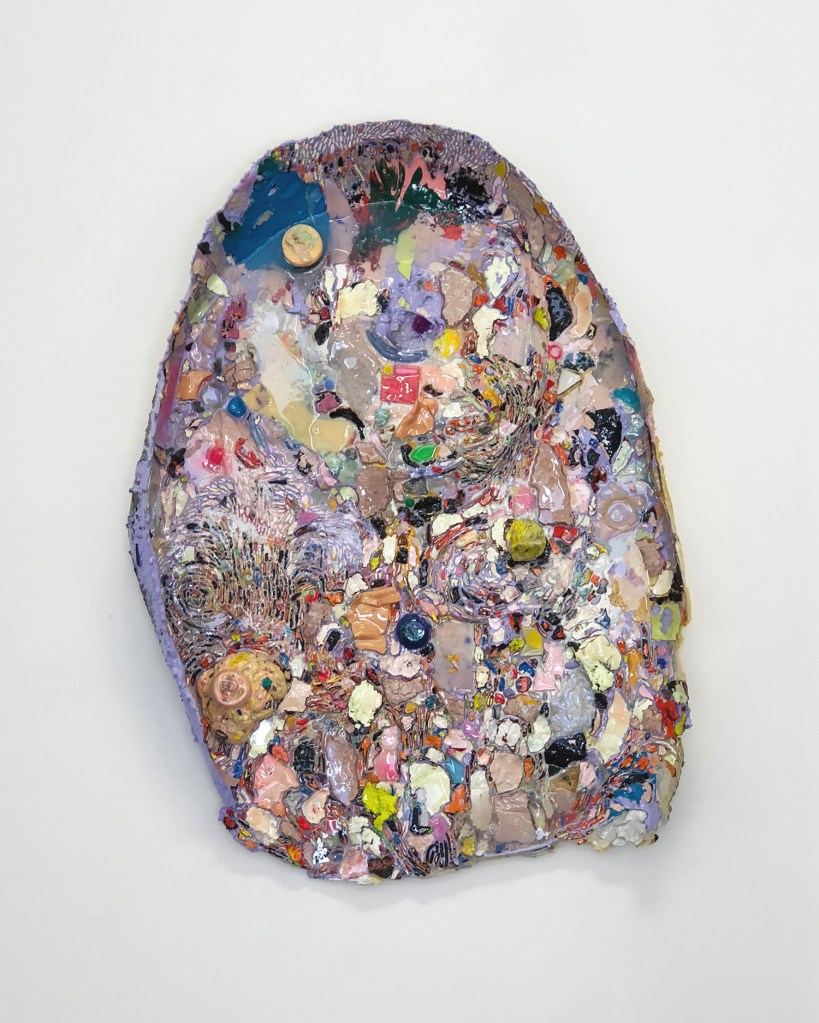
everything that rises must converge, 2016-18.
Untitled, 2017.
Flesh and Flood, 2018.

Nils-Udo

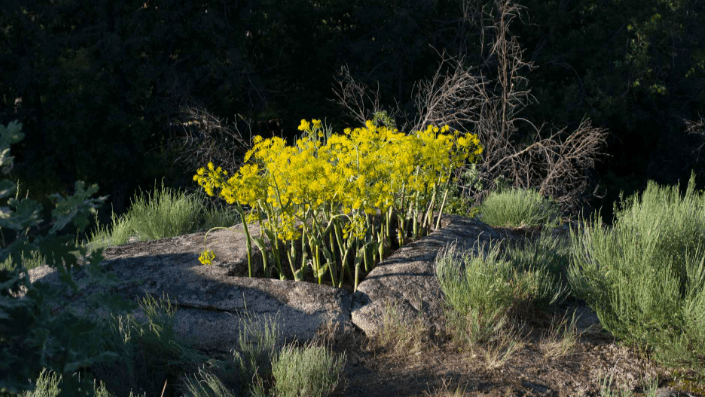
Nils-Udo is a sculptural artist from Germany that creates art revolving around nature. I chose this artist specifically because his work aligns with what I plan to do for my final individual project. In his work, Udo only uses objects found in nature. He says that “the basic idea is to achieve absolute purity. Nature performs a demonstration of itself. Every non-natural element is ruled out as impure. No other materials are used than those found in each natural space. The characteristics, the respective possibilities for processing, and the character of the natural space itself plays the major role in determining the shape of the work.” Unity and juxtaposition are commonly used throughout Udo’s work- He often creates bold nest-like structures with a central area surrounded by uniform objects expanding outwards, as seen in pieces like his Ginsterlicht series and his Grave-Stone series (see below). I like how the installations themselves are not only made of sprawling natural objects, but they are also always in different, fairly mundane and unrecognizable locations throughout nature. You can’t tell where you are when you look at his work, and I love how this creates a feeling of complete immersion. Besides sculptural work, Udo also creates contemporary paintings (of nature, of course) that have been exhibited around the world.

Grave-Stone 3, 2021.
Ginsterlicht 4, 2021.
Mountain Wind (Painting 1035), 2005.

3D Cardboard Project

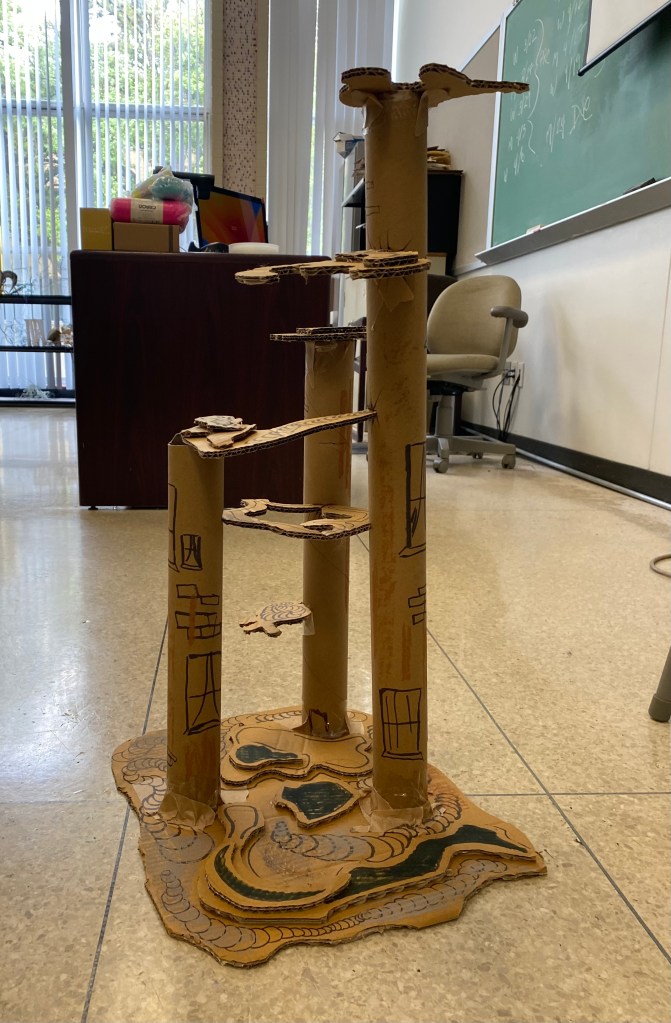
I had no set plan going in to this project, so I explored the different forms of recycled cardboard in the bin for inspiration. I found a few cardboard tubes that inspired me to create something upright/vertically standing, sort of like a tower or tree house. I did a lot of taking apart pieces and combining until I was satisfied. I made two different sculptures in class that I combined together, but in the end I wan’t feeling it so I decided to scrap it and create an entirely new one at home. I still wanted to stick to the treehouse appearance, so I got some more cardboard tubes, cut flat cardboard into organic shapes, and then attached them by inserting the shapes into slits on the tubes. In the end, the piece ended up looking like a cat tree. I drew abstract patterns and little windows across the structure with sharpie and pastel- I wish I had been more organized with these drawings, but since I worked last minute it came out a little incoherent. Oh well! Maybe sometime in the future I’ll give cardboard another go.

Scrapped in-class project
Final product
Drawings

Chris Gilmour

Chris Gilmour is a UK-born sculptural artist whose work is both selective and unique. Using only cardboard and glue, Gilmour creates large, realistic pieces. I think it’s really interesting how he comes up with so many different solutions to make the cardboard look like the appropriate objects/material, making the appearance transcend cardboard. When asked about his process and why he chooses to do this, he stated “The cardboard, although not as strong as traditional sculpture materials like marble or wood, is very flexible. In the end, my works are no more fragile than the works on paper, bronze or wood. As long as the cardboard is treated with care, it should last a lifetime; the oldest piece I have made is nearly twenty years old and is intact.” In 2006, Chris won the Premio Cairo art prize, along with multiple awards and recognitions throughout his art career. Currently, Chris is working in the film industry at a company he created called Vectar Sets. Using his sculptural problem-solving skills, Chris and his team collect sustainable materials (cardboard included) and create sets for movies and tv.

Chris Gilmour, Captain America.
Chris Gilmour, The Triumph of Good over Evil.

R. Mertens

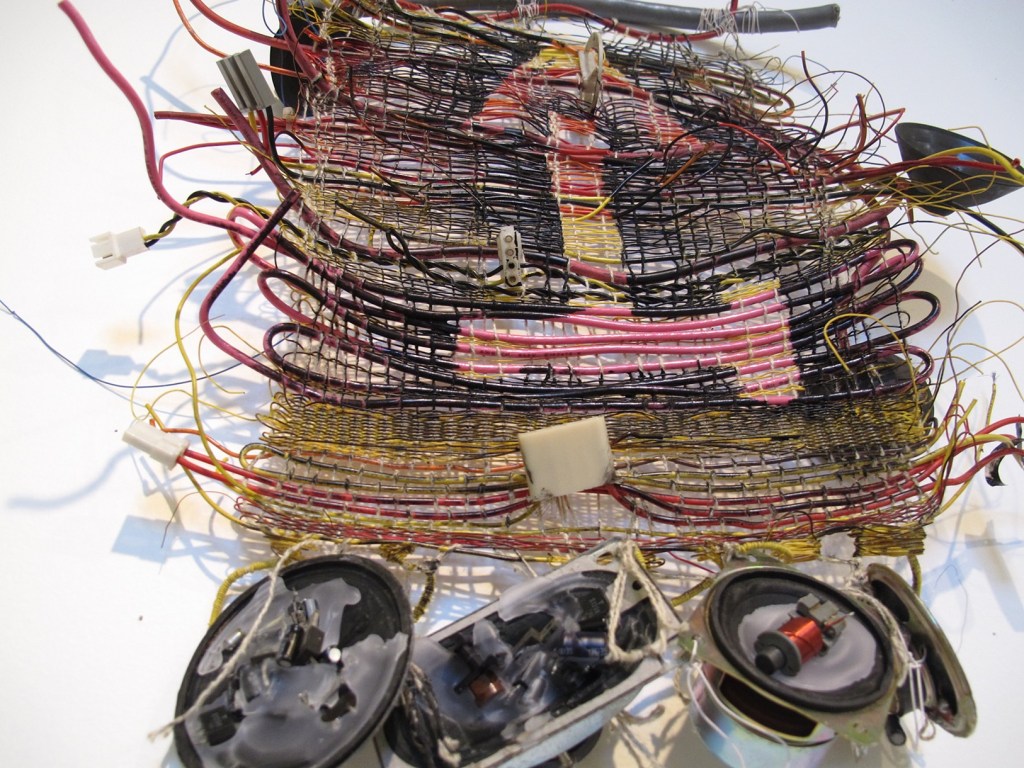
Robert Mertens is an artist and curator born in Wisconsin. His work covers a wide range of mediums, and he often uses material like fabrics, wire, and found items to create large, eye-catching sculptures. In his website bio, it is stated “His work revolves around the intersections between technology, religion, science and myth. These pieces combine new media with traditional fibers craft and culminate in performances, installations and powered sculptures.” I was intrigued by Robert’s work because of the rugged appearance of his pieces- aged fabrics, stained material, and overall coherence of pieces that you normally wouldn’t picture together. Aside from traditional artwork, Robert is also trained as a sound technician and creates soundtracks that reflect human life. Currently, Robert lives in Virginia and works at the James Madison University’s School of Art, Design and Art History as a creative director. He has held six solo exhibitions since 2010, and his work has been featured all around the country.

Lectric Schematics, 2013.
Breathe, 2022.

Sources:

https://rmertensresearch.blogspot.com/

https://robertmertensartist.com/home.html

Alberto Giacometti

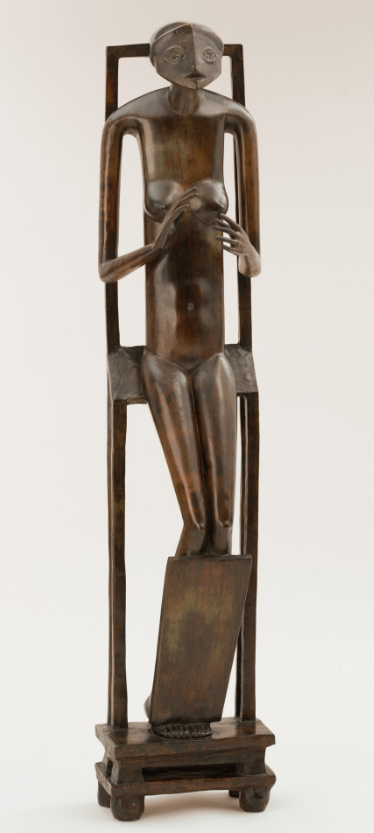
This week I decided to choose a more well known artist from the early 1900s (1901-1966), Alberto Giacometti. Alberto was born in Borgonovo, Switzerland and grew up around his father and grandfather who were both painters- Growing up around art inspired him to become an artist himself, and he would later become a painter and sculptor. In 1922, Alberto moved to Paris and got an education at the Académie de la Grande-Chaumiére.

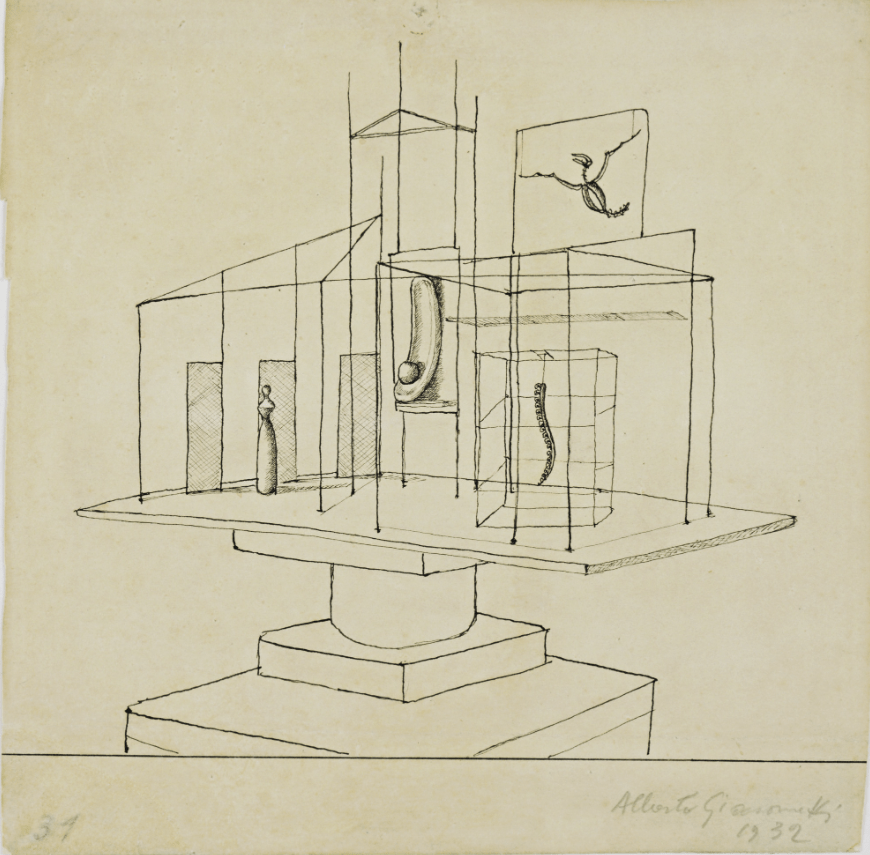
The surrealism and cubism movements of the 1900s greatly influenced Alberto’s work. He started off creating 2d work, integrating cubist elements into his sketches like Study for The Palace at 4 a.m. Over time, Alberto focused more on 3d work and started making bronze sculptures. As World War 2 unfolded, the chaos and despair of warfare stirred up was a common theme in Albertos work- The figures he created are strangely surreal, limber, and appear shriveled and existential. This may also come from his creative process, where he states “From 1935 through 1940, I spent every day with the model. Nothing went as planned. For me, a head became a wholly unfamiliar and dimensionless entity.” Emotion and the human condition played a big role in Alberto’s work, and a quote I found that sums it up pretty well is “He sought to make renderings of his models as he saw them and as he believed they should be seen.” For example- he sometimes made extremely small sculptures because the models he worked off were far away in the distance. However, he also made towering sculptures that spanned over 8 feet tall. Even decades after his death, Alberto Giacometti’s work continues to be eye-catching and thought provoking.

Study For the Palace at 4am, 1932
Hands Holding the Void (Invisible Object) 1934 (cast c. 1954-55)
City Square, 1948

David Oliveira

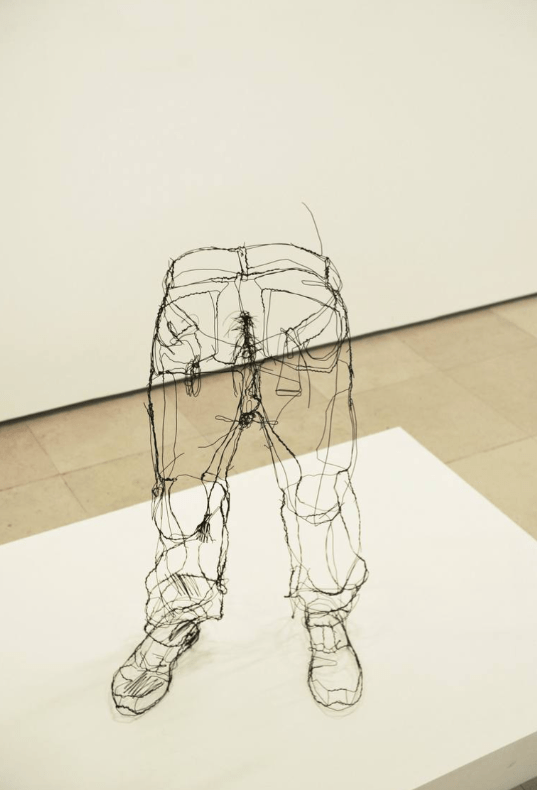
David Oliveira is a sculptural artist from Lisbon, Portugal who creates wire sculptures. He creates work that is both complex and anatomically accurate, but also gestural and lively through integration of loosely bent wire into the more technical parts (see Loose Skin below) Before starting his wire sculpture journey, David attended Lisbon University where he received a degree in ceramics/sculpture. He then went on to study anatomy in his postgraduate years; he says while studying figures, he discovered “In my work, I realise there was a lot of empty space underneath the visible (skin), so I started representing the bones. In 2014 I wanted to explore what I could find inside the bones (the energy, the intention, the movement).” Combining his two areas of study, David creates complex sculptures full of expression which are featured in exhibitions around the globe. I chose to do research on David because we are working in 3d space with linear material this week, and also because I really like the messy, but coherent feel of his work as a whole.

Loose Skin, Sculpture, 0.4 W x 0.4 H x 1 D in
Half Naked, Sculpture, 0.4 W x 0.4 H x 1 D in

Sources:

https://www.saatchiart.com/davidoliveira

http://davidmigueloliveira.blogspot.com/

Transluscent Paper

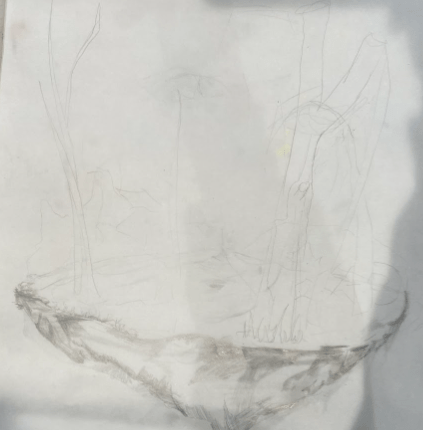
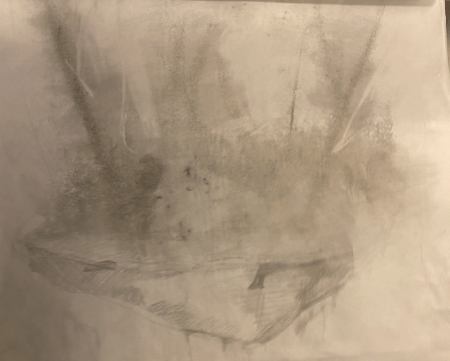
When doing research for the last post, I came across an artist named Brooks Salzwedel who creates really interesting nature scenes with translucent paper. She inspired me to draw a foggy forest scene, and I wanted to make it eerie so I decided to overlay it with a face. Most of this project was experimentation, and I used a lot of different mediums (watered down paint, markers, charcoal, graphite) to achieve the effect I was looking for. Since there are so many layers and the tracing paper blurred each layer underneath, it was a challenge to create part of the scene, and then continuously check to make sure each layer was lined up correctly. Most of my process would be making a mark on a layer, combining the layers, stepping back to see what it looked like, and then continuing to alter the overall appearance until I was satisfied with the result. My goal was to have the foreground on the top paper layer, midground on the second, and so on, but towards the end I was working mainly on the top layer regardless. Next time I work with transparent layers, I would like to do something colorful and abstract.

Initial Sketch
Building up layers/value

Carl Krull

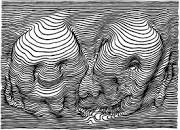
Since we are going to be making sculptures out of linear materials this week, I chose an artist named Carl Krull. Carl Krull is a Danish artist who grew up creating and surrounded by art, going on to attend the Jan Matejko Academy of Fine Arts in Krakow, Poland. Most of the work he does currently is fully composed of 2D lines twisting and folding together to create seemingly 3d forms. He hadn’t used this method of drawing until one day he stated he was “doing some work with drawing in virtual reality, and found myself drawing in a three- dimensional space,” he said. “It was an eye-opener.” Drawings like his Barrier 04 (see below) take on a topographical feel, “utilizing a striking sculptural technique that break open new territory, showing us our world as if caught by sonar and echolocated in space.” His similar works have been displayed in galleries internationally, and Krull continues to make these unique drawings. 

Barrier 04, 2017

Seismogram VI, 2014

Sources:

https://www.insider.com/danish-artist-three-dimensional-drawings-2018-8#with-the-paper-rolled-around-a-tube-the-images-emerged-as-if-printed-by-an-inkjet-printer-one-horizontal-line-after-another-krull-said-7

Isabelle Menin

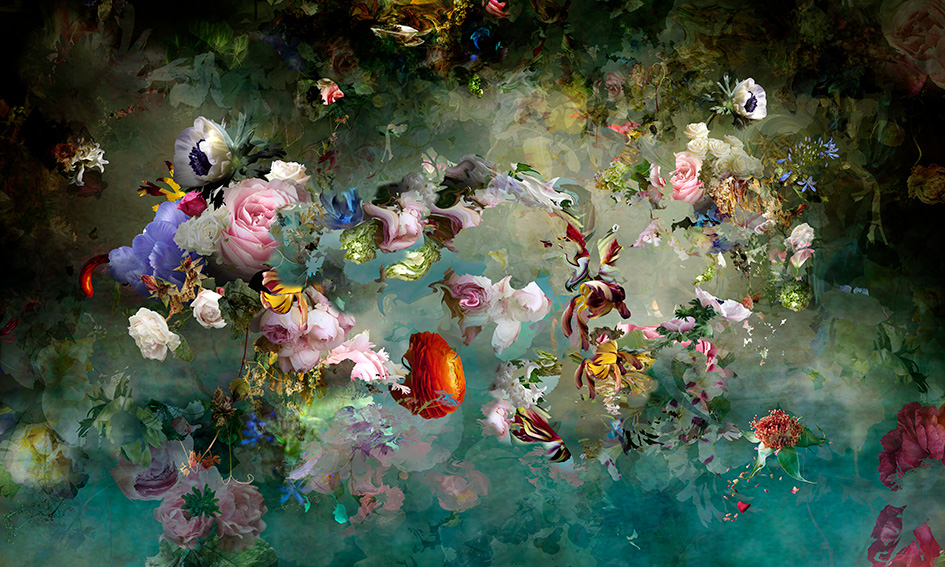
Isabelle Menin is a digital collage artist from Belgium. Her interest in art began when she was just a small child- she attended a theater performance and explained: “Immediately, I was hooked. I fell in love with the sets, the music, the emotions, the intensity – from that point on, my life was devoted to art. I became totally committed to the cause – or at least, to the feelings that it provoked in me.” Once she got older, Menin would go on to attend school at the Graphic Research School in Brussels where she explored painting, graphic design, and photography. Eventually she would develop a great interest in nature, and gravitated towards including natural objects in her work like plants and flowers. The work she does now is mainly digital, and almost always is a flowery composition with beautiful colors and seemingly infinite layers. She achieves this by photographing/scanning her flower subjects individually, then cropping them and layering them, using transparency effects to create a mystical atmosphere. The parts are then moved and manipulated digitally until the result is satisfactory. 

Isabelle Menin, Pink Storm, Digital.
Isabelle Menin, Avant que le monde ne fut roi, Digital.