Individual Project

For my final project, I knew that I wanted to work with video since it’s my favorite medium. And I knew I wanted to explore how memories become fragmented over time, so I decided to create an installation that reflects this theme.

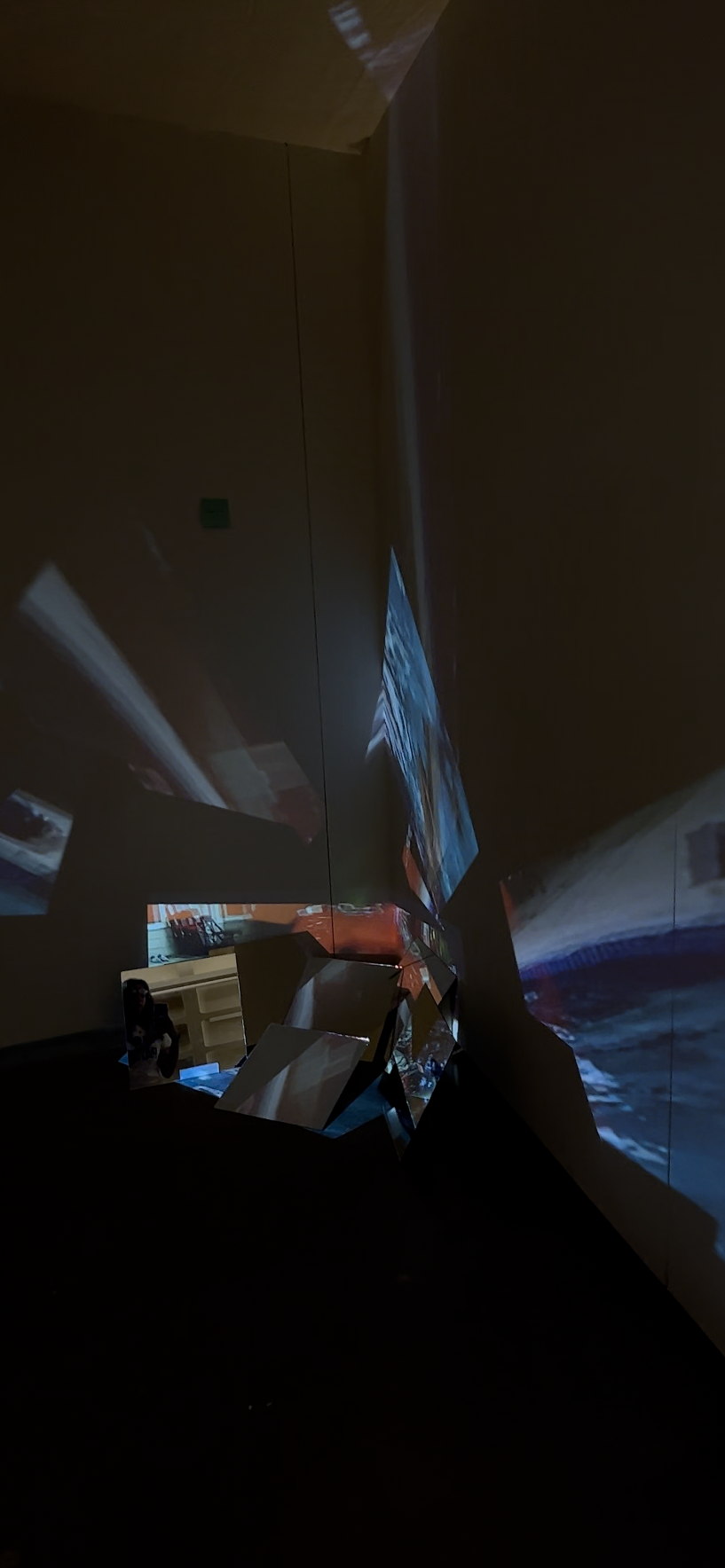
My initial idea was that i wanted to project a video onto mirrors to create multiple reflections of distorted iamges. I knew this would add a unique element to my project and help me explore the concept of fragmentation in a more visual and tangible way, and I think it also ties into Drawing into Space.

During the video editing process, I went through old hard drives and found some footage of interviews I would do with my friends and from parties. I collaged some videos together, or overlapped some, and cut some parts out to make them distorted. I also had multiple audios of friends talking on top of each other to add to the theme of fragmentation. Ultimately, I wanted the video to express how it feels to try to remember a specific moment, and the struggle to try to do so as time goes on.

After almost finishing the video, my computer shut down, and I lost all of my progress! It was frustrating, but I had to start over, and I finally got it done.

The next step was buying the mirrors, and setting them up ended up being my favorite part! I experimented with different ways of setting them up, and at first, I wanted to shatter them. But, I ended up liking how they looked propped up on the floor because it made the video reflect all over the walls.

Overall, I’m happy with the way my final art project turned out, and I feel like I was able to explore the concept of fragmented memories in a unique and meaningful way.

Group Project

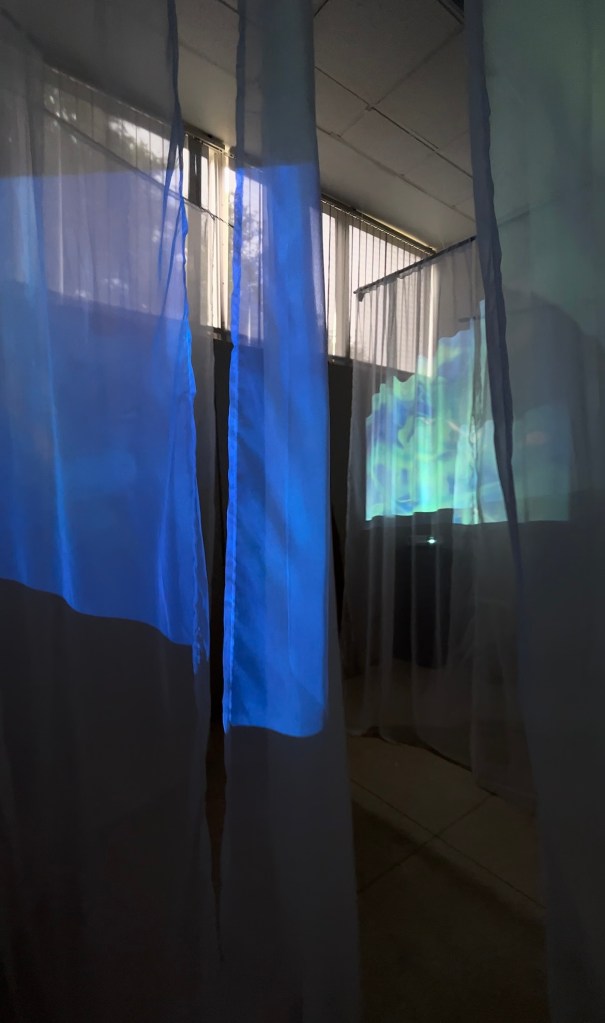
When we were choosing which project to be part of, I was drawn to Adrianas because I really liked her concept of bringing nature indoors and the fact that it incorporated video. We began by scouting out different locations for our instillation. We decided on a room inside the printmaking classroom that was the perfect size for our project, and also had huge windows on one side to add to the nature theme. We then began ordering sheer curtains and metal rods, which we would use as our screen for the video projections. Then, we started clearing out the storage room, which I thought would take us way longer than it did, so that we could begin installing the metal rods and curtains.

The goal of the project was to immerse the viewer in both the peaceful and chaotic elements of nature. Each member of our group went out into nature and captured different footage, such as flowers, trees, lakes, bugs, and the sky. We realized that a lot of the footage was either too short or shaky, so that’s when we came up with the idea of having a chaotic montage with quick cuts in the video to disorient the viewer. During the editing phase, I contributed by adding smooth transitions to the peaceful footage and rough transitions to the footage. We also experimented with audio and visual combinations, we added a soothing soundtrack to accompany the sounds of nature, and at times switched around the audio and videos. After completing the video, we connected the media players to the projectors and set them up on pedestals.

3D Project

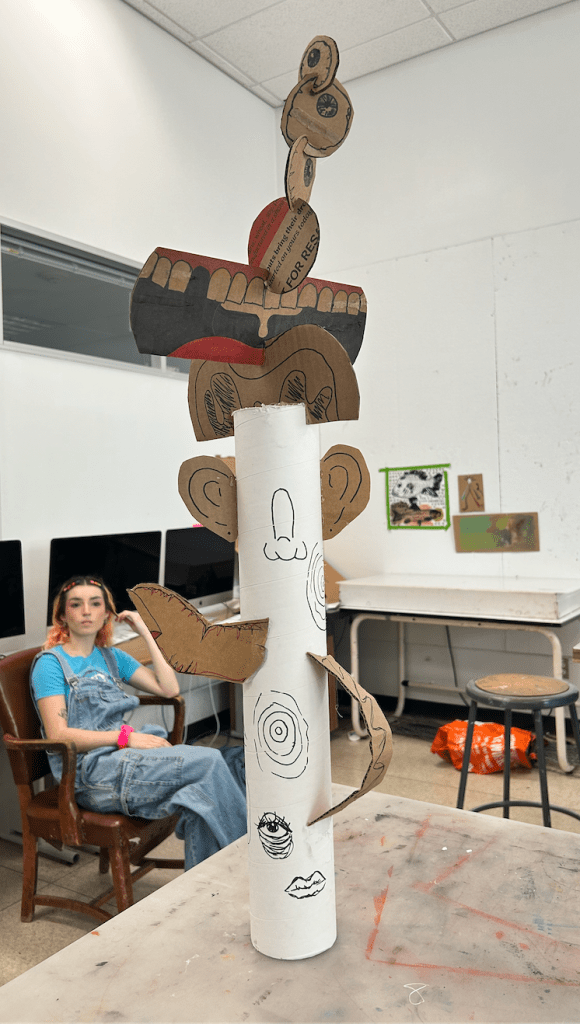
For my 3D Art Sculpture, I struggled with figuring out how to combine the cardboard cutouts I had made. I had an idea of what I wanted to create, but I couldn’t seem to find the right way to assemble the pieces. I kept trying different combinations, but they didn’t work. It was frustrating, but I knew I had to keep experimenting. Then, I found a round vase-like cardboard thing that I decided to use as my base. It inspired me to create a sort of totem pole-like sculpture with my cutouts. I had cut out different shapes of eyes, a mouth, ears, and a finger, and I decided to stack up the eyes on top of the mouth and put that on top of the vase thing. It looked interesting, but it wasn’t quite what I was looking for yet. So, I continued to experiment and try different combinations. I attached the rest of the cutouts on the vase like a totem pole and drew more images of lips and noses on the base. It was starting to come together. Finally, after several attempt, I had created something that I was proud of. It’s a totem pole-like sculpture with a mix of eyes, a mouth, ears, and a finger. It still isn’t quite what I had envisioned, but I think it has potential. If I had more time, I would have liked to paint on the cardboard and make the cut outs double sided so that it works from all angles.

David Blandy

David Blandy is a British artist known for his works that explore themes of identity, race, and pop-culture. Blandy studied Fine Art at Central Saint Martins College of Art and Design in London, and later earned a Masters in Fine Art at Slade School of Fine Art. His art spans video, installation, performance, and gaming, often drawing on personal experiences and family history. Blandy’s work has been exhibited internationally, and he has won numerous awards for his contributions to contemporary art.

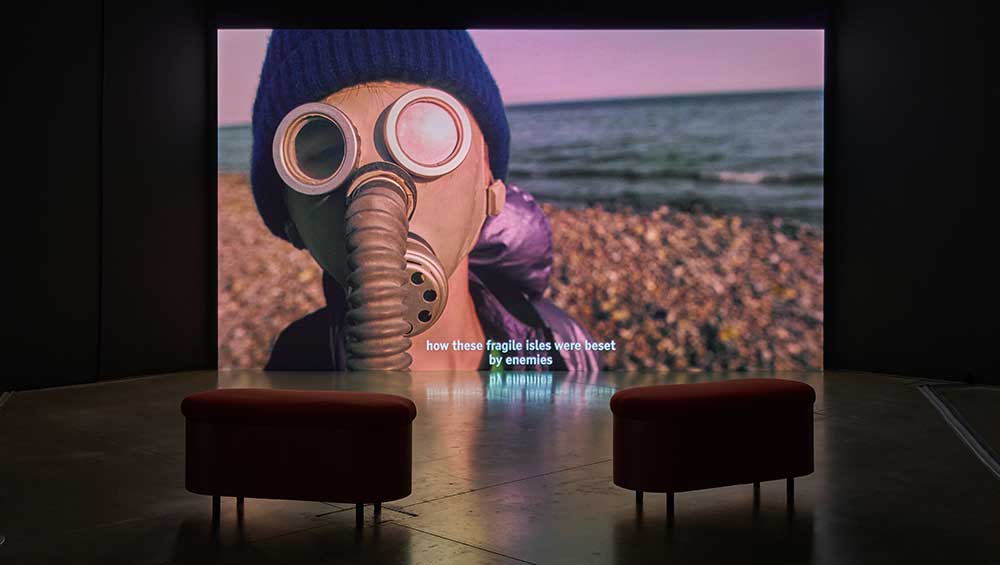
David Blandy’s exhibition, “Atomic Light”, consists of four interconnected films. The exhibition draws on Blandy’s family history, exploring how historical events such as the atomic bombing of Hiroshima and Nagasaki and the Second World War have shaped our world. He often combines found footage with his own filmed material, as well as animation and computer-generated images. Blandy is particularly interested in exploring the cultural and historical resonances of different types of media, and he often incorporates vintage footage from sources like old movies, television shows, and newsreels into his work.

https://www.studiointernational.com/index.php/david-blandy-atomic-light-review-john-hansard-gallery-southampton

Marc Camille Chaimowicz

Marc Camille Chaimowicz is a French artist based in London who specializes in installation, performance, sculpture, and design. Chaimowicz’s work often explores themes of memory, domesticity, as well as the connection between art and everyday life.

One of Chaimowicz’s most significant works is “Nuit Américaine,” a large-scale installation that was first exhibited at the Serpentine Gallery in London in 2016. The installation was named after a term used in the film industry to describe the technique of shooting night scenes during the day, using filters to create the illusion of darkness.

“Nuit Américaine” consists of a series of rooms that are furnished with a range of objects, including furniture, textiles, and decorative items. The rooms are designed to create a sense of domestic intimacy and comfort, while also evoking a dreamlike, surreal atmosphere.

https://www.studiointernational.com/index.php/marc-camille-chaimowicz-nuit-americaine-review-wiels-brussels

Petrit Halilaj

Petrit Halilaj is a contemporary artist from Kosovo who specializes in installations and sculptures that explore issues related to identity, memory, and displacement. His work is deeply rooted in his personal experiences growing up in Kosovo during the war and the subsequent period of reconstruction and transformation.

Halilaj’s work has been exhibited in major museums and galleries around the world, including the Tate Modern in London, the New Museum in New York, and the Stedelijk Museum in Amsterdam. He has received numerous awards and honors, including the Mario Merz Prize in 2014 and the 2020 Hugo Boss Prize.

“Very volcanic over this green feather” is one of Petrit Halilaj’s installation. This work was first exhibited at the Fondazione Merz in Turin, Italy in 2018, and later at the Palazzo Grassi in Venice in 2019.

Robert Rauschenberg

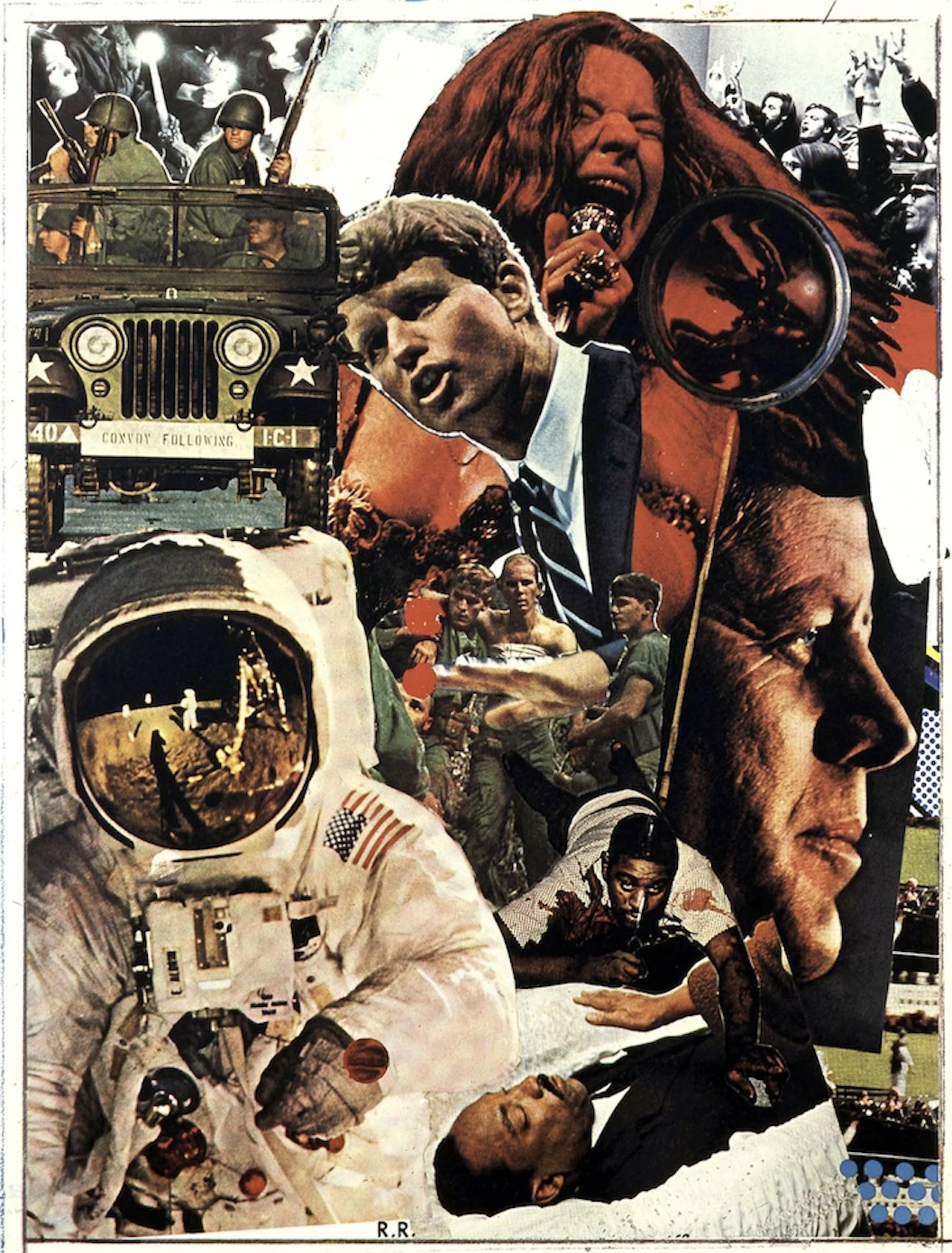
Robert Rauschenberg was an American painter and graphic artist born in Port Arthur, Texas who specialized in abstract expressionism. He took an experimental approach to art making which resulted in him being considered as one of the most influential American artists. Along with painting, he also worked with photography, printmaking, paper making, and performance art.

In his landmark series of Combines he mixed the materials of art making with ordinary things. With this series, Rauschenberg endowed new significance to ordinary objects by placing them in the context of art. The work ranged from free standing to wall-hung pieces, influenced by surrealism and the pop art movement.

Line Project

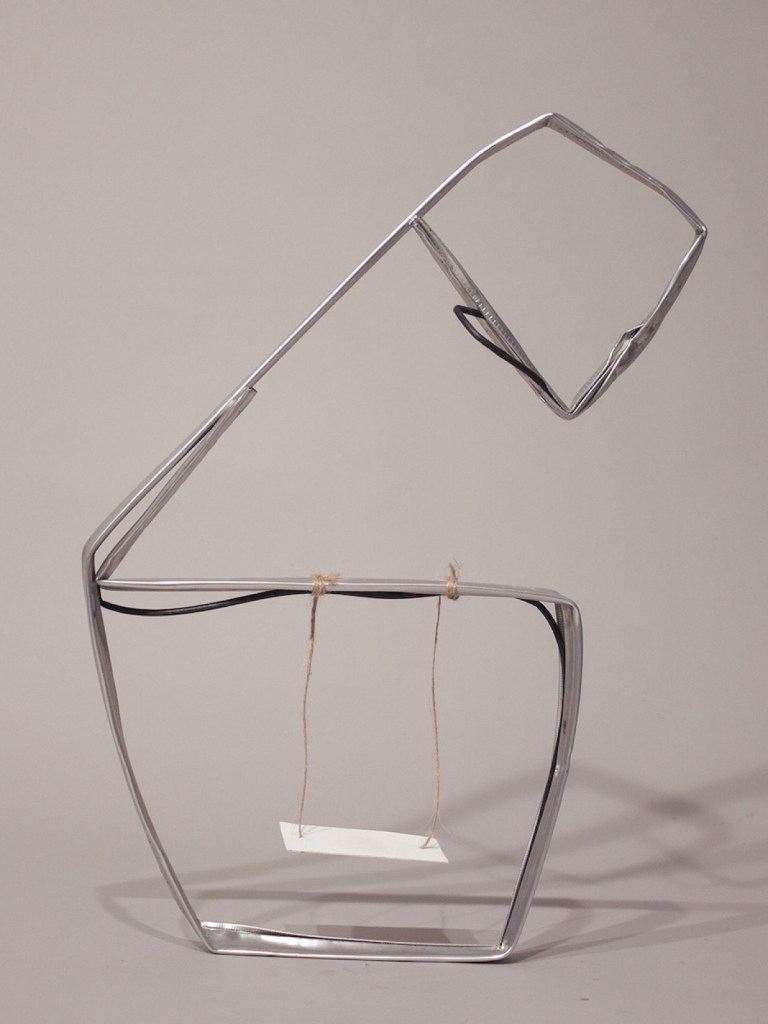
Our line art project started with brainstorming ideas and browsing Pinterest. We were drawn to the idea of incorporating a tree into our project, inspired by a green wire that resembled glass. After stumbling upon an image of a wire tree house, we decided to create something similar. We used the green wire as a base, laying it flat to represent the ground, and then used silver wire to form the trunk of the tree. To create the tree tops, we bunched up the green wire. However, we encountered a problem when the tree became too heavy for the flat wire base to support it. To solve this, we decided to hang the tree, which gave it a slightly crooked look that we liked. Ultimately, we decided to abandon the tree house idea and instead created a swing set.

As we continued to work on our project, it took on a darker theme. We added swings underneath the tree and incorporated roots emerging from the base, which gave the impression of an underworld. Our desire to add a creepy doll to one of the swings led us to craft one from sticks and twine. As we continued to work on the project, the dark theme became more prominent.

Lenard Smith

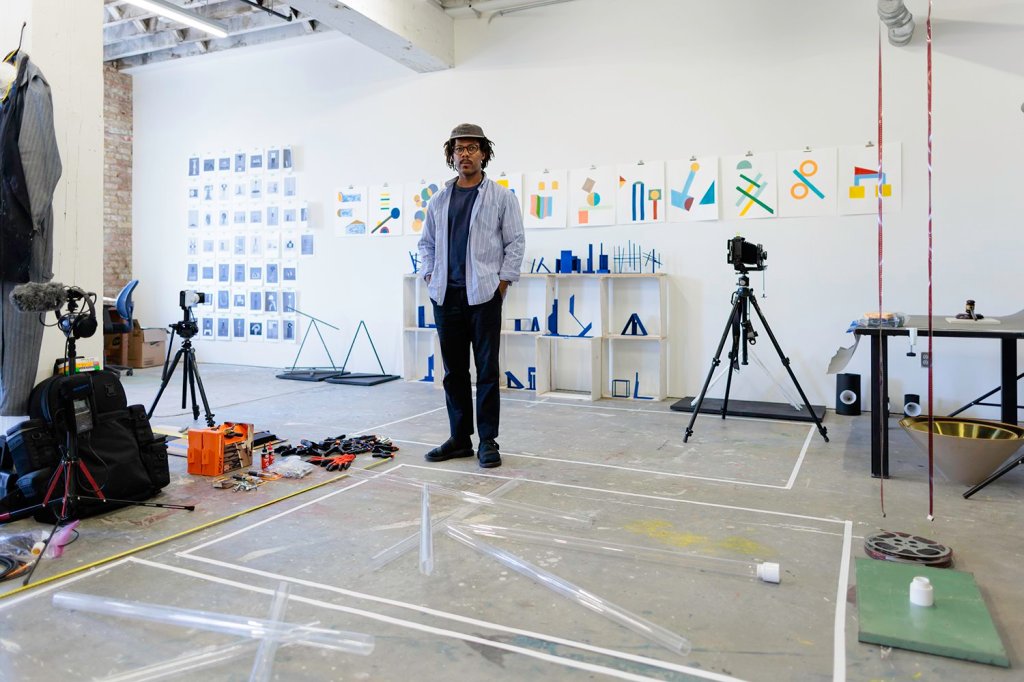
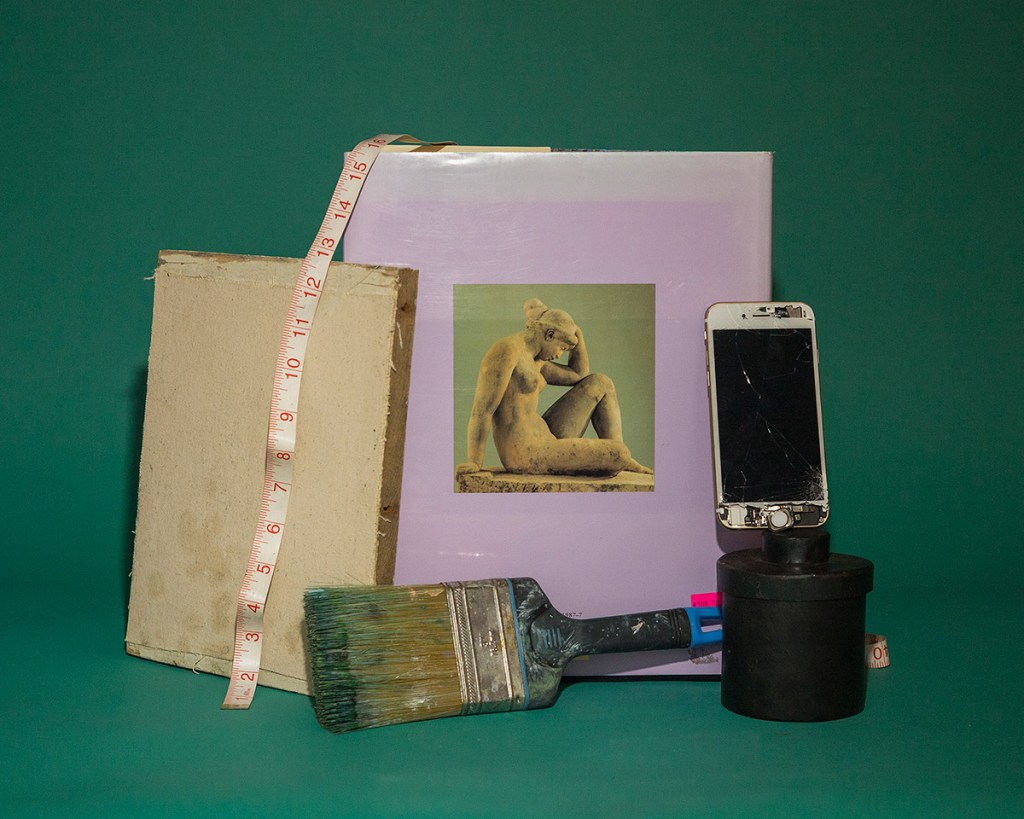
Lenard Smith is a first generation Ghanaian-American interdisciplinary artist based in in Los Angeles, California. His work explores surrealism, introspection, and references personal and found objects. His artistic practice includes photography, sculpture, painting, sound, film, and bookmaking. Lenard’s art is characterized by a signature style that combines assemblage sculpture and still life photography, drawing influences from pedagogical readings, architecture, and design. He has exhibited his work in various exhibitions and galleries in the United States and internationally. His artistic expression is diverse and motivated by his memories of past moments, and how they relate to the present.

In his work “Fortuitous Encounter”, he brings together intimate personal belongings and found objects to create sculptural arrangements that offer new interpretations of disparate items. Smith wants us to reflect on the meaning of objects in our lives and to reimagine their significance. He challenges us to consider how we assign value to things and how we can find new ways to relate to the objects that surround us.

https://www.bemiscenter.org/residents/lenard-smith

Karine Jollet

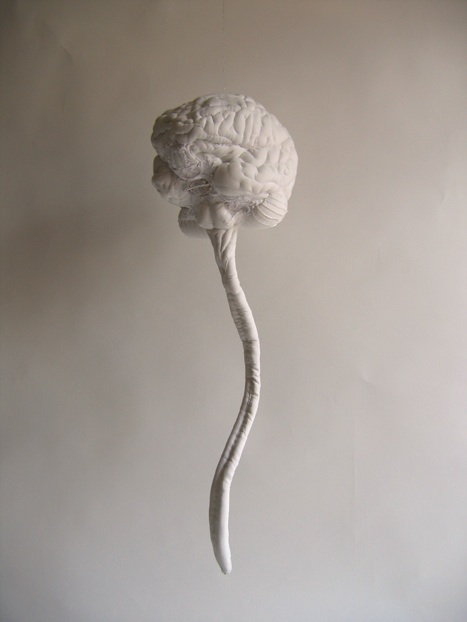
“Ancestor”, 2005, old bed sheet and wadding, 36cm x 43cm x 25cm. Karine Jollet

Karine Jollet is an artist based in Paris who specializes in sculpture, metals, and design. Her main focus has always been on exploring the relationship between the outer surface and the contents of objects. She began working with textiles since it was a softer and more flexible medium, and eventually started using recycled fabrics such as old bed sheets and shirts to create sculptures that resemble the human body. Her work has been exhibited in private and collective exhibitions across France and in Switzerland, Belgium, Italy, and Japan.

Jollet’s sculptures show depictions of the human body, including organs, muscles and faces, but without any of the messiness or blood. All of her work is created in white fabric, which she uses as a symbol for skin, representing the “covering that conceals what lies beneath”. Jollet’s art challenges viewers to reconsider their perceptions of the human body by isolating it from its more unsettling aspects and presenting it in an almost ethereal light.

“Tribute to hypophysis – Brain”, 2011, old bed sheet, shirt, embroidery, pearl, polyester fiber and electric wire, 70cm x 19cm x 19cm.

https://medinart.eu/works/karine-jollet/