This week I decided to choose a more well known artist from the early 1900s (1901-1966), Alberto Giacometti. Alberto was born in Borgonovo, Switzerland and grew up around his father and grandfather who were both painters- Growing up around art inspired him to become an artist himself, and he would later become a painter and sculptor. In 1922, Alberto moved to Paris and got an education at the Académie de la Grande-Chaumiére.
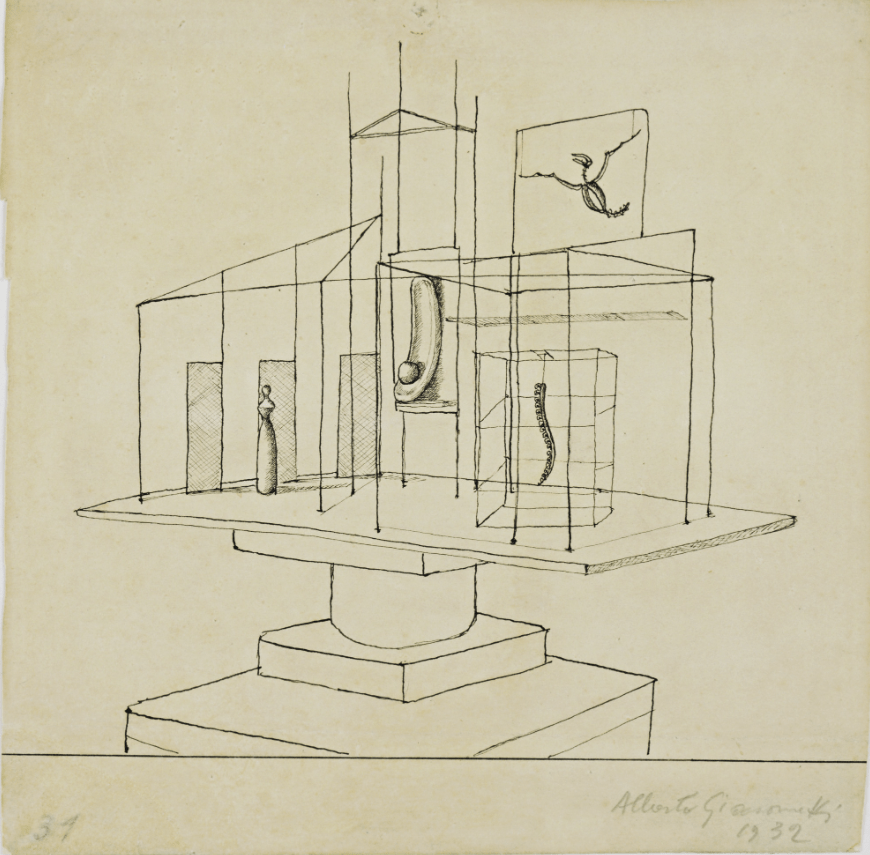
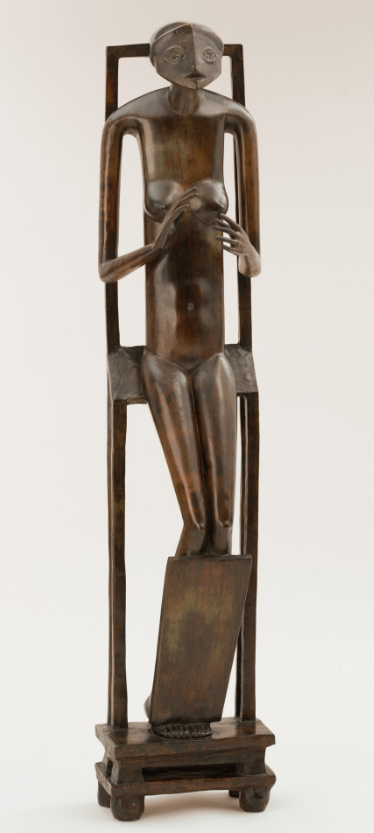
The surrealism and cubism movements of the 1900s greatly influenced Alberto’s work. He started off creating 2d work, integrating cubist elements into his sketches like Study for The Palace at 4 a.m. Over time, Alberto focused more on 3d work and started making bronze sculptures. As World War 2 unfolded, the chaos and despair of warfare stirred up was a common theme in Albertos work- The figures he created are strangely surreal, limber, and appear shriveled and existential. This may also come from his creative process, where he states “From 1935 through 1940, I spent every day with the model. Nothing went as planned. For me, a head became a wholly unfamiliar and dimensionless entity.” Emotion and the human condition played a big role in Alberto’s work, and a quote I found that sums it up pretty well is “He sought to make renderings of his models as he saw them and as he believed they should be seen.” For example- he sometimes made extremely small sculptures because the models he worked off were far away in the distance. However, he also made towering sculptures that spanned over 8 feet tall. Even decades after his death, Alberto Giacometti’s work continues to be eye-catching and thought provoking.

 drawing into space