Val Britton

Val Britton is an American artist who is known for her intricate and captivating works of art that explore the nature of language and the human experience. Born in Livingston, New Jersey in 1977, Britton was raised in a family of artists, which fostered her love for the arts at an early age. In school, Britton explored a wide range of mediums, including printmaking, painting, drawing, and sculpture, but it was her fascination with maps that became the defining focus of her work.

https://valbritton.com/detail/continental-collision/in-set/featured

She uses a range of materials and techniques, including gouache, ink, graphite, and collage, to create her pieces. Her work is inspired by her travels and experiences in various parts of the world. Her works often have a dreamlike quality to them, as if they are part of a larger narrative that is just out of reach. Britton’s work has been widely exhibited both nationally and internationally, and is included in numerous public and private collections.

https://valbritton.com/detail/the-continental-interior-2012/in-set/installation
Research Post

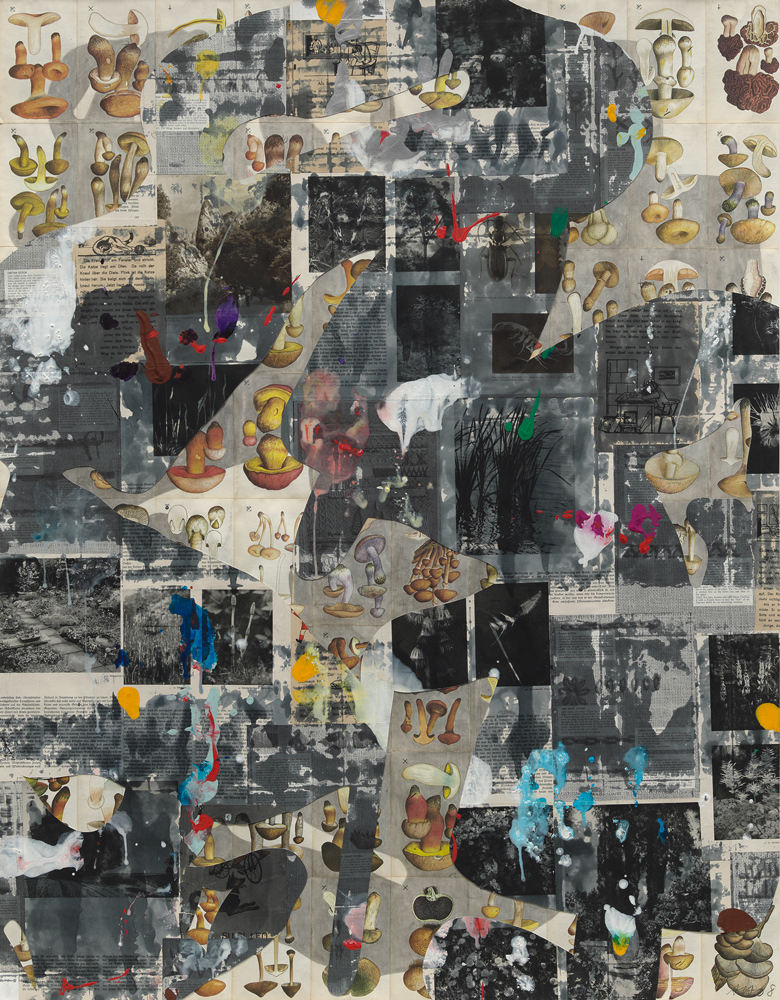
Arturo Herrera is a Venezuelan-born artist whose work spans a variety of mediums, including collage, drawing, painting, printmaking, sculpture, and wall painting. He received a BA from the University of Tulsa, Oklahoma, and an MFA from the University of Illinois at Chicago. He became well known in the 1990s for his collage work, which drew attention for its innovative approach to combining popular culture references with abstract forms. Based in Berlin, Germany, and New York, his work has gained international recognition for its unique ability to tap into the viewer’s unconscious and evoke memory and recollection. Today, he is considered one of the most influential contemporary artists working today, with his work being exhibited in museums and galleries around the world.

Mushrooms, 2008, Collage, mixed media on paper, 146,5 cm x 113,5 cm

In addition to his collages, Herrera’s work includes sculpture, relief, wall painting, photography, and felt wall hangings. His felt works involve cutting shapes from a piece of felt and pinning it to the wall. His work is deeply rooted in the idea of the unconscious, and he often intertwines fragments of cartoon characters with abstract shapes and partially obscured images that evoke memory and recollection.

Dwarf Back #4, 2006, Graphite on paper, 42 x 28 cm

Xu Bing

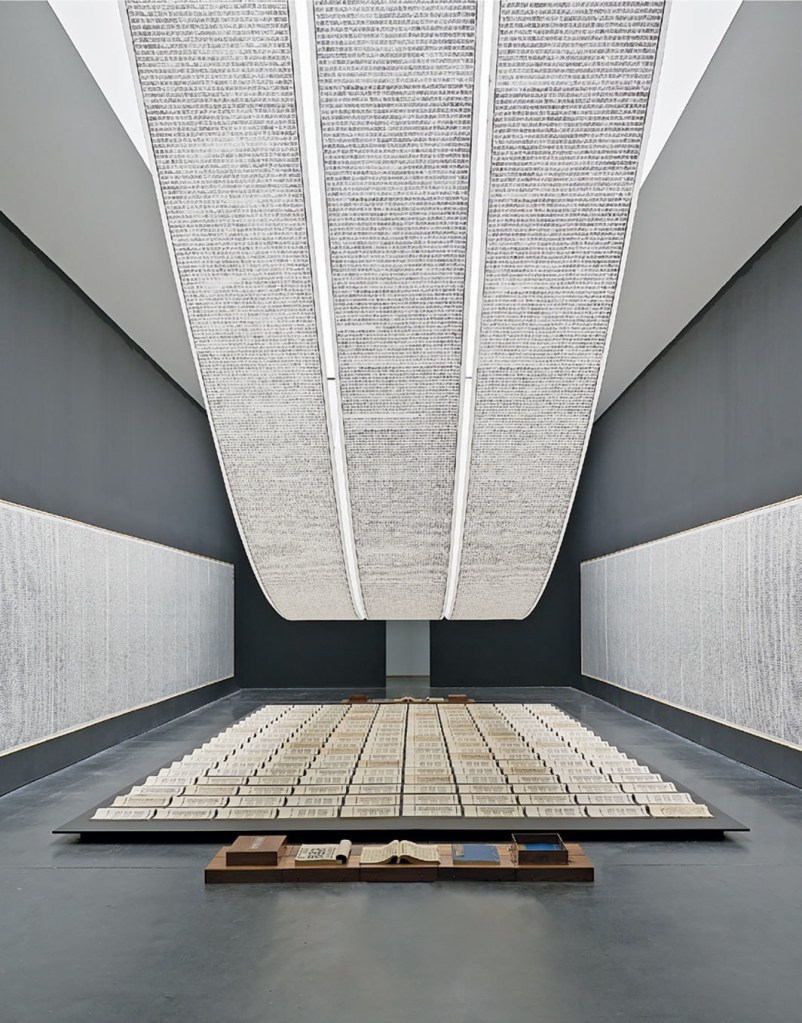
For this week’s research post, I have chosen to talk about the artist Xu Bing. Xu Bing is a pioneering Chinese contemporary artist who grew up in Beijing. Bing takes his fascination with visual and written languages to create his mix-media installations that deal with not only language but upending expectations and perception as well. Through his installations, the artist takes the audience on a journey that considers how cultural backgrounds, including those that have been shaped by language, are the foundations of how we view the world. Bing explains this link as the “cognitive structures of the mind”. The first image that I included below is of his installation titled “Book from the Sky” which was displayed at the Blanton Museum in Austin from June 2016 to January 2017. This piece has been exhibited globally, receiving praise for its provocative power and for its ability to engage the audience beyond its original context.

https://www.artforum.com/print/reviews/201809/xu-bing-77280
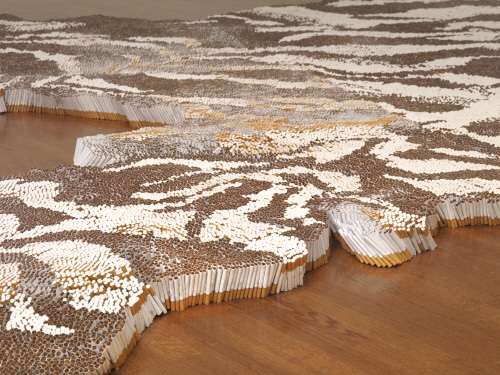
https://magazine.art21.org/2012/02/10/ink-contemplating-nicotine-xu-bings-tobacco-project/?amp=1

Sopheap Pich

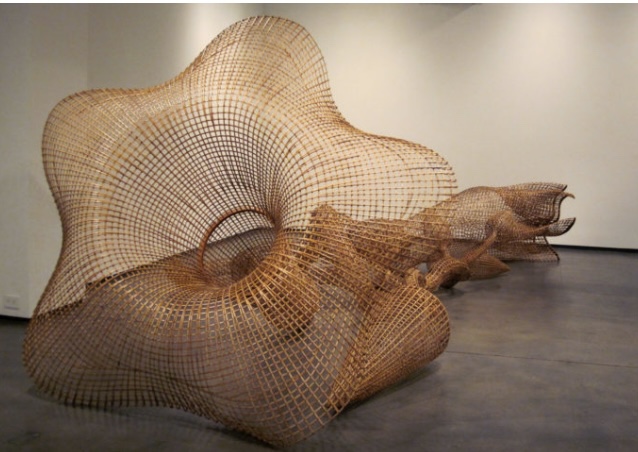
I chose this week’s research post to be about the Cambodian American contemporary artist Sopheap Pich. Towards the end of the Khmer Rouge’s reign in Cambodia, Sopheap Pich and his family fled the country and eventually immigrated to the United States. In the desire to reconnect with his childhood memories and experiences, Pich went back to the country in 2002. His sculptural practice is sculpted by the experiences he endured from the Vietnamese invasion and having to witness all of the devastations that come with war. Sourcing materials from rattan and bamboo as well as other indigenous sources, Pich creates three-dimensional objects which poetically simulate reconstruction. Pich’s art is the embodiment of his memories, culture, and place through both their medium and form. Rattan and bamboo are integral to everyday life in rural Southeast Asia, and the techniques that Pich uses to interweave the material are derived from Cambodia’s craft tradition. 

http://www.trfineart.com/artist/sopheap-pich/#artist-works

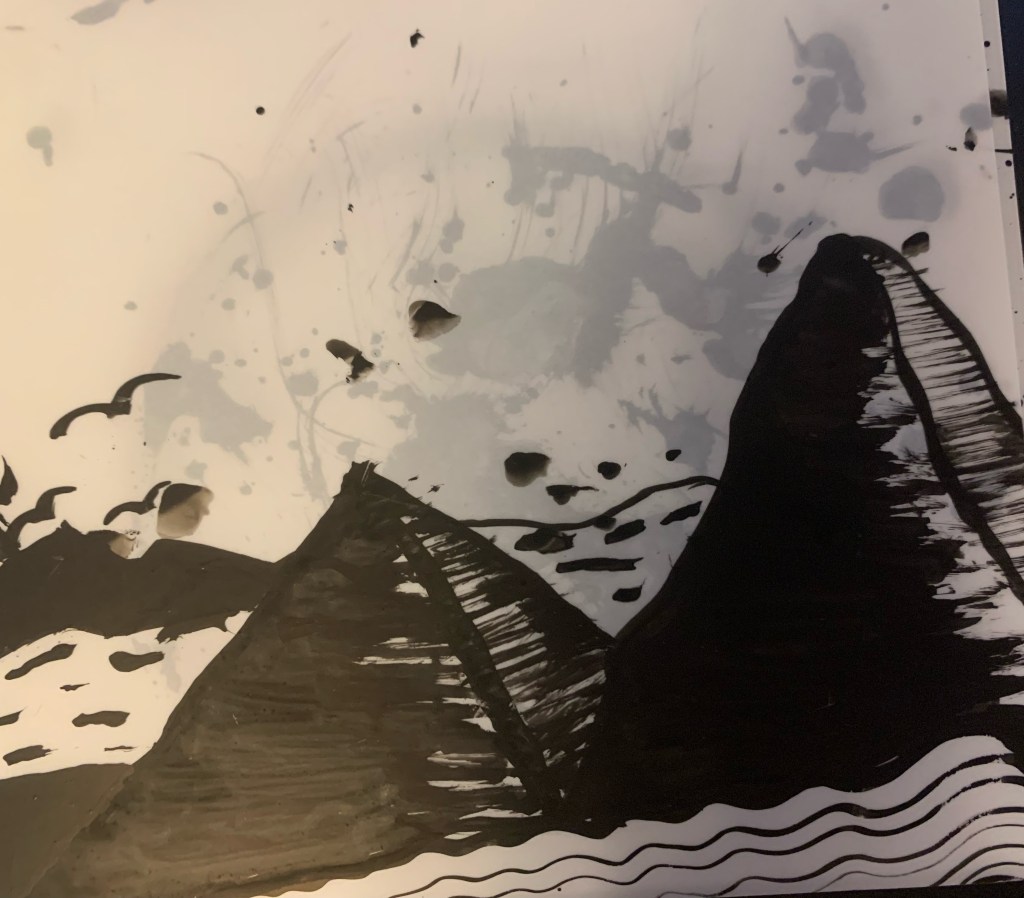
Galaxy Mountain- Translucent Layers

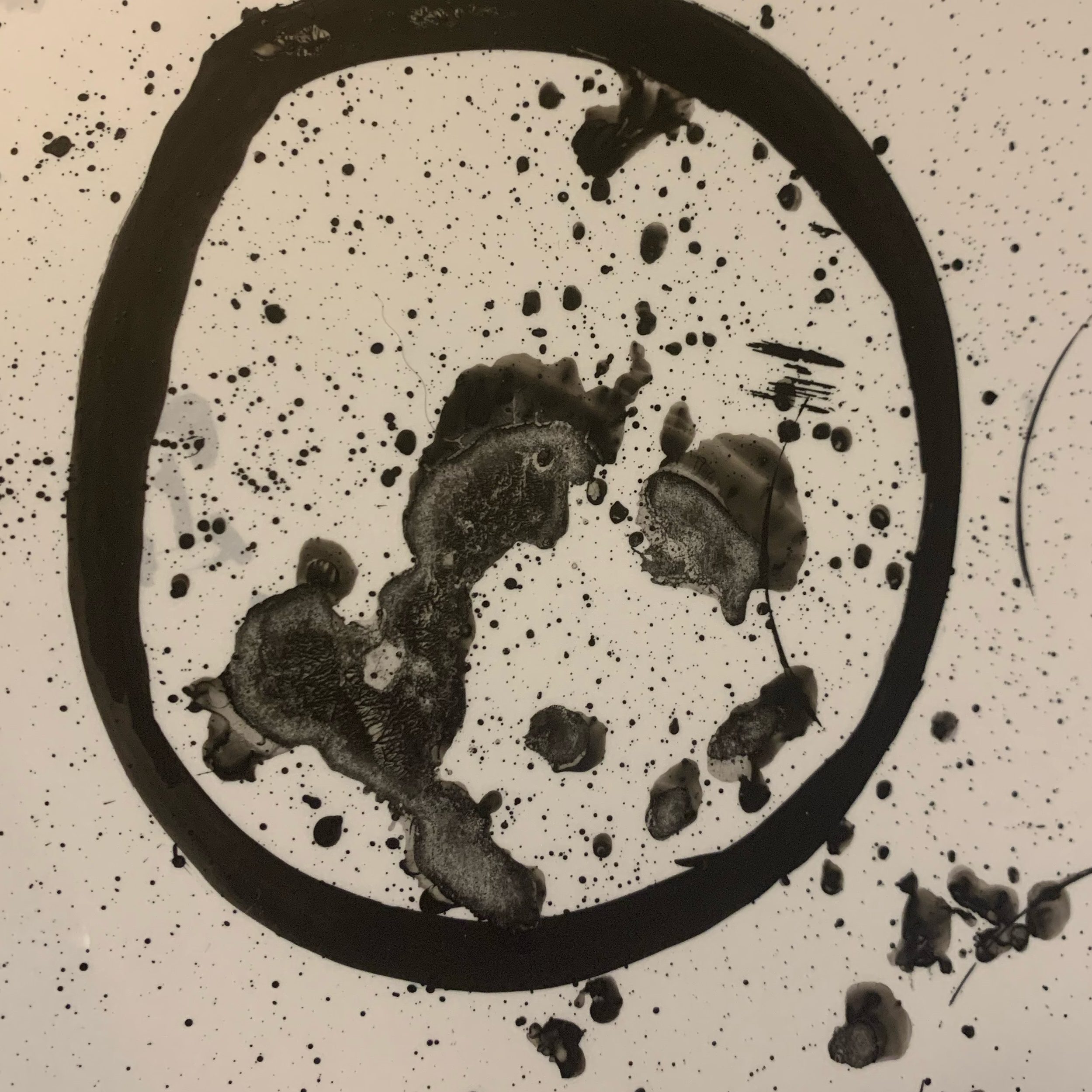
For this weeks project, I used two layers to create a mountain area with a galaxy moon and background. My idea for this was simplistic due to not working in layers before. The medium I decided to use was black waterproof India ink.

I started with this circle as a moon and I flicked ink all over the page. I also messed around a little and spread some of the droplets around with my brushes. I thought it looked pretty good there.

I started on my top layer that portrays mountains, some waves, and a little bit of a mess. Lesson learned: don’t paint outside on a windy day. I did mess up a little, I tried to cover it up with more mountains but it looks funky, but that okay.

Luo Zhongli

The person I did this week is Luo Zhongli. He was born in Chongqing in 1948. He works in realistic paintings and famously known for doing portraits. He was also known for developing a lot of chinese art back in the 1980s. During that time (1982) he went to school at Shichuan Fine Arts Institute. He then went to the Royal Academy of Fine arts in Belgium in order to get an Masters of Fine Arts in Oil painting.

Luo did this painting called Father which is one of his best works. This piece below is revolutionary. It spread all across the world and helped bring a lot of attention to Chinese artist. For the painting itself, its a point of view of peasants and allowed people to bring thought into how they were treated.

Zhongli was awarded the National Golden Award which was huge for Art in China at the time. His work ended up being put up in the Chinese art museum.

Luo Zhongli had quite a few exhibitions in America in New York and Havard Art museums while he was still in school for his MFA.

Reconciliation
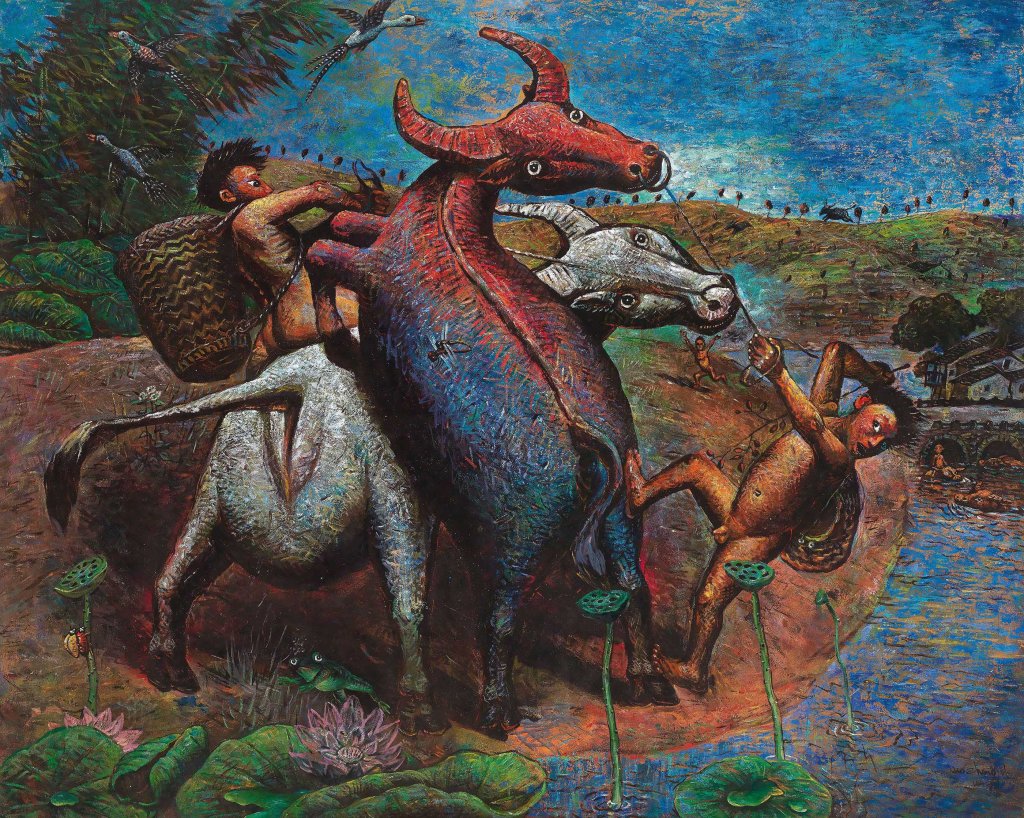
signed and dated ‘Luo Zhongli 1991’ and signed in Chinese (lower right)
oil on canvas

This is another example about his research in peasants and trying to get his audience to look into history and understand this piece. The medium he used is Oil on canvas. The colors he uses in his paintings are correlated to a palette that he uses for most of his paintings. The reason for this is because of religious motifs. In this painting, he uses red and blue for the buffalo. This symbolizes the strength and rage in the buffalo.

Citation:

https://www.artnet.com/artists/luo-zhongli/biograp

https://www.christies.com/en/lot/lot-6080108

Ming-Yi Sung

This week, I was inspired by Ming-Yi Sung. Her work isn’t much like what I’m working on right now, but she uses the same materials that I’m using– yarn. Sung draws with yarn, he work is a lot more objective that what I’m working on.

Sung started school at the Maryland Institute, where she got her bachelors of fine art. She went back to the same school to receive her Master’s in Art Education. Her career began with a publication in Sculpture Magazine, after that she did an exhibition for the Holt Center of the Arts in Maryland.

Besides working with yarn, Sung also paints, draws and makes ceramics:

I feel like her work relates to this class because she is literally drawing into space with yarn. She’s also definitely someone that could inspire somebody’s next project.

Fitz Hugh Lane

Fitz Hugh Lane, born Nathaniel Rogers Lane was born December 19, 1804, in Gloucester, Massachusetts, a coastal town on Cape Ann known for its fisherman and salt island at low tide. The focus of the vast majority of his paintings was maritime-themed. His father was a sailmaker which led to him painting many sailboats on the seas throughout his life. During the majority of his career, he would spend time between Boston, Massachusetts, and New York City, New York where he would showcase his work for others to see.

Hugh’s route of education is more of an untraditional style. He completed an apprenticeship in Boston, Massachusetts. His apprenticeship was at Pendelton’s Lithography which is a printing company that printed illustrations that could also be printed again and again. After his career in the art industry, Fitz Hugh Lane went back to his hometown of Gloucester, Massachusetts. He died on August 14, 1865, at the age of 60. His works can be found in museums all over from The New York Metropolitan Museum in New York City, New York to Art to the Amon Carter Museum of American Art, in Fort Worth, Texas.

Lumber Schooners at Evening on Penobscot Bay, 1863
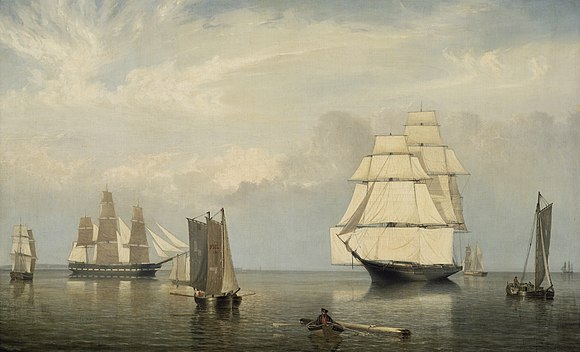
Salem Harbor, oil on canvas, 1853

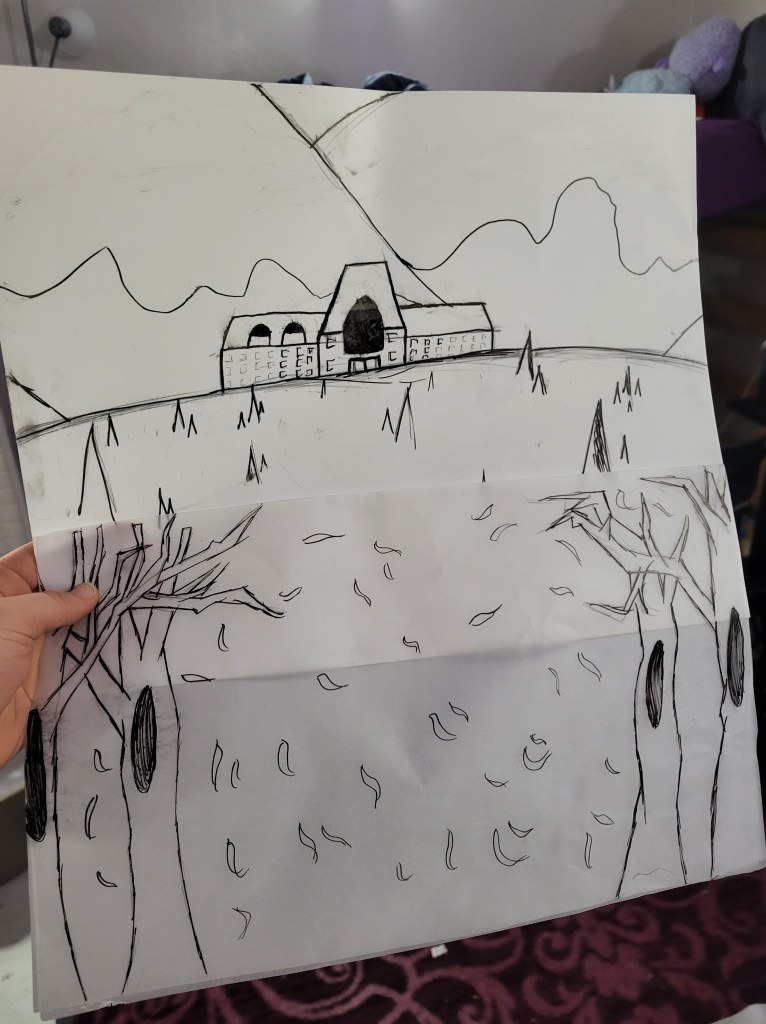
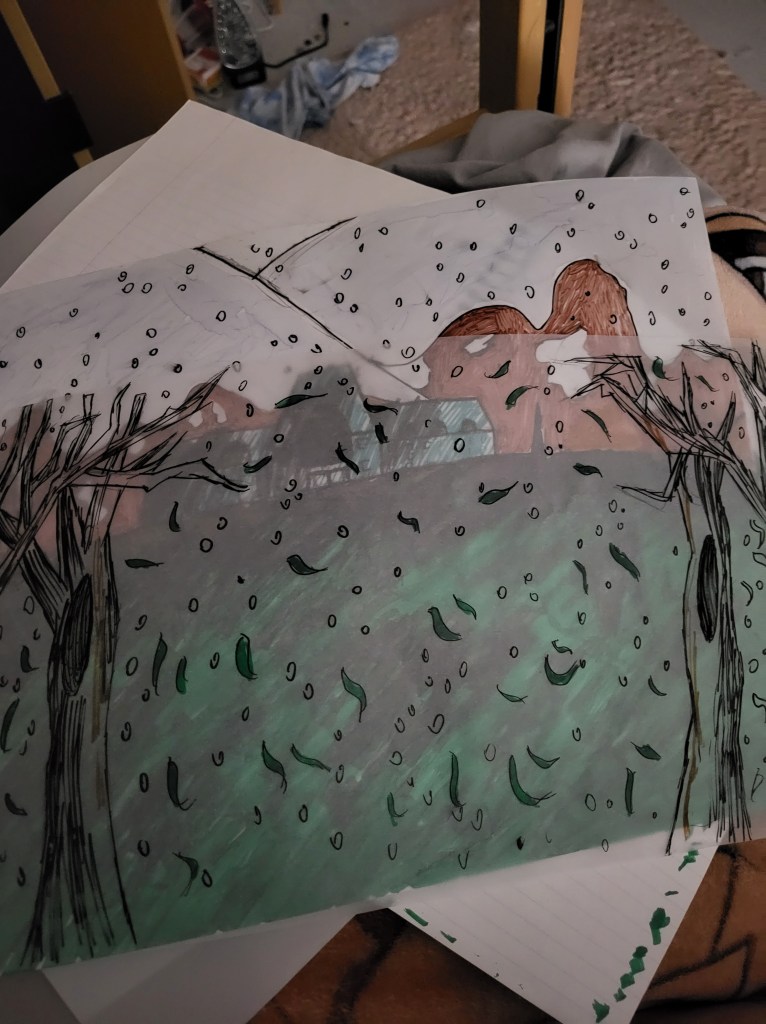
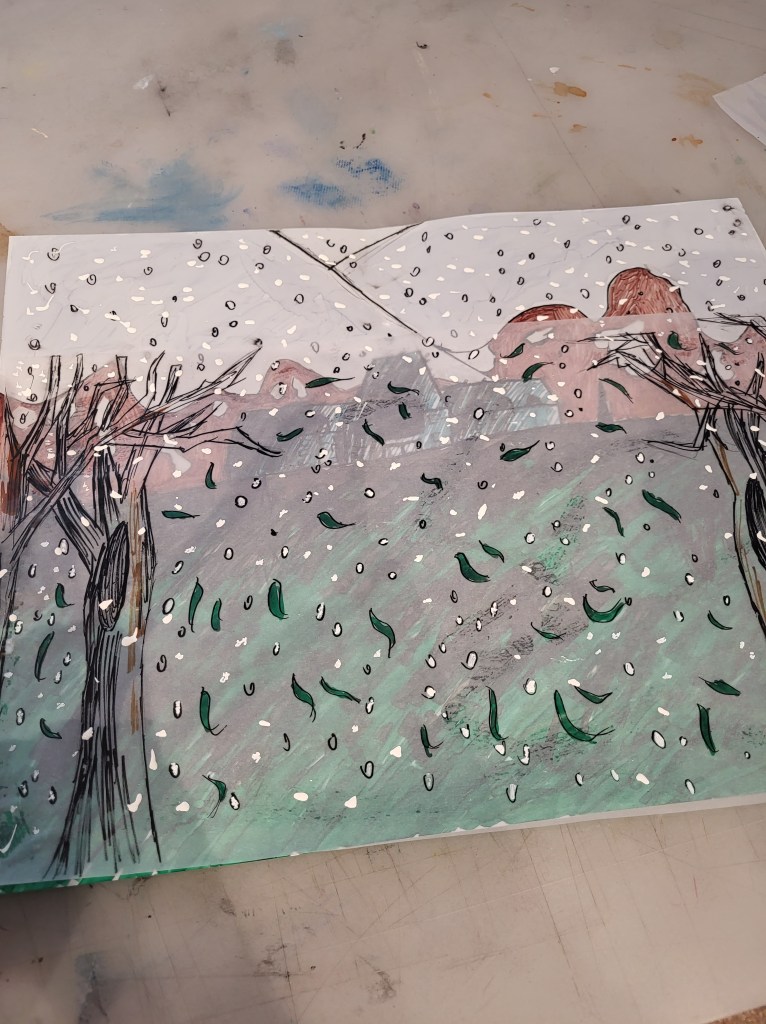
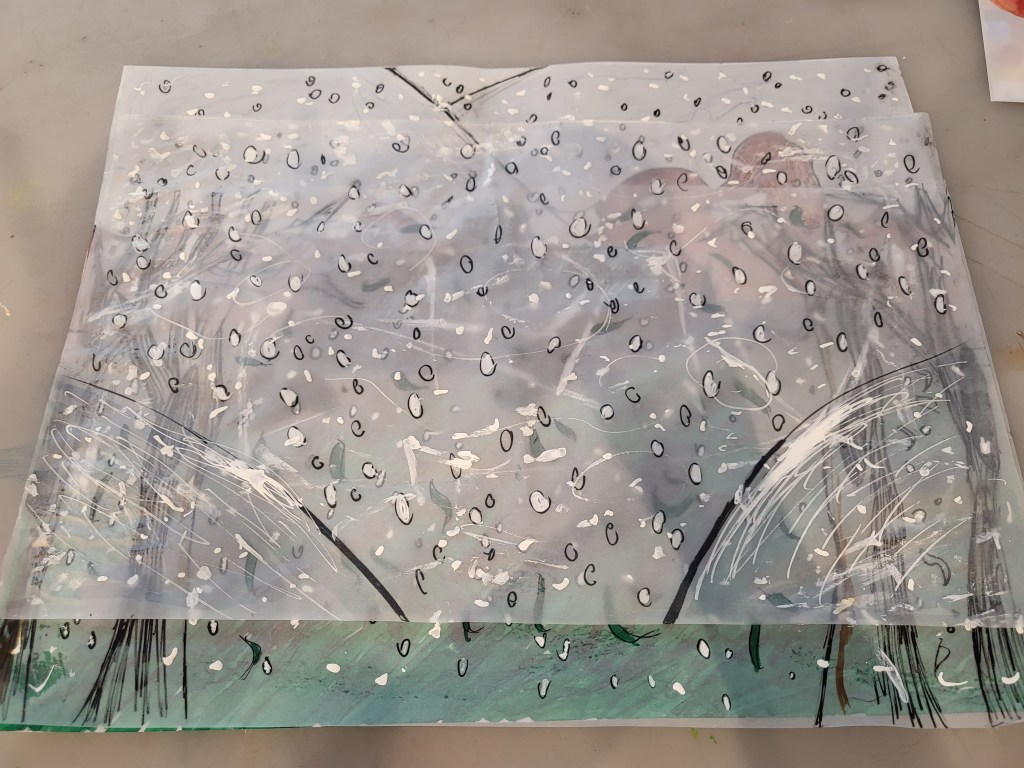
Translucent Layers

This one for me was kind of hard, so I honestly don’t like how it looks. I tried to make a snowy artwork of the overlook hotel from the shining. It was the first thing that came to mind, so I decided to try it out. As for the materials I used, it was mainly alcohol markers and ink pens for this project.

I sadly didn’t have any white markers or pens, so I had to use light blue markers for the snow. However, in class, I was able to use one from someone to make the snow look better. The end result is much better than how it started, but I wish I had some other kind of paper to make the hotel and ground look better.

Barbara Licha

 “The complexity of people’s behaviour has always intrigued me and inspired me to visually express the range of human emotion.” – Barbara Licha

Barbara Licha was born in 1957 in Poland before moving to Australia in 1982. Licha studied Graphics and Sculpture at The Academy of Fine Arts in Wroclaw, Poland from 1979 to 1981. After moving to Australia, Licha got a BA (1985 – 1988) and a Graduate Diploma of Fine Arts (1989) from the City Art Institute in Sydney, Australia.

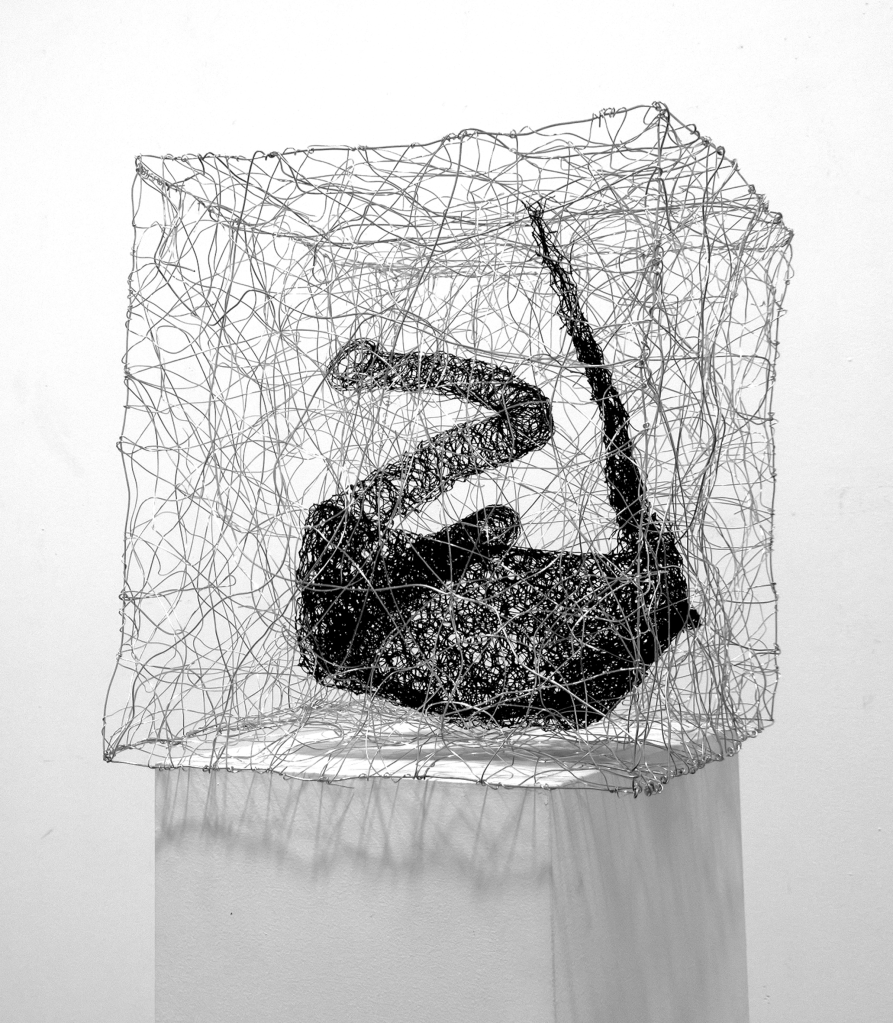
Licha uses various mediums for her work from painting to sculpture, but her favorite material to work with is wire because it is a material she has worked with for more than a decade and has never had any reason to complain about using it. This seems to track given that the majority of her works use a lot of wire to create her meaningful sculptures.

Licha has expressed that she has “always been interested in the complexity of human condition and the variety of human behaviour” and emotions. She explores that in her work through the use of human-like figures to represent “symbols of emotions” so that they can represent everyone and let viewers project themselves into her work. As Licha has expressed, her favorite thing about being an artist is the dialogue between herself and her work and how that transforms into the dialogue between her finished work and the viewers. This communication is what makes her enjoy creating her work and being an artist.

Sculpture Pictures from Barbara Licha – Contemporary Art Website