Cardboard (Project 6)

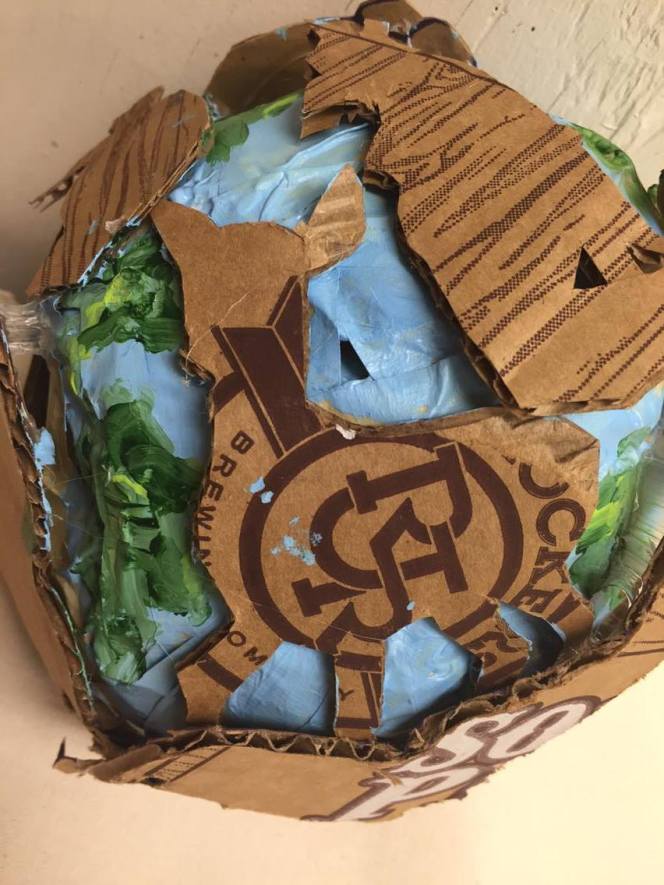
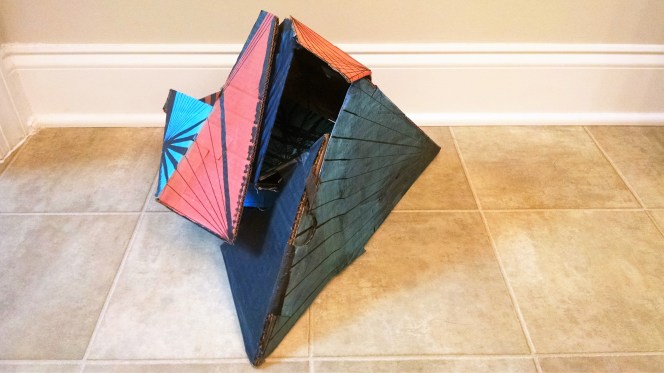
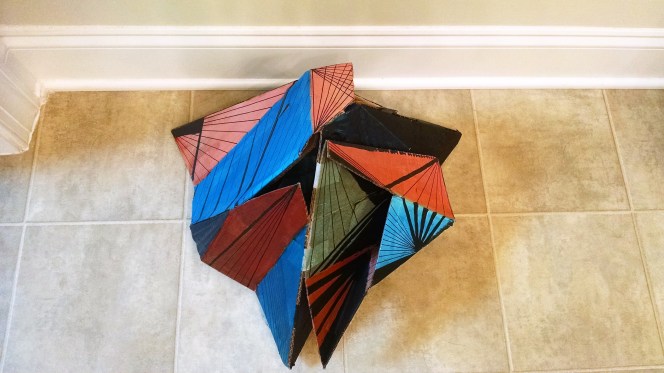
For this project I was honestly just playing with the material and getting an idea of how it worked when manipulate. I wanted to make an abstract sculpture because I wanted to go outside my comfort zone of needing everything to be precise and instead make something that essentially makes no sense.

I started by taping piece together and seeing what it would create, I ended up with this building like structure and wanted to do more to it so I started introducing the string to play around with it a bit. I used the glittery string first to help bind the structure together and create interesting patterns with the structure. I then went and added a plain black string so that I could up the shapes being made and make them more dynamic and interesting.

String Instillation (Project 5)

For our project, Rebecca and I decided to work with just string and tape. We wanted to go with a “web of life” kind of idea and make it interesting within the space. The white yarn represents life and the good parts, the high points of life. The black string lower to the ground represents death and the bad parts, low points of life.  The red/pink string was to represent the steadiness of life, the linear aspect of going back and forth and learning and stumbling and succeeding. All of these components were used to give an representation to the complexity of life and to bring them together in a complex, condensed way.

Fu Xiaotong’s Intricate Landscapes

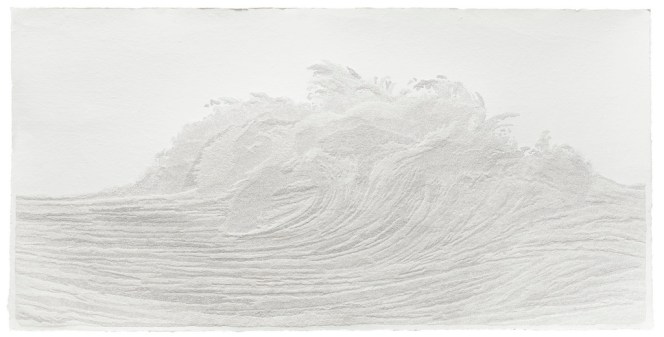
For centuries Chinese artist over time have depicted the cultural landscape in their works showcasing China’s land in a way that does it justice. Artist Fu Xiaotong continues this long tradition in her own unique way. Using a single tony needle and  large pieces of paper, Xiaotong uses the needle as a pen poking holes into the paper in the same manner as pointillism. Poking the paper with the need hundreds and thousands of times to create a monochromatic  version of the tradition of Chinese landscapes. After She had completed a drawing, she then names the artworks based the number of time she has pierced the paper which can go up to 700,000 times. The interesting thing I found about her work is that while the images are flat, when she is finished it almost as though she managed to make the forms in the drawings looks raised.


25058579221_e46ab22596_o24775393829_91e073a76b_b_d

Works Cited: http://hifructose.com/2016/02/20/fu-xiaotong-draws-chinese-landscapes-with-thousands-of-pinholes/

Conor Harrington’s New classical

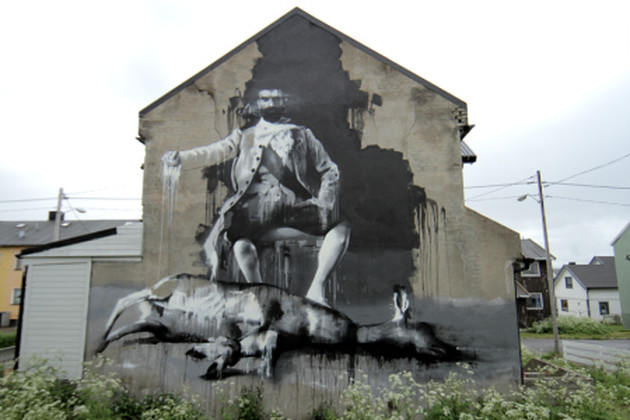
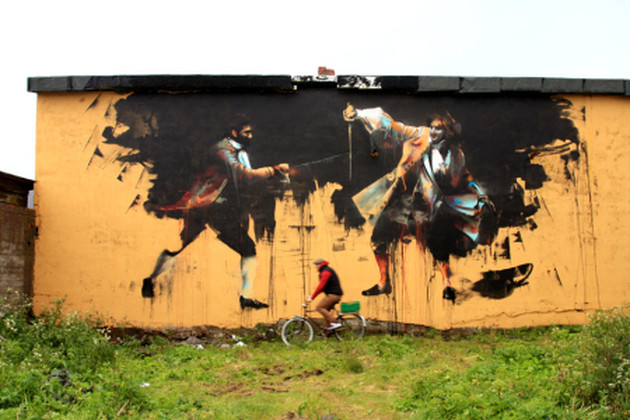
Conor Harrington is a former graffiti artist and now painter from Ireland that combines the aesthetics of classical art with a contemporary twist. In his work he paints his subjects in a realistic and classical manner and juxtaposes them with the modern abstractions and motif of graffiti such a dripping paint and sporadic paint strokes. The majority of the time he depicts the male figure in the position of power and showcases male masculinity in the same that old classical paintings depicted men as stern, high class, and composed. Combined with vagueness of abstractions Harrington uses this a a comment on male identity and roles on society. While Harrington usually paints on more tradition surfaces such a canvas he is more known for his use of space with the murals he paints, using the shape of the wall and buildings as the shape of his giant canvas and composition.


452188_db0d231fc4cb485ca196f51b3e52c325452188_e68d55cc121d47aab10676549ba44503

Works Cited: http://www.streetartbio.com/#!about-conor-harrington-bio/cnt1

Ana Teresa Barboza

Ana Barboza is an artist based in Lima, Peru, and studied painting in PCUP. She experimented with embroidery at first with images of the human body, then expanded on into using embroidery as decorative patterns and camouflage. In her biography, she explains mostly of where her ideas start, and where they will continue to go. As of now, she is interested in the human body in relations to garments and animals with behavior. The pieces that I am most interested in, she does incredibly detailed embroidery of landscapes and plants. Her compositions start of as traditional embroidery images, but them spill out of the frames. She creates these 2d images with thread, that then pulls in the viewer and make the 3d space a part of her pieces. The thread, however, isn’t just laid about tangled and a mess, Barboza is very intentional to how she places her thread outside of the frame, most of which are netted and weaved together  and placed in a fashion that almost mimics the way plants and nature would be naturally.

landscape-4

landscape-3

landscape-2

plants

Citations:

“Now Contemporary Art – Miami, Fl.” Now Contemporary Art – Miami, Fl. Web. 20 Feb. 2016.

“Embroidered Landscapes and Plants by Ana Teresa Barboza.” Colossal. 2014. Web. 20 Feb. 2016.


Project 6: Cardboard: Kimberlyn and Spun

By; Kimberlyn Cook and Spun Ngoensritong

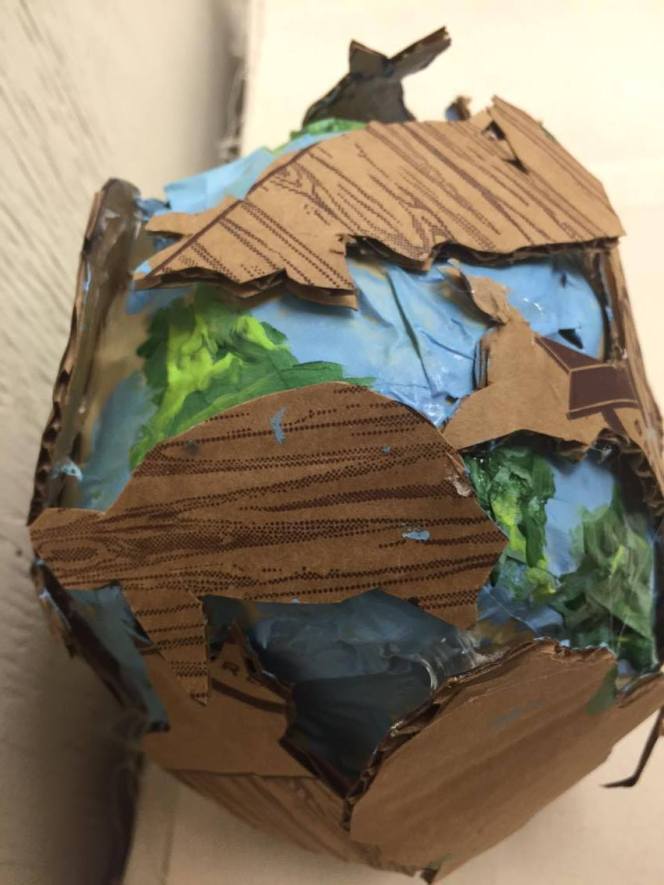
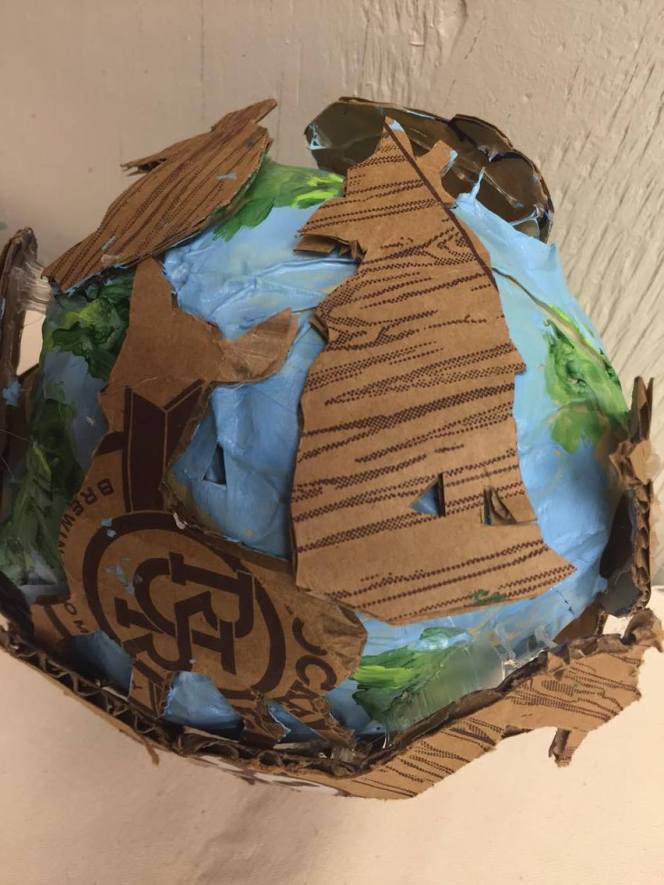
For this project we created an earth out of the brown paper, and then wrapped in in tape to create a sphere, which became the earth.  Next we painted it blue and green to represent the different continents.  After painting the globe we wanted to incorporate animals but in a unique way. Originally our idea led us to do a mobile, but we wanted to be more outside of the box, so instead we pasted the animals to the earth and played with line.  Some have lines drawn on them, some are plane cardboard, and our kangaroo has line work done with hot glue on  his body.  Our concept for this project was about extinction and animal awareness.  It is scary to think that the animals we have grown up with and come to know might one day not be on this earth for our children to see.  I think this is a topic that is too overlooked in our society and needs to be on a higher level of concern.

12751871_10205510272505235_1315287496_o

12773226_10205510272385232_888745445_o

12765578_10205510272305230_1191298518_o-2

12772886_10205510272425233_1418503388_o


Lines and Pyramids (Project 6)

IMG_20160220_135341023

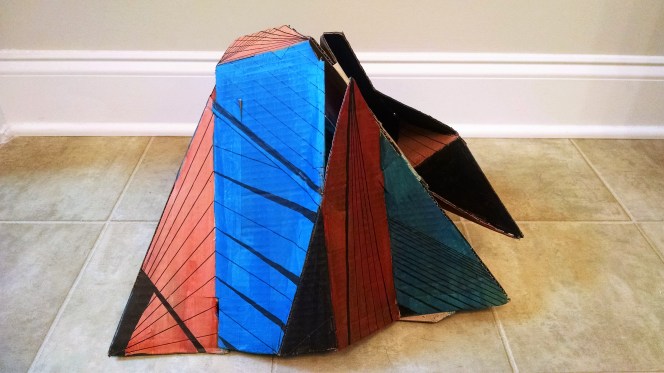
For the 3D drawing constructs, I started with the general idea of shaping the cardboard into small triangular pieces. Then I worked to combine the pieces to create a general pyramid shape. The artwork drew some inspiration from the artist Clemens Behr, whose work was part of the examples for 3D drawing. Behr uses multiples of shapes to construct her installations, which inspired the construction method and overall shape of my work.

IMG_20160220_135408061IMG_20160220_135427928

The cardboard planes are defined by color, which helps to distinguish each plane from one another. I chose to keep the color scheme simple consisting of black and shades and tints of orange and blue.

IMG_20160220_135437666

For drawing in three dimensions, I chose to use straight, directional, and converging lines on the structure. I think this adds to the piece aesthetically as well as to give more movement to the piece. It helps to distinguish the planes but also to see how they interact next to each other. Overall I like the dimensional quality and aesthetics of the piece.

IMG_20160220_135449992

String Installation (Project 5)

IMG_20160201_154954618

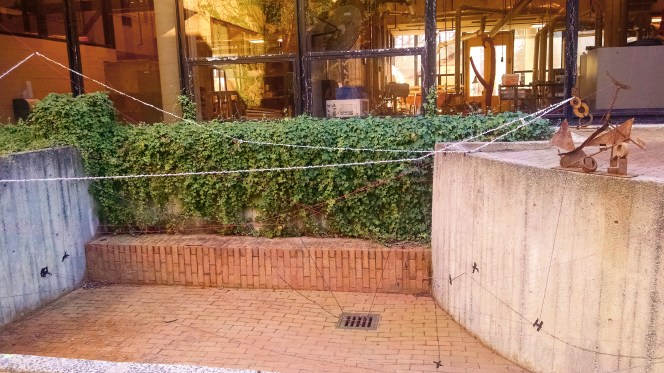
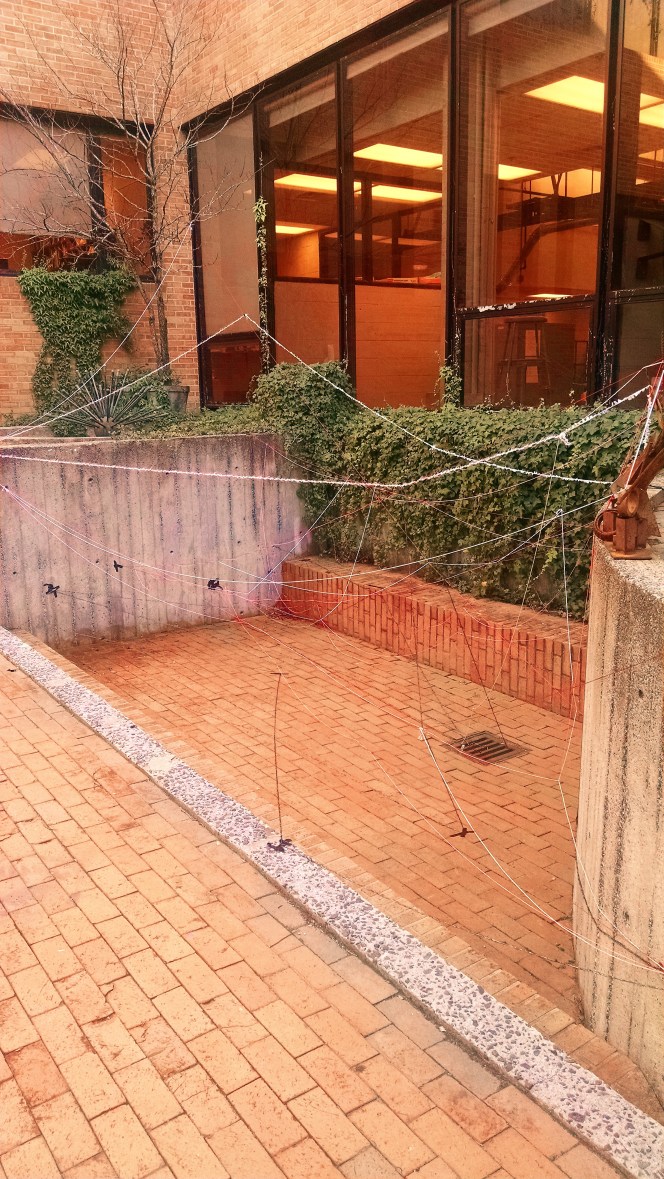
On February 1, 2016, Nicole and I installed our spatial drawing using the unconventional materials: string and yarn. The project was inspired from the space and environment. The juxtaposition of the brick and cement with the green vines and trees already made it a space of tension and opposites. Our initial intention was to start with weaving string throughout the space and bring attention to it. The process of running the pink string back and forth between the cement walls started to feel like a journey and inspired a concept about life and its ups and downs.


IMG_20160201_163753282

The addition of the white yarn that is attached to the trees and sits above the rest of the lines represents the good, peaceful moments. The drain in the ground and the black yarn that interacts with the pink string, represents the bad turns in life. These moments of color and placement meanings help to enforce the contradictions of the space with the contradictions of life.

IMG_20160201_163739600


IMG_20160201_163851133


IMG_20160201_181240666

This documented picture  was taken at night and the green filter from the camera helped to bring out the red and pink strings.

Eske Rex’s “Drawing Machine”

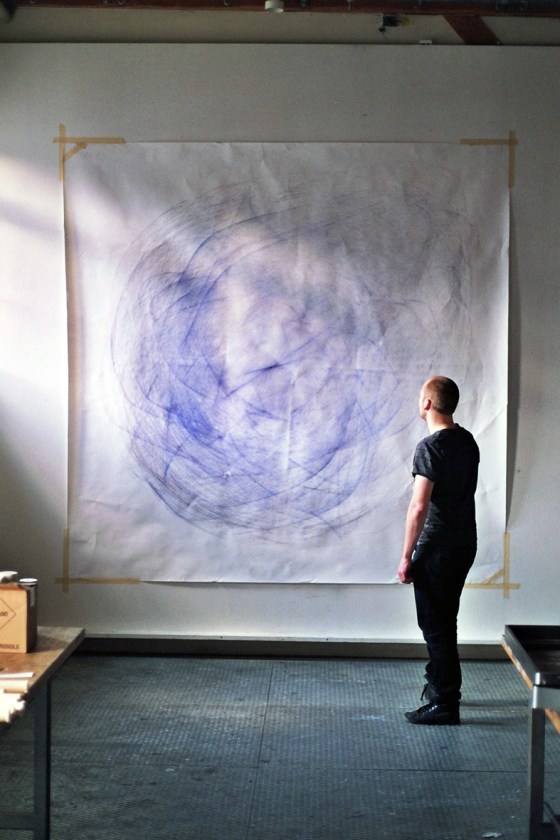
Eske Rex is a Copenhagen-based artist who explores the values of craft and design through his novel sculptures and installations. Most notable of his work is his “Drawing Machine”, a man-powered mechanism fitted with weights and pendulums that produces giant spirograph drawings. Rex aimed to analyze the potential for a machine to function as a sculpture and installation, and as an investigation into the relationship between time and movement.

Drawing Machine. Wood, metal, concrete, venyl, ballpen. 650 x 650 x 300 cm.

The drawing machine is constructed as two nine-foot tall pyramid-shaped pendulums that may be weighted to produce bigger or smaller circles. The structures are connected at a point where a ball-point pen is affixed atop a piece of paper; once triggered by hand, the pendulums begin to swing and continue to do so for however long each others’ kinetic energy lasts. The images produced can be up to nine by nine feet in size and, due to the nature of being powered by hand, no two images are alike.


Wöhlk, Nina. “On Rex’s Works In General.” 2015
http://www.eskerex.com/?page_id=1159

“Drawing Machine.” 3 October, 2009.
http://www.eskerex.com/?p=464

https://www.artsy.net/artist/eske-rex

Edgar Mueller- 3D Sidewalk Art

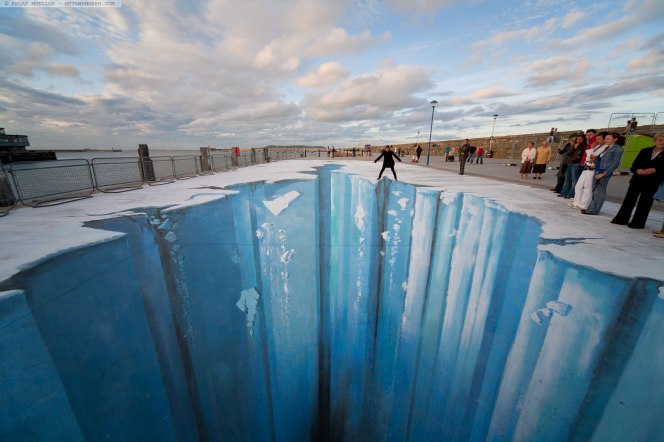
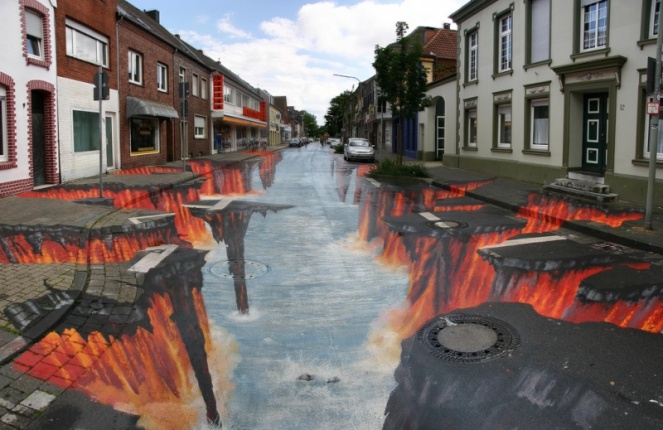
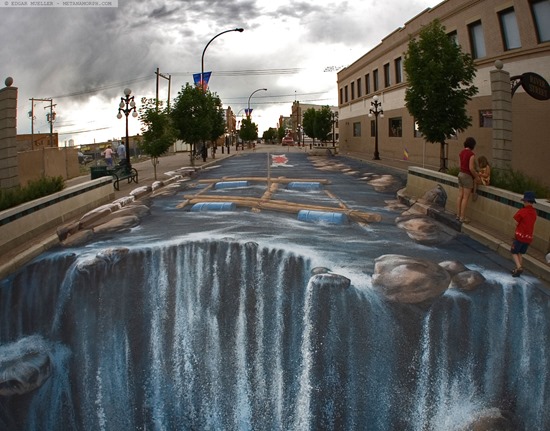
Edgar Mueller is German born artist who specializes in the art of street painting. Growing up, he got inspiration from urban art around him walking to school. Eventually, he earned the coveted title of “master street painter”. He now travels the world transforming streets and holding workshops.
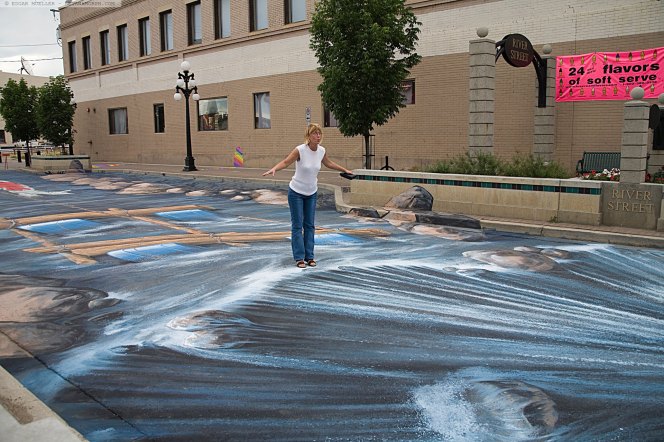
Mueller showcases his talent with these ultra-realistic depictions of landscapes on different streets all around the world. He is able to completely transform a space with the simple swipe of chalk. His expert use of perspective causes the viewer to feel unexplainable and almost laughable fear. Even viewing these artworks on a computer makes my heart skip a beat. Take a look at a few of his sidewalk transformations.Edgar Mueller 1Edgar Mueller 2Edgar Mueller 3Edgar Mueller 5.jpg

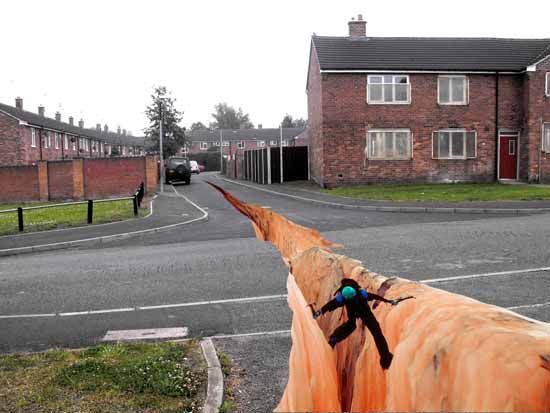
However, with a few steps to the left or to the right, the art transforms completely. The beauty and mastery of Mueller is his ability to create these masterpieces from one perspective.

Edgar Mueller 4

Imagine walking down the street and seeing this!

http://www.metanamorph.com/